口腔医学 ›› 2026, Vol. 46 ›› Issue (10): 796-801.doi: 10.13591/j.cnki.kqyx.2026.10.012
黄虹1,2, 荆得宝1, 王开1, 景秋平1, 王东苗2( )
收稿日期:2025-09-10
出版日期:2026-10-28
发布日期:2026-10-16
通讯作者:
王东苗 E-mail:wdm9921@njmu.edu.cn基金资助:
HUANG Hong1,2, JING Debao1, WANG Kai1, JING Qiuping1, WANG Dongmiao2()
Received:2025-09-10
Online:2026-10-28
Published:2026-10-16
摘要:
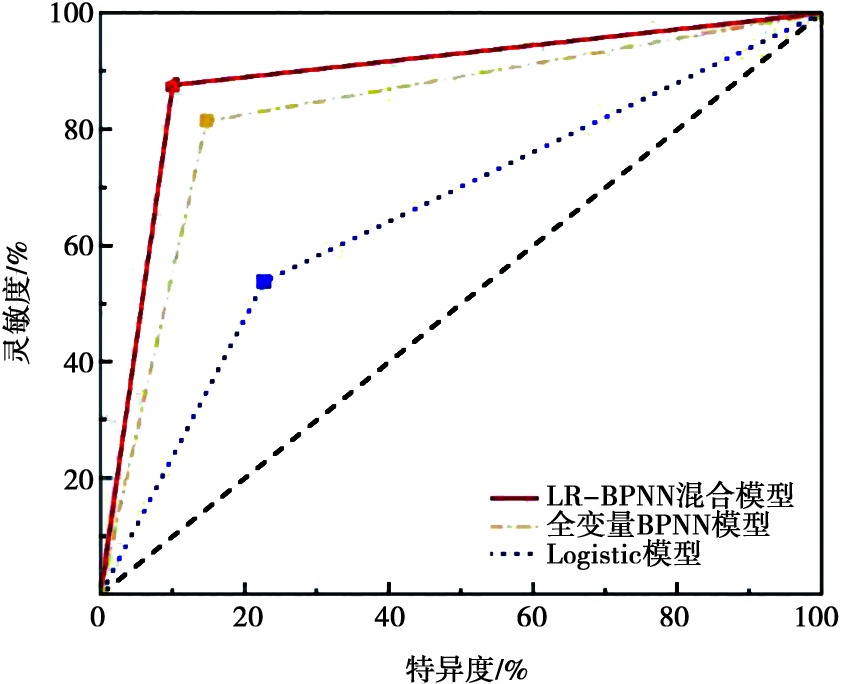
目的 探讨青少年正畸治疗中下颌第三磨牙萌出的相关风险因素,并通过逻辑回归-反向传播神经网络(Logistic regression-back propagation neural network,LR-BPNN)算法构建预测模型。方法 采用回顾性队列研究设计,纳入在南京医科大学附属口腔医院完成正畸治疗且具有锥形束计算机断层扫描影像的565例青少年患者的下颌第三磨牙萌出相关参数指标。通过Logistic回归分析筛选具有统计学意义的预测变量,随后将这些变量输入反向传播神经网络(BPNN)模型,从而形成LR-BPNN混合预测模型。采用受试者工作特征曲线下面积(AUC)、准确率、灵敏度、特异度等指标在独立验证集上评估并比较其性能。结果 Logistic回归分析筛选出6个核心影响因素,建立的LR-BPNN混合模型的预测性能最优,其准确率达89.94%,AUC为0.901,显著高于传统Logistic回归模型(AUC=0.755)与全变量BPNN模型(AUC=0.893)(P<0.01)。结论 本研究成功构建并验证了一个基于LR-BPNN混合架构的下颌第三磨牙萌出预测模型,具有较高的预测准确性与临床实用性,能为正畸临床中评估阻生风险、制定个性化拔牙策略及间隙管理方案提供客观、量化的决策支持。
中图分类号:
黄虹, 荆得宝, 王开, 景秋平, 王东苗. 基于LR-BPNN混合模型的青少年正畸患者下颌第三磨牙萌出预测研究[J]. 口腔医学, 2026, 46(10): 796-801.
HUANG Hong, JING Debao, WANG Kai, JING Qiuping, WANG Dongmiao. Prediction of mandibular third molar eruption in adolescent orthodontic patients using a LR-BPNN hybrid model[J]. Stomatology, 2026, 46(10): 796-801.
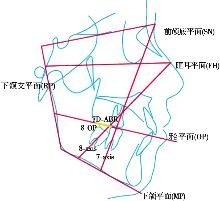
图1
头影测量示意图"
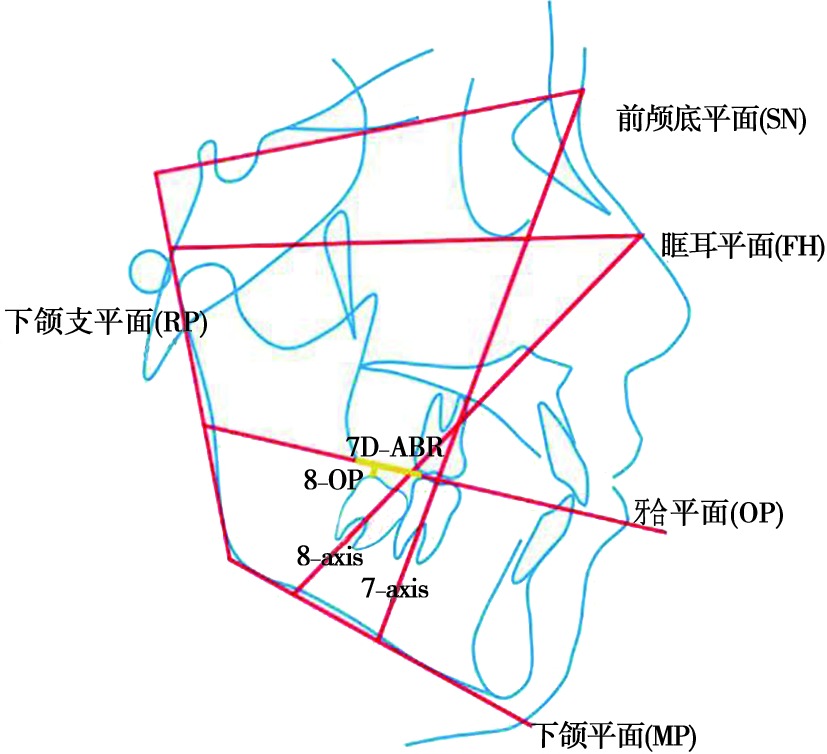
表1
头影分析:线性及角度测量指标的定义"
| 测量值 | 定义 |
|---|---|
| 7D-ABR/mm | 下颌第二磨牙远中冠接触点沿咬合平面到下颌升支前缘的距离 |
| 8-OP/mm | 第三磨牙冠的最高点到咬合平面的距离 |
| 7-8-axis/(°) | 第二磨牙和第三磨牙长轴之间的角度 |
| MP-RP/(°) | 下颌支平面和下颌平面之间的角度 |
| 8-axis-SN/(°) | 第三磨牙的长轴与前颅底平面之间的角度 |
| MP-SN/(°) | 下颌平面和前颅底平面之间的夹角 |
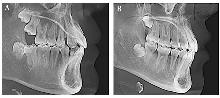
图2
下颌第三磨牙萌出分类 A:萌出; B:阻生。"
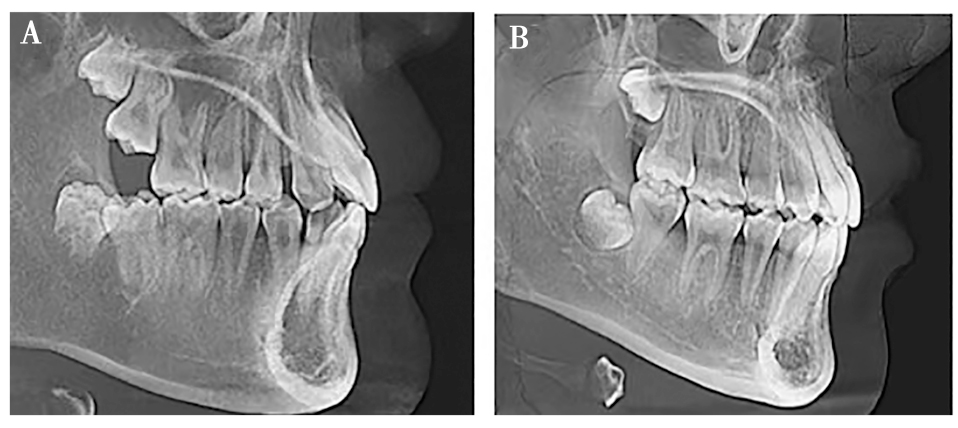
图3
LR-BPNN混合模型构建流程图"
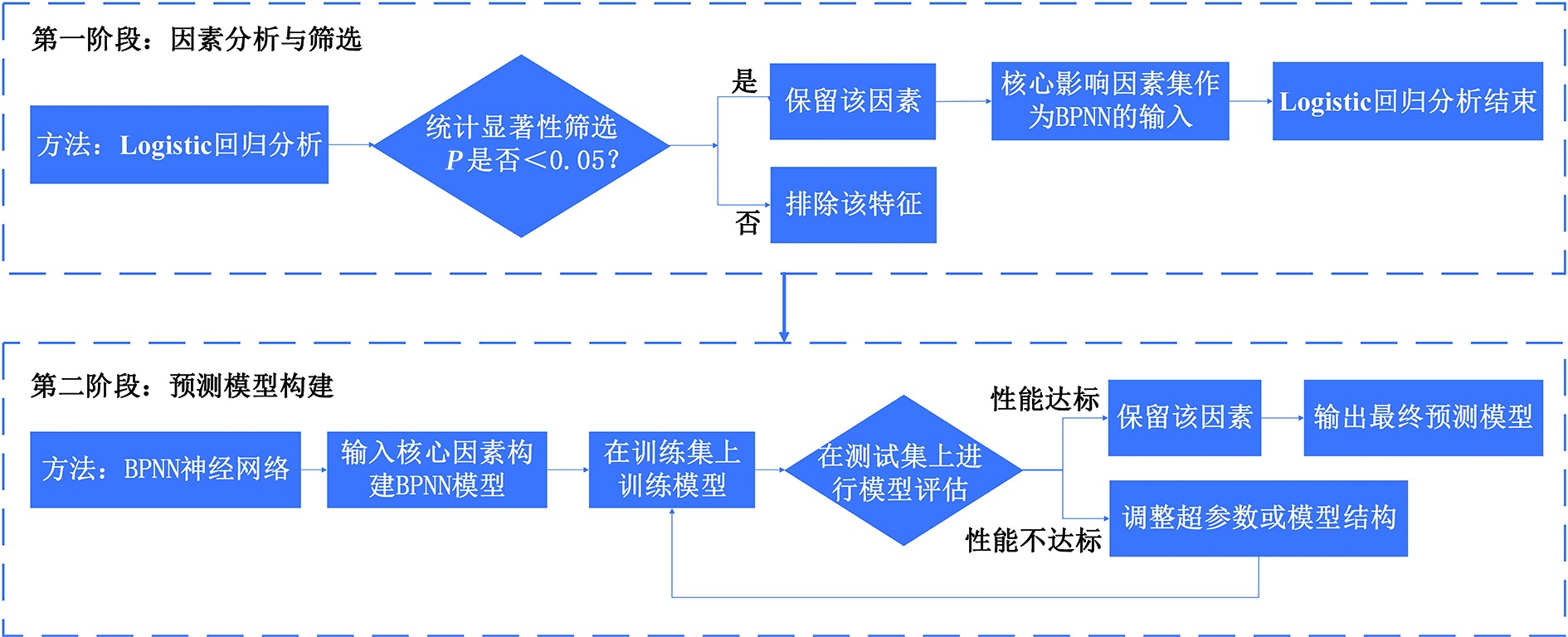
表2
影响下颌第三磨牙萌出的多因素Logistic回归分析"
| 变量 | 下颌第三磨牙状态 | P | OR(95% CI) | |||||
|---|---|---|---|---|---|---|---|---|
| 萌出组(n=398) | 未萌出组(n=167) | |||||||
| 性别 | ||||||||
| 女 | 285(71.6%) | 102(61.1%) | ||||||
| 男 | 113(28.4%) | 65(38.9%) | 0.850 | 0.96(0.62~1.48) | ||||
| 减数拔牙 | ||||||||
| 否 | 195(49.0%) | 108(64.7%) | ||||||
| 是 | 203(51.0%) | 59(35.3%) | 0.005* | 0.55(0.36~0.83) | ||||
| 下颌第三磨牙发育程度 | ||||||||
| 仅牙冠形成 | 175(44.0%) | 105(62.9%) | ||||||
| 牙根形成 | 223(56.0%) | 62(37.1%) | 0.003* | 0.49(0.31~0.78) | ||||
| 7D-ABR/mm | 1.25±1.52 | 0.75±1.68 | 0.018* | 0.85(0.74~0.97) | ||||
| 8-OP/mm | -0.52±1.02 | -1.95±1.41 | <0.001* | 0.35(0.28~0.44) | ||||
| 8-axis-SN/(°) | 36.52±11.88 | 24.31±11.05 | <0.001* | 0.92(0.90~0.94) | ||||
| 7-8-axis/(°) | 25.28±9.45 | 36.85±11.24 | <0.001* | 1.08(1.05~1.11) | ||||
| MP-SN/(°) | 37.65±5.98 | 36.88±6.12 | 0.520 | 0.98(0.94~1.03) | ||||
| MP-RP/(°) | 124.50±9.85 | 123.75±11.95 | 0.350 | 0.99(0.97~1.01) | ||||
表3
LR-BPNN混合模型预测结果表"
| 结果 | 实际结果:萌出 | 实际结果:阻生 | 合计 |
|---|---|---|---|
| 预测结果:萌出 | 99 | 9 | 108 |
| 预测结果:阻生 | 8 | 53 | 61 |
| 合计 | 107 | 62 | 169 |
表4
三种预测模型的判别性能比较"
| 模型 | 准确率 | 灵敏度 | 特异度 | 阳性预测值 |
|---|---|---|---|---|
| Logistic回归 | 76.8 | 73.2 | 79.5 | 70.3 |
| 全变量BPNN模型 | 83.6 | 85.2 | 80.6 | 88.5 |
| LR-BPNN混合模型 | 89.9 | 92.5 | 86.8 | 91.7 |
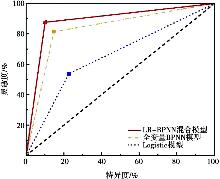
图4
三种预测模型的ROC分析"
| [1] |
Carter K, Worthington S. Predictors of third molar impaction: A systematic review and meta-analysis[J]. J Dent Res, 2016, 95(3): 267-276.
doi: 10.1177/0022034515615857 pmid: 26561441 |
| [2] |
Guo XQ, Gao Y, Zhang F, et al. Assessment of mandibular retromolar space in adults with regard to third molar eruption status[J]. Clin Oral Investig, 2023, 27(2): 671-680.
doi: 10.1007/s00784-022-04782-6 |
| [3] |
Palikaraki G, Mitsea A, Sifakakis I. Effect of mandibular third molars on crowding of mandibular teeth in patients with or without previous orthodontic treatment: A systematic review and meta-analysis[J]. Angle Orthod, 2024, 94(1): 122-132.
doi: 10.2319/032323-205.1 |
| [4] |
Vranckx M, Ockerman A, Coucke W, et al. Radiographic prediction of mandibular third molar eruption and mandibular canal involvement based on angulation[J]. Orthod Craniofac Res, 2019, 22(2): 118-123.
doi: 10.1111/ocr.12297 pmid: 30734999 |
| [5] |
Wu D, Wang GG. Causal artificial neural network and its applications in engineering design[J]. Eng Appl Artif Intell, 2021, 97: 104089.
doi: 10.1016/j.engappai.2020.104089 |
| [6] |
Kim HS, Park SJ, Seo SM, et al. Regression analysis of high-temperature oxidation of Ni-based superalloys using artificial neural network[J]. Corros Sci, 2021, 180: 109207.
doi: 10.1016/j.corsci.2020.109207 |
| [7] |
Zayed SO, Abd-Rabou RYM, Abdelhameed GM, et al. The innovation of AI-based software in oral diseases: Clinical-histopathological correlation diagnostic accuracy primary study[J]. BMC Oral Health, 2024, 24(1): 598.
doi: 10.1186/s12903-024-04347-x pmid: 38778322 |
| [8] |
Liang YR, Li QG, Chen PS, et al. Comparative study of back propagation artificial neural networks and logistic regression model in predicting poor prognosis after acute ischemic stroke[J]. Open Med, 2019, 14: 324-330.
doi: 10.1515/med-2019-0030 |
| [9] |
Esteva A, Chou K, Yeung S, et al. Deep learning-enabled medical computer vision[J]. NPJ Digit Med, 2021, 4: 5.
doi: 10.1038/s41746-020-00376-2 pmid: 33420381 |
| [10] |
Shao YX, Wang ZJ, Cao NN, et al. Prediction of 3-month treatment outcome of IgG4-DS based on BP artificial neural network[J]. Oral Dis, 2021, 27(4): 934-941.
doi: 10.1111/odi.v27.4 |
| [11] | Nolla CM. The development of permanent teeth[J]. J Dent Chil, 1960, 27(4):254-266. |
| [12] |
Swets JA. Measuring the accuracy of diagnostic systems[J]. Science, 1988, 240(4857): 1285-1293.
doi: 10.1126/science.3287615 pmid: 3287615 |
| [13] |
DeLong ER, DeLong DM, Clarke-Pearson DL. Comparing the areas under two or more correlated receiver operating characteristic curves: A nonparametric approach[J]. Biometrics, 1988, 44(3):837-845.
pmid: 3203132 |
| [14] |
Jung SK, Kim TW. New approach for the diagnosis of extractions with neural network machine learning[J]. Am J Orthod Dentofacial Orthop, 2016, 149(1): 127-133.
doi: 10.1016/j.ajodo.2015.07.030 |
| [15] |
Shan T, Tay FR, Gu L. Application of artificial intelligence in dentistry[J]. J Dent Res, 2021, 100(3): 232-244.
doi: 10.1177/0022034520969115 pmid: 33118431 |
| [16] |
Schwendicke F, Samek W, Krois J. Artificial intelligence in dentistry: Chances and challenges[J]. J Dent Res, 2020, 99(7): 769-774.
doi: 10.1177/0022034520915714 pmid: 32315260 |
| [17] |
Revilla-León M, Gómez-Polo M, Vyas S, et al. Artificial intelligence applications in restorative dentistry: A systematic review[J]. J Prosthet Dent, 2022, 128(5): 867-875.
doi: 10.1016/j.prosdent.2021.02.010 |
| [18] |
Hanley JA, McNeil BJ. A method of comparing the areas under receiver operating characteristic curves derived from the same cases[J]. Radiology, 1983, 148(3): 839-843.
doi: 10.1148/radiology.148.3.6878708 pmid: 6878708 |
| [19] |
Sahoo RK, Sahoo KC, Dash GC, et al. Diagnostic performance of artificial intelligence in detecting oral potentially malignant disorders and oral cancer using medical diagnostic imaging: A systematic review and meta-analysis[J]. Front Oral Health, 2024, 5: 1494867.
doi: 10.3389/froh.2024.1494867 |
| [20] |
Bayrakdar IS, Orhan K, Akarsu S, et al. Deep-learning approach for caries detection and segmentation on dental bitewing radiographs[J]. Oral Radiol, 2022, 38(4): 468-479.
doi: 10.1007/s11282-021-00577-9 |
| [21] |
Kaur A, Jyoti D, Sharma A, et al. Deep caries detection using deep learning: From dataset acquisition to detection[J]. Clin Oral Investig, 2024, 28(12): 677.
doi: 10.1007/s00784-024-06068-5 |
| [22] |
Mohammad-Rahimi H, Motamedian SR, Pirayesh Z, et al. Deep learning in periodontology and oral implantology: A scoping review[J]. J Periodontal Res, 2022, 57(5): 942-951.
doi: 10.1111/jre.13037 pmid: 35856183 |
| [23] |
Hanley JA, McNeil BJ. The meaning and use of the area under a receiver operating characteristic (ROC) curve[J]. Radiology, 1982, 143(1): 29-36.
doi: 10.1148/radiology.143.1.7063747 pmid: 7063747 |
| [24] |
Najeeb M, Islam S. Artificial intelligence (AI) in restorative dentistry: Current trends and future prospects[J]. BMC Oral Health, 2025, 25(1): 592.
doi: 10.1186/s12903-025-05989-1 |
| [25] |
Bhat S, Mansoor A, Georgescu B, et al. AUC reshaping: Improved sensitivity at high-specificity[J]. Sci Rep, 2023, 13(1): 21097.
doi: 10.1038/s41598-023-48482-x |
| [1] | 《人工智能辅助牙槽骨骨开窗/骨开裂影像识别专家共识》编写组. 人工智能辅助牙槽骨骨开窗/骨开裂影像识别专家共识[J]. 口腔医学, 2026, 46(10): 721-726. |
| [2] | 丁羽, 顾永佳, 邹德荣, 俞律峰. 伴有颞下颌关节紊乱综合征临床症状的Ⅱ类错牙合患者髁突位置的研究[J]. 口腔医学, 2026, 46(10): 771-775. |
| [3] | 李振霞, 杨一鸣, 刘超, 夏伦果, 房兵, 纪芳. 口腔正畸住院医师规范化培训中教学门诊的改革与实践[J]. 口腔医学, 2026, 46(10): 807-810. |
| [4] | 仲武, 陆禾佳, 胥加斌, 周猛. 下颌前磨牙区埋伏多生牙致邻牙牙根吸收的影响因素分析[J]. 口腔医学, 2026, 46(9): 703-706. |
| [5] | 翁依雅, 袁礼婵, 张梦男, 马俊青. 导板在正畸治疗中的矫治效能与临床应用[J]. 口腔医学, 2026, 46(8): 619-623. |
| [6] | 于鑫, 陆胜男, 章婷, 谢慧敏, 石慧. 青少年下切牙先天性缺失对牙颌面形态的影响[J]. 口腔医学, 2026, 46(7): 531-535. |
| [7] | 王芯萌, 李依梅, 常新. MARPE结合数字化在临床实践中的创新应用[J]. 口腔医学, 2026, 46(7): 555-560. |
| [8] | 顾珩, 杜宇晴, 沈慧婕, 汤欢, 严斌. 骨性Ⅱ类不同垂直骨面型上气道与颞下颌关节结构特征相关性研究[J]. 口腔医学, 2026, 46(6): 442-447. |
| [9] | 梁肖伦, 张梦涵, 张文喆, 吴梦婕. 隐形矫治器厚度与附件对尖牙远移效率的三维有限元分析[J]. 口腔医学, 2026, 46(6): 409-415. |
| [10] | 王若雯, 王华. 下颌切牙牙根与牙槽骨反应的差异——骨性Ⅲ类掩饰性与联合治疗比较[J]. 口腔医学, 2026, 46(5): 363-368. |
| [11] | 钟悦, 吕丹, 张译尹, 黄子铭, 张元, 谢理哲, 钱雅婧. 基于3dMD的正畸治疗后成人面部软组织变化的研究[J]. 口腔医学, 2026, 46(4): 283-288. |
| [12] | 王潇辰, 林君彦, 郭培培, 张蕊, 李丹丹. 低水平激光通过线粒体自噬通路促进正畸牙移动的作用研究[J]. 口腔医学, 2026, 46(3): 181-188. |
| [13] | 张渊岫, 龚爱秀, 王嘉艺. 高位头帽-肌激动器联合舌栅矫治器治疗替牙期骨性Ⅱ类高角错𬌗畸形的疗效分析[J]. 口腔医学, 2026, 46(3): 195-200. |
| [14] | 王诗语, 黄钖钖, 刘浩, 杨丽, 胥加斌, 王鹏来. 骨性Ⅱ类错𬌗畸形下颌平面角控制的研究进展[J]. 口腔医学, 2026, 46(3): 224-229. |
| [15] | 韩陆琦, 沈慧婕, 陆山鸣, 李国情, 王威, 汤欢. 下颌切牙先天缺失患者间隙关闭前后的骨量变化[J]. 口腔医学, 2025, 45(12): 909-913. |
| 阅读次数 | ||||||
|
全文 |
|
|||||
|
摘要 |
|
|||||
 苏公网安备32010602011670号