口腔医学 ›› 2026, Vol. 46 ›› Issue (11): 892-897.
彭景粲1, 王赛楠2, 龙赟子3, 徐晓巍4,5( ), 李姣5,6
收稿日期:2025-11-27
出版日期:2026-11-28
发布日期:2026-11-18
通讯作者:
徐晓巍 Tel:(010)52328747 E-mail:xu.xiaowei@imicams.ac.cn基金资助:
PENG Jingcan1, WANG Sainan2, LONG Yunzi3, XU Xiaowei4,5(), LI Jiao5,6
Received:2025-11-27
Online:2026-11-28
Published:2026-11-18
摘要:
锥形束计算机断层扫描(cone-beam computed tomography,CBCT)具有良好的三维成像能力,在牙髓与根尖周病变诊断中展现出二维影像无法比拟的优势,尤其在深龋、继发龋及复杂根管再治疗中具有重要临床应用价值。随着数字化与人工智能技术的融入,CBCT已实现对龋损与髓腔的自动识别,提升了诊断的效率与一致性。本文按照任务顺序,首先综述基于CBCT的解剖结构分割,其次阐述龋损的检出与分级,并介绍剩余牙本质厚度(remaining dentin thickness,RDT)及病灶体积等客观量化方法在深龋风险评估与治疗决策中的应用,最后讨论临床流程嵌入,旨在为临床实践提供指导。
中图分类号:
彭景粲, 王赛楠, 龙赟子, 徐晓巍, 李姣. 人工智能辅助CBCT龋病诊断的研究进展[J]. 口腔医学, 2026, 46(11): 892-897.
PENG Jingcan, WANG Sainan, LONG Yunzi, XU Xiaowei, LI Jiao. Advances in artificial intelligence-assisted CBCT diagnosis of dental caries[J]. Stomatology, 2026, 46(11): 892-897.
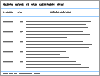
表1
基于CBCT的龋损AI检出与分级代表性研究汇总"
| 研究者 | 任务 | 数据规模 | 模型类型 | 主要指标 | 验证方式 |
|---|---|---|---|---|---|
| Qi等[ | 定位+分级 | 1 778张单牙 | 3D CNN(联合定位与分级) | 定位召回率=0.899;Dice=0.776;(牙医均值Dice=0.700) 分级:精确率/召回率/F1=0.855/0.857/0.856;(牙医均值F1=0.678) | 内部测试;牙医对照 |
| Qi等[ | 四级分级 | 2 148张单牙 | CariesAI-3D(多任务学习)+SA-FFM(空间注意力融合) | 交叉验证:准确率=0.886;精确率=0.882;召回率=0.873;F1=0.876;内部独立测试集:AUC=0.947~0.998;MAD=0.011~0.033(交叉验证vs.内部独立测试集) | 交叉验证(n=1 826)+独立测试(n=322,内部) |
| Esmaeilyfard等[ | 检出(龋/非龋分类) | 785颗磨牙(382龋/403非龋) | 多视图2D CNN(多平面输入) | 准确率=0.953;灵敏度=0.921;特异度=0.963;F1=0.932 | 内部测试 |
| Chen等[ | 分类+可解释 | 204颗龋坏牙(2 713轴位切片,切片级) | 预分割+分类+LIME解释 | 直接分类模型准确率0.700;引入预分割与解释后,准确率/精确率/召回率/F1均>0.917 | 内部测试;方法对照 |
| [1] |
黄港, 曹桂莹, 刘民. 1990-2019年中国龋病的疾病负担现状及变化趋势研究[J]. 中国全科医学, 2024, 27(14): 1735-1741.
doi: 10.12114/j.issn.1007-9572.2023.0494 |
| [2] | 冯希平. 中国居民口腔健康状况: 第四次中国口腔健康流行病学调查报告[C]// 2018年中华口腔医学会第十八次口腔预防医学学术年会, 2018: 12-13. |
| [3] |
Raoof M, Vazavandi E, Parizi MT, et al. Clinical, radiological, and histological correlation in diagnosis of pulpitis[J]. Dent Res J, 2022, 19: 25.
doi: 10.4103/1735-3327.340110 |
| [4] |
Demant S, Dabelsteen S, Bjørndal L. A macroscopic and histological analysis of radiographically well-defined deep and extremely deep carious lesions: Carious lesion characteristics as indicators of the level of bacterial penetration and pulp response[J]. Int Endod J, 2021, 54(3): 319-330.
doi: 10.1111/iej.13424 pmid: 33012046 |
| [5] |
Murray PE, Smith AJ, Windsor LJ, et al. Remaining dentine thickness and human pulp responses[J]. Int Endod J, 2003, 36(1): 33-43.
doi: 10.1046/j.0143-2885.2003.00609.x pmid: 12656512 |
| [6] |
Akdeniz BG, Gröndahl HG, Magnusson B. Accuracy of proximal caries depth measurements: Comparison between limited cone beam computed tomography, storage phosphor and film radiography[J]. Caries Res, 2006, 40(3): 202-207.
doi: 10.1159/000092226 pmid: 16707867 |
| [7] | Berbari R, Khairallah A, Kazan HF, et al. Measurement reliability of the remaining dentin thickness below deep carious lesions in primary molars[J]. Int J Clin Pediatr Dent, 2018, 11(1): 23-28. |
| [8] |
Patel S, Durack C, Abella F, et al. Cone beam computed tomography in Endodontics: A review[J]. Int Endod J, 2015, 48(1): 3-15.
doi: 10.1111/iej.12270 pmid: 24697513 |
| [9] |
Cebe F, Aktan AM, Ozsevik AS, et al. The effects of different restorative materials on the detection of approximal caries in cone-beam computed tomography scans with and without metal artifact reduction mode[J]. Oral Surg Oral Med Oral Pathol Oral Radiol, 2017, 123(3): 392-400.
doi: 10.1016/j.oooo.2016.11.008 |
| [10] |
Kamburoğlu K, Kurt H, Kolsuz E, et al. Occlusal caries depth measurements obtained by five different imaging modalities[J]. J Digit Imaging, 2011, 24(5): 804-813.
doi: 10.1007/s10278-010-9355-9 pmid: 21116675 |
| [11] |
Lahoud P, EzEldeen M, Beznik T, et al. Artificial intelligence for fast and accurate 3-dimensional tooth segmentation on cone-beam computed tomography[J]. J Endod, 2021, 47(5): 827-835.
doi: 10.1016/j.joen.2020.12.020 pmid: 33434565 |
| [12] |
Esmaeilyfard R, Bonyadifard H, Paknahad M. Dental caries detection and classification in CBCT images using deep learning[J]. Int Dent J, 2024, 74(2): 328-334.
doi: 10.1016/j.identj.2023.10.003 |
| [13] |
Dot G, Chaurasia A, Dubois G, et al. DentalSegmentator: Robust open source deep learning-based CT and CBCT image segmentation[J]. J Dent, 2024, 147: 105130.
doi: 10.1016/j.jdent.2024.105130 |
| [14] | 石瑛琦, 陈萍, 任美, 等. 深度学习用于口腔锥形束CT研究进展[J]. 中国介入影像与治疗学, 2025, 22(1): 58-62. |
| [15] |
Preda F, Morgan N, Van Gerven A, et al. Deep convolutional neural network-based automated segmentation of the maxillofacial complex from cone-beam computed tomography: A validation study[J]. J Dent, 2022, 124: 104238.
doi: 10.1016/j.jdent.2022.104238 |
| [16] | Ren GQ, Chen YF, Qi S, et al. Feature patch based attention model for dental caries classification[M]// Clinical Image-Based Procedures. Cham: Springer Nature Switzerland, 2023: 62-71. |
| [17] | Qi S, Shan HX, Fu YJ, et al. A clinically oriented and interpretable AI framework for classifying dentin caries severity on CBCT images[J]. J Prosthet Dent, 2026, 135(3): 594. e1-594.e8. |
| [18] |
Zhang ZH, Li L, Wu JW, et al. CariesAttNet: An attention-enhanced encoder-decoder network for automated caries segmentation in CBCT images[J]. IEEE Access, 2025, 13: 147569-147580.
doi: 10.1109/ACCESS.2025.3601329 |
| [19] |
Yuan K, Ding JF, Zeng XY, et al. Dental caries detection with cone beam computed tomography and multiscale wavelet attention network[J]. Opt Lasers Eng, 2025, 195: 109366.
doi: 10.1016/j.optlaseng.2025.109366 |
| [20] |
Kot WY, Au Yeung SY, Leung YY, et al. Evolution of deep learning tooth segmentation from CT/CBCT images: A systematic review and meta-analysis[J]. BMC Oral Health, 2025, 25(1): 800.
doi: 10.1186/s12903-025-05984-6 |
| [21] |
Slim ML, Jacobs R, de Souza Leal RM, et al. AI-driven segmentation of the pulp cavity system in mandibular molars on CBCT images using convolutional neural networks[J]. Clin Oral Investig, 2024, 28(12): 650.
doi: 10.1007/s00784-024-06009-2 |
| [22] | 林翔, 傅裕杰, 任根强, 等. U-Net神经网络分割锥形束CT影像中下颌磨牙牙体与牙髓腔及其准确性验证[J]. 上海口腔医学, 2022, 31(5): 454-459. |
| [23] |
Fontenele RC, do Nascimento Gerhardt M, Pinto JC, et al. Influence of dental fillings and tooth type on the performance of a novel artificial intelligence-driven tool for automatic tooth segmentation on CBCT images: A validation study[J]. J Dent, 2022, 119: 104069.
doi: 10.1016/j.jdent.2022.104069 |
| [24] |
Elgarba BM, Van Aelst S, Swaity A, et al. Deep learning-based segmentation of dental implants on cone-beam computed tomo-graphy images: A validation study[J]. J Dent, 2023, 137: 104639.
doi: 10.1016/j.jdent.2023.104639 |
| [25] |
Choi H, Jeon KJ, Kim YH, et al. Deep learning-based fully automatic segmentation of the maxillary sinus on cone-beam computed tomographic images[J]. Sci Rep, 2022, 12: 14009.
doi: 10.1038/s41598-022-18436-w pmid: 35978086 |
| [26] |
Morgan N, Van Gerven A, Smolders A, et al. Convolutional neural network for automatic maxillary sinus segmentation on cone-beam computed tomographic images[J]. Sci Rep, 2022, 12(1): 7523.
doi: 10.1038/s41598-022-11483-3 pmid: 35525857 |
| [27] |
Bayrakdar IS, Elfayome NS, Hussien RA, et al. Artificial intelligence system for automatic maxillary sinus segmentation on cone beam computed tomography images[J]. Dentomaxillofac Radiol, 2024, 53(4): 256-266.
doi: 10.1093/dmfr/twae012 pmid: 38502963 |
| [28] | 叶页, 房硕博, 路惠童, 等. 基于深度学习的CBCT中下颌管及分支的分割与验证[J]. 上海口腔医学, 2025, 34(2): 119-125. |
| [29] |
Shalalvand M, Haghanifar S, Moudi E, et al. Deep learning-assisted CBCT segmentation provides reliable volumetric assessment of mandibular defects compared with micro-CT for 3D printing and surgical planning[J]. Sci Rep, 2025, 15(1): 37561.
doi: 10.1038/s41598-025-24748-4 |
| [30] |
Qi S, Fu YJ, Shan HX, et al. Localisation and classification of multi-stage caries on CBCT images with a 3D convolutional neural network[J]. Clin Oral Investig, 2025, 29(5): 246.
doi: 10.1007/s00784-025-06325-1 |
| [31] |
Chen SR, Yang Y, Wu WW, et al. Classification of caries based on CBCT: A deep learning network interpretability study[J]. J Imaging Inform Med, 2024, 37(6): 3160-3173.
doi: 10.1007/s10278-024-01143-5 |
| [32] |
Park HS, Seo JK, Hyun CM, et al. A fidelity-embedded learning for metal artifact reduction in dental CBCT[J]. Med Phys, 2022, 49(8): 5195-5205.
doi: 10.1002/mp.v49.8 |
| [33] |
Feltraco LT, Rossetto C, Yeung AWK, et al. Utility of the radiological report function of an artificial intelligence system in interpreting CBCT images: A technical report[J]. Dentomaxillofac Radiol, 2025, 54(3): 239-244.
doi: 10.1093/dmfr/twaf004 pmid: 39832268 |
| [34] |
Ezhov M, Gusarev M, Golitsyna M, et al. Clinically applicable artificial intelligence system for dental diagnosis with CBCT[J]. Sci Rep, 2021, 11(1): 15006.
doi: 10.1038/s41598-021-94093-9 pmid: 34294759 |
| [35] |
Amasya H, Alkhader M, Serindere G, et al. Evaluation of a decision support system developed with deep learning approach for detecting dental caries with cone-beam computed tomography imaging[J]. Diagnostics, 2023, 13(22): 3471.
doi: 10.3390/diagnostics13223471 |
| [36] |
Fu WT, Zhu QK, Li N, et al. Clinically oriented CBCT periapical lesion evaluation 3D CNN algorithm[J]. J Dent Res, 2024, 103(1): 5-12.
doi: 10.1177/00220345231201793 |
| [37] |
Kirnbauer B, Hadzic A, Jakse N, et al. Automatic detection of periapical osteolytic lesions on cone-beam computed tomography using deep convolutional neuronal networks[J]. J Endod, 2022, 48(11): 1434-1440.
doi: 10.1016/j.joen.2022.07.013 pmid: 35952897 |
| [38] | 钱军, 马芮, 曲妍, 等. 人工智能在锥形束计算机断层扫描影像中识别慢性根尖周炎根尖区病变的应用[J]. 华西口腔医学杂志, 2022, 40(5): 576-581. |
| [39] |
Chau KK, Zhu ML, AlHadidi A, et al. A novel AI model for detecting periapical lesion on CBCT: CBCT-SAM[J]. J Dent, 2025, 153: 105526.
doi: 10.1016/j.jdent.2024.105526 |
| [40] | 贺梦柯, 鲁嘉韦, 段晖, 等. 人工智能技术在牙周炎影像诊断中的研究进展[J]. 口腔医学, 2025, 45(6): 460-464. |
| [41] |
Hadzic A, Urschler M, Press JA, et al. Evaluating a periapical lesion detection CNN on a clinically representative CBCT dataset: A validation study[J]. J Clin Med, 2023, 13(1): 197.
doi: 10.3390/jcm13010197 |
| [42] |
Topol EJ. High-performance medicine: The convergence of human and artificial intelligence[J]. Nat Med, 2019, 25(1): 44-56.
doi: 10.1038/s41591-018-0300-7 pmid: 30617339 |
| [43] |
Kelly CJ, Karthikesalingam A, Suleyman M, et al. Key challenges for delivering clinical impact with artificial intelligence[J]. BMC Med, 2019, 17(1): 195.
doi: 10.1186/s12916-019-1426-2 pmid: 31665002 |
| [44] | 查昶玮, 张曦文, 罗惜元, 等. 人工智能在儿童口腔医学中的应用和展望[J]. 口腔医学, 2026, 46(6): 466-470. |
| [45] | Azarfar G, Naimimohasses S, Rambhatla S, et al. Responsible adoption of multimodal artificial intelligence in health care: Promises and challenges[J]. Lancet Digit Health, 2025, 7(12): 100917. |
| [46] | Vasey B, Nagendran M, Campbell B, et al. Reporting guideline for the early stage clinical evaluation of decision support systems driven by artificial intelligence: DECIDE-AI[J]. BMJ, 2022, 377: e070904. |
| [47] |
Andersen ES, Birk-Korch JB, Hansen RS, et al. Monitoring performance of clinical artificial intelligence in health care: A scoping review[J]. JBI Evid Synth, 2024, 22(12): 2423-2446.
doi: 10.11124/JBIES-24-00042 pmid: 39658865 |
| [1] | 查昶玮, 张曦文, 罗惜元, 刘瑞军, 王晨, 陈潇童, 于鹏. 人工智能在儿童口腔医学中的应用和展望[J]. 口腔医学, 2026, 46(6): 466-470. |
| [2] | 陈鸿炜, 刘安雅, 梁嘉鑫, 袁一方, 周子超, 蒋文凯, 王胜朝. 抗菌再矿化材料在龋病防治中的研究进展[J]. 口腔医学, 2026, 46(5): 380-387. |
| [3] | 王敏永, 冯立晓, 王冬梅, 王衣祥. 儿童龋病综合防治效果及龋风险因素关联性分析[J]. 口腔医学, 2026, 46(4): 295-299. |
| [4] | 蒋园园, 陈金林, 张琰, 王思, 周津津, 廖珊珊. Twin-Block与隐形下颌前导矫治Ⅱ类错牙合的CBCT三维评价[J]. 口腔医学, 2026, 46(11): 854-858. |
| [5] | 高彬渊, 南欣荣. 人工智能在腭部唾液腺肿瘤术前精准诊断中的临床价值研究[J]. 口腔医学, 2026, 46(11): 898-902. |
| [6] | 《人工智能辅助牙槽骨骨开窗/骨开裂影像识别专家共识》编写组. 人工智能辅助牙槽骨骨开窗/骨开裂影像识别专家共识[J]. 口腔医学, 2026, 46(10): 721-726. |
| [7] | 张洁心, 周媛, 郑黎薇. 人工智能在口腔遗传病与罕见病精准诊疗中的应用研究进展[J]. 口腔医学, 2026, 46(1): 35-40. |
| [8] | 袁鑫玺, 夏也康, 王涵, 胡建, 刘来奎, 梁薇薇. 机器学习在牙列缺损修复中的应用[J]. 口腔医学, 2025, 45(9): 707-712. |
| [9] | 张金萍, 虞仙, 陈熠名, 王泽辉, 陶瑜, 韦一, 李碧榕, 朱炳震, 张娟. 基于卷积神经网络的下颌第三磨牙和下颌神经管关系诊断[J]. 口腔医学, 2025, 45(8): 596-602. |
| [10] | 张玉雯, 李蓓, 葛兵, 朱晔, 王小贞, 白璐, 朱鹏. 苏州市小学二年级学生口腔健康状况调查[J]. 口腔医学, 2025, 45(8): 613-618. |
| [11] | 刘飞, 张久楼, 金若帆, 张楠, 周薇娜. 基于深度学习方法建立颞下颌关节核磁共振影像的自动分割模型[J]. 口腔医学, 2025, 45(6): 445-452. |
| [12] | 贺梦柯, 鲁嘉韦, 段晖, 罗礼君. 人工智能技术在牙周炎影像诊断中的研究进展[J]. 口腔医学, 2025, 45(6): 460-464. |
| [13] | 黄淑慧, 朱珠, 汪云毅, 徐雨悦, 李竞, 俞刚, 张峰. 人工智能在颌面部骨折诊疗中的应用进展[J]. 口腔医学, 2025, 45(5): 386-393. |
| [14] | 李嘉宁, 王胜朝, 周子超, 张倩霞, 蒋文凯. CBCT结合数字化技术及人工智能在牙体牙髓中的应用进展[J]. 口腔医学, 2025, 45(4): 296-300. |
| [15] | 常兴桃, 胡佳心, 孙江龄, 张吉琴, 陈贤润, 白国辉, 罗祎. 天然抗菌生物材料对变异链球菌及其生物膜的抑制作用[J]. 口腔医学, 2025, 45(3): 235-240. |
| 阅读次数 | ||||||
|
全文 |
|
|||||
|
摘要 |
|
|||||
 苏公网安备32010602011670号