
Stomatology ›› 2026, Vol. 46 ›› Issue (7): 521-530.doi: 10.13591/j.cnki.kqyx.2026.07.006
• Basic and Clinical Research • Previous Articles Next Articles
ZHANG Borui1, MA Yufeng1,2( )
)
Received:2025-05-12
Online:2026-07-28
Published:2026-07-23
CLC Number:
ZHANG Borui, MA Yufeng. Three-dimensional finite element analysis of the crown method for the internal friction angle of horizontally impacted mandi-bular teeth[J]. Stomatology, 2026, 46(7): 521-530.
Tab.1
Material properties"
| 材料 | 弹性模量E/MPa | 泊松比v |
|---|---|---|
| 皮质骨 | 14 800 | 0.30 |
| 松质骨 | 1 850 | 0.30 |
| 牙釉质 | 80 000 | 0.33 |
| 牙本质 | 20 000 | 0.31 |
| 牙髓 | 2 | 0.45 |
| 牙周膜 | 68 | 0.45 |
| 神经管 | 70 | 0.45 |
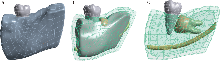
Fig.1
Model establishment of a complete horizontally low-positioned impacted third molar and surrounding structures"
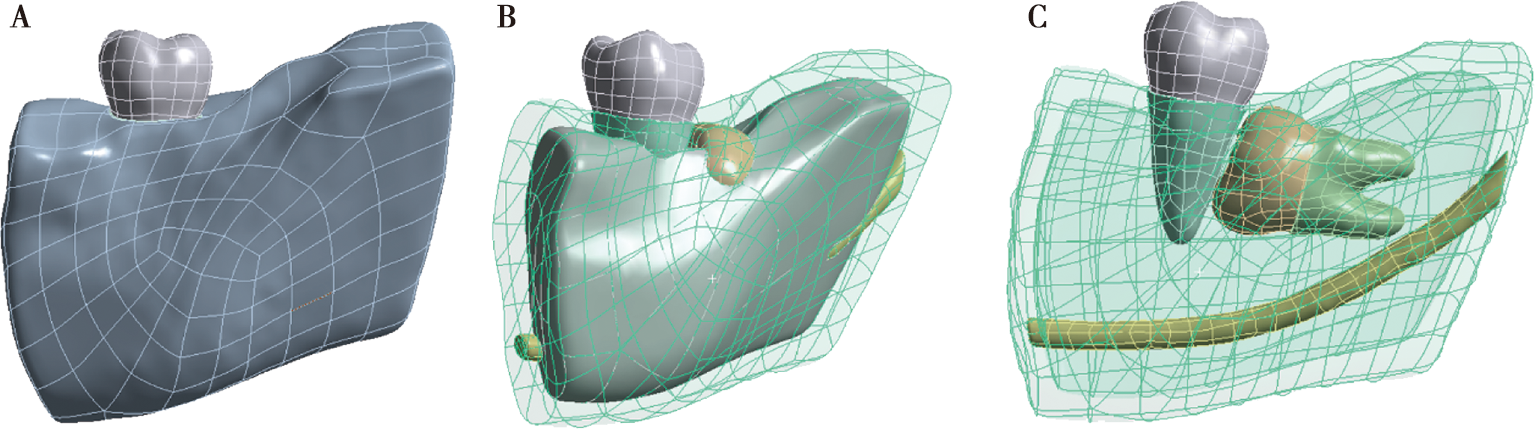

Fig.2
Model grouping based on internal friction angle with crown sections cut, featuring a fissure width of 1 mm and 1.5 mm of tissue retained at the base"

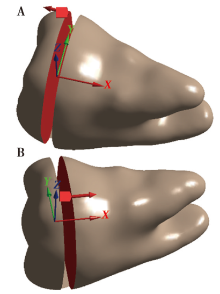
Fig.3
Loading conditions on the sectioned third molar"
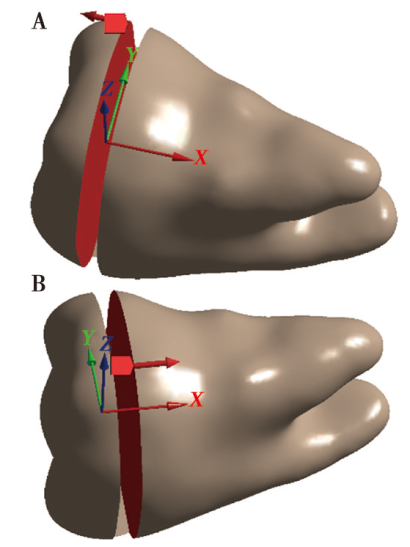

Fig.4
Stress comparison of the third molars in four model groups;M1 and M2 exhibit higher stress concentration at the base of the crown"


Fig.5
Comparison of maximum von Mises stress locations in four groups"
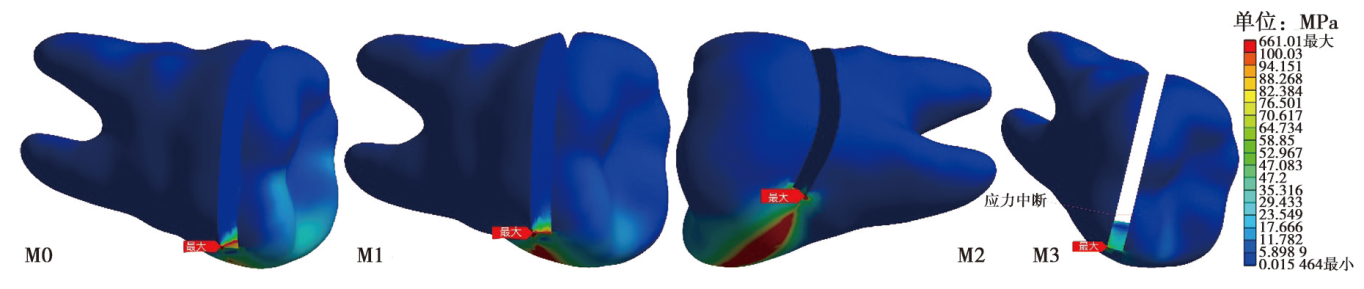
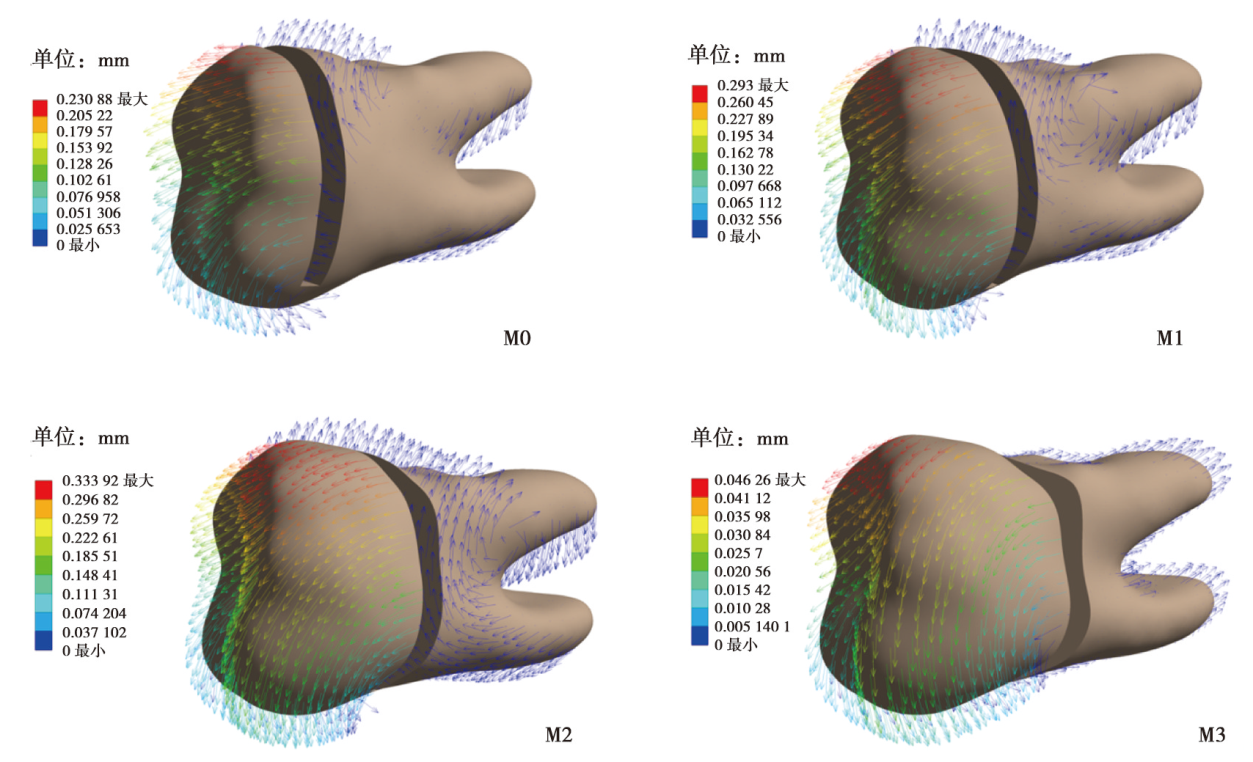
Fig.6
Displacement directions and magnitudes of the third molar"
Tab.2
Comparison of maximum von Mises stress in surrounding structures (excluding the jawbone) of impacted MPa"
| 周围结构 | M0 | M1 | M2 | M3 |
|---|---|---|---|---|
| 第二磨牙 | 0.17 | 0.14 | 0.16 | 0.13 |
| 第二磨牙牙周膜 | 0.06 | 0.05 | 0.06 | 0.10 |
| 下牙槽神经管 | 0.13 | 0.17 | 0.16 | 0.20 |
Fig.7
Stress distribution at the outer surface of the periodontal ligament of the second molar"
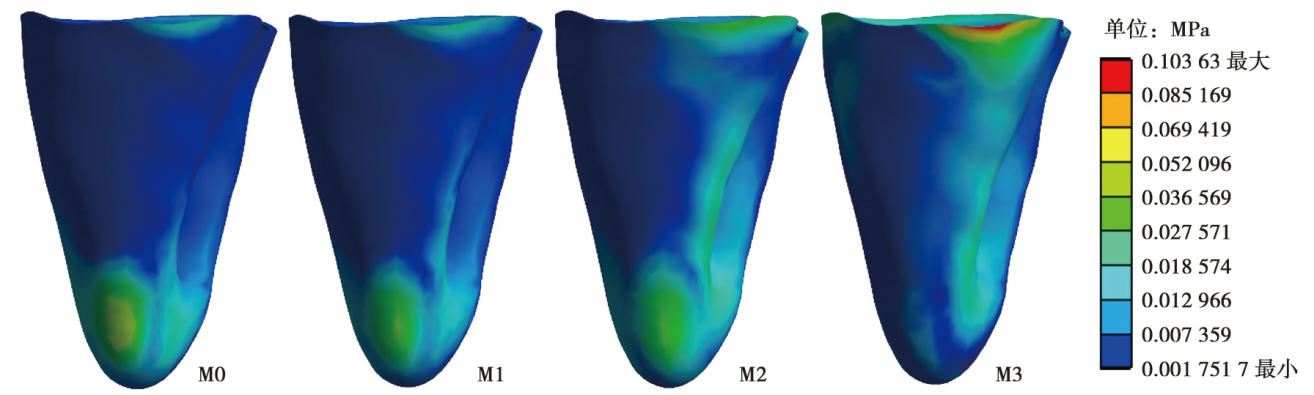
Fig.8
Stress distribution at the periodontal ligament-root surface interface of the second molar"
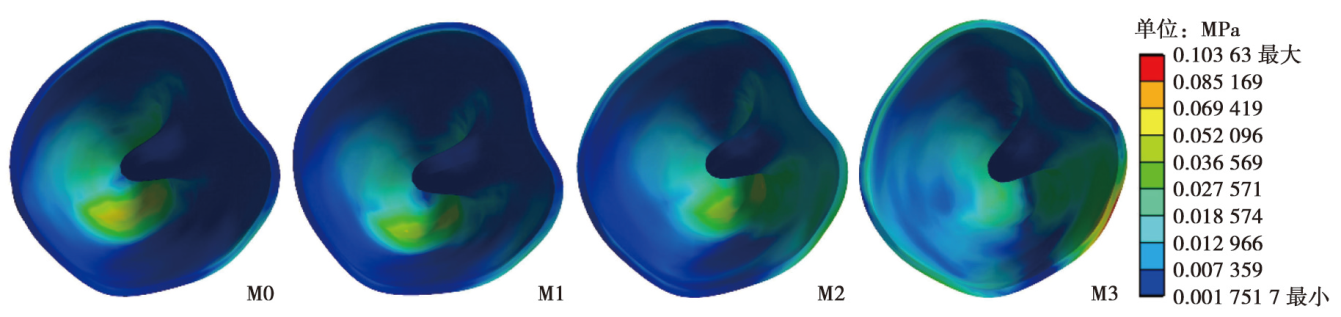
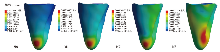
Fig.9
Strain distribution in the periodontal ligament of the second molar"

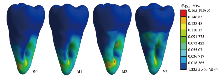
Fig.10
Root stress distribution in the second molar across four model groups"
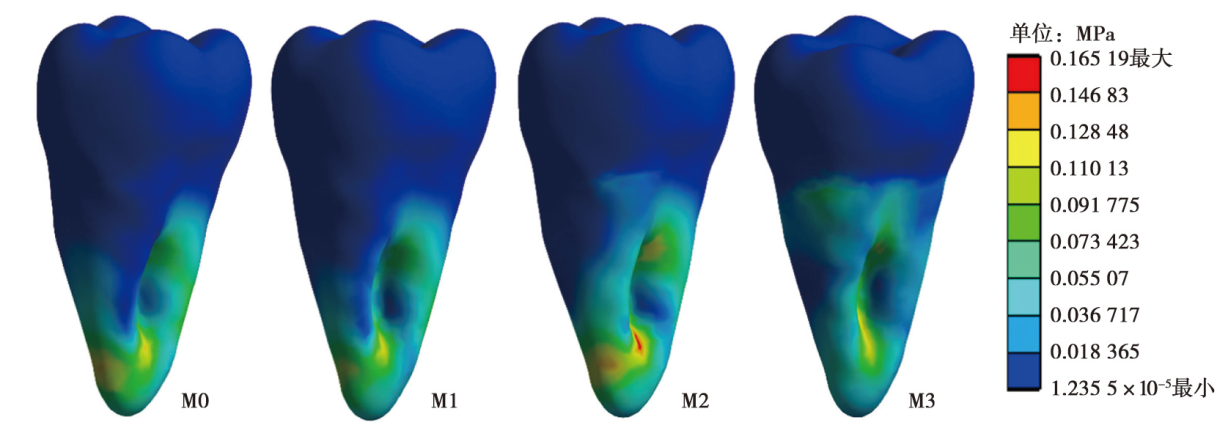
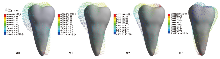
Fig.11
Displacement distribution in the second molar"
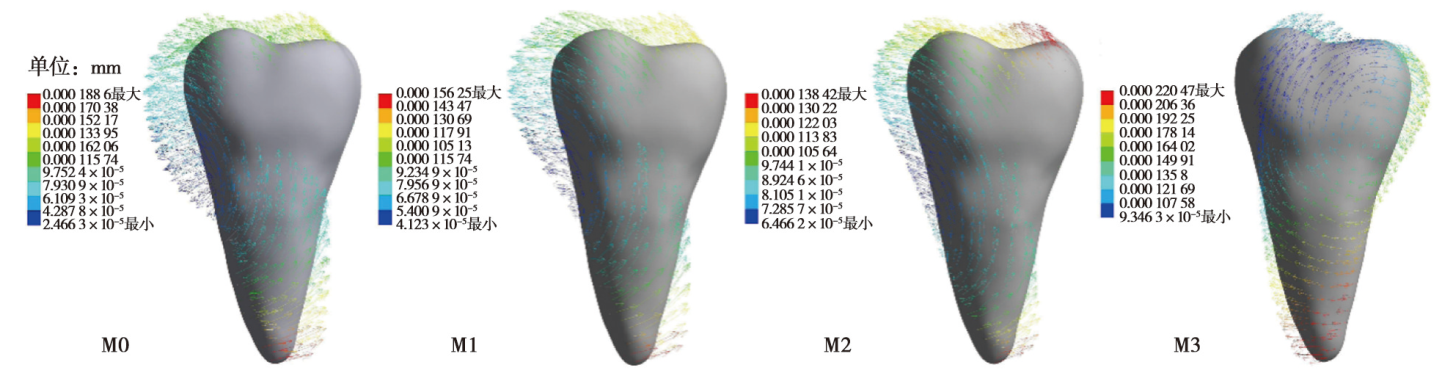
Fig.12
Stress distribution in the lingual cortical bone plate"
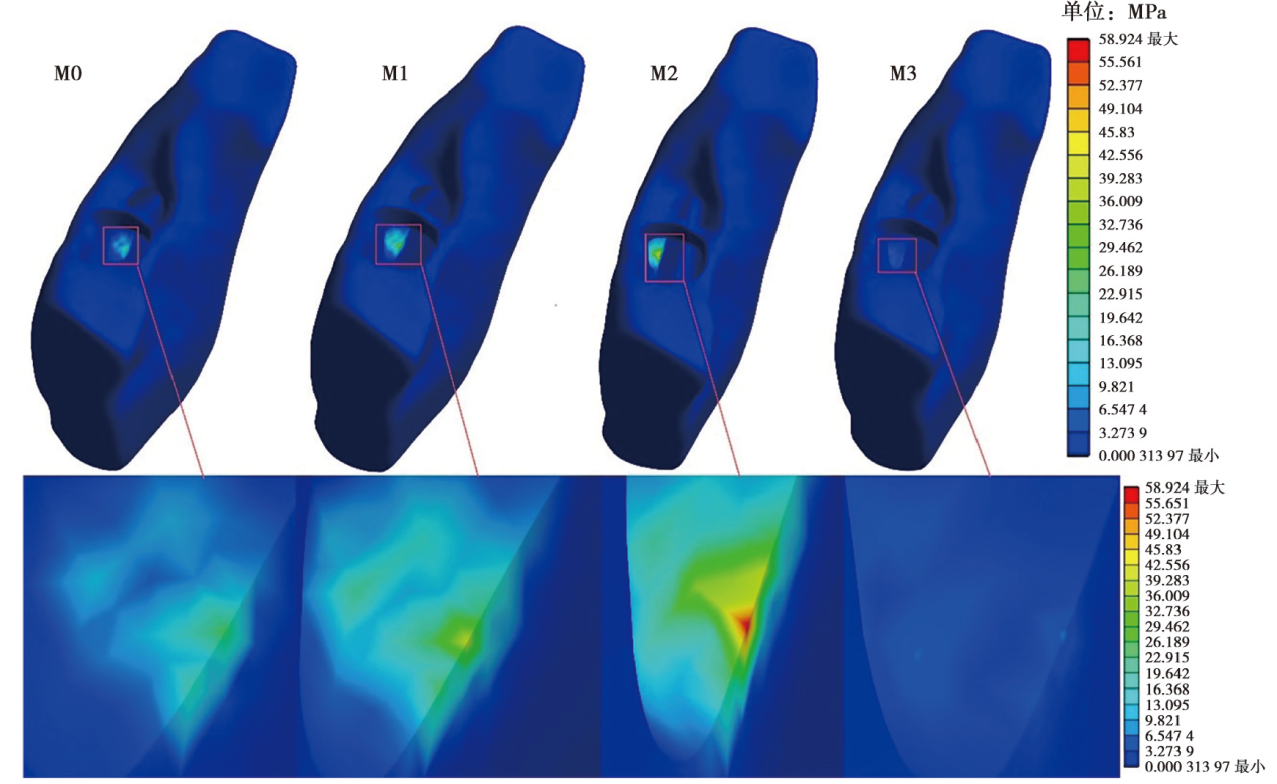

Fig.13
Strain distribution in the cortical bone"

Fig.14
Stress distribution in cancellous bone"
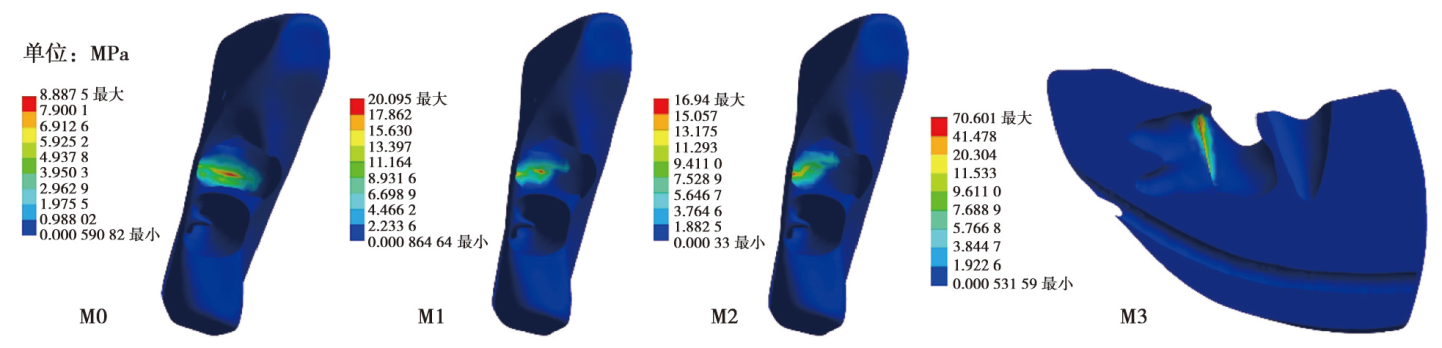
Fig.15
Strain distribution in cancellous bone"
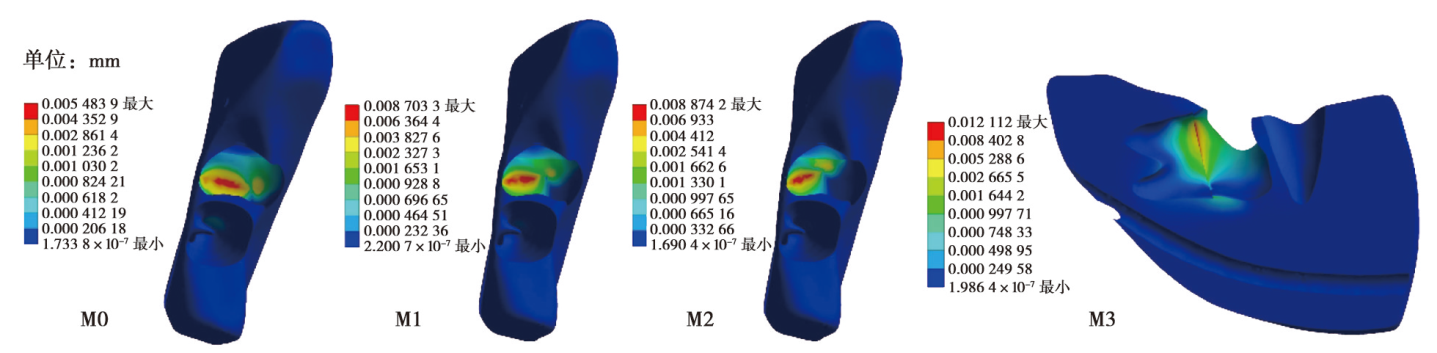
Fig.16
Stress distribution in the mandibular canal"
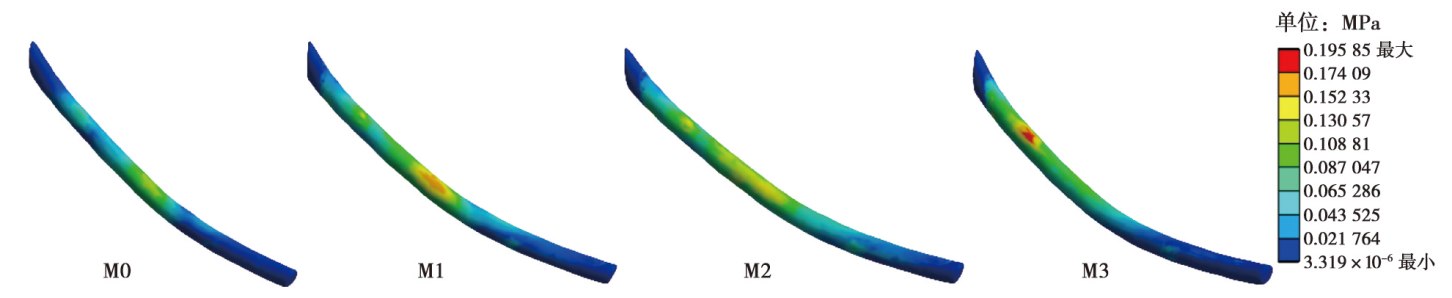

Fig.17
Strain distribution in the mandibular canal"

| [1] |
侯笑茹, 虎小毅, 李彦秋, 等. 动态实时导航技术在拔除周围伴有囊性病变的复杂下颌第三磨牙中的应用[J]. 口腔颌面外科杂志, 2024, 34(5): 379-385.
doi: 10.12439/kqhm.1005-4979.2024.05.008 |
| [2] | 王军, 刘素芳, 王会敏. 微创拔牙术治疗下颌复杂阻生牙的临床疗效[J]. 深圳中西医结合杂志, 2023, 33(8): 115-118. |
| [3] |
Fan XH, Yue L, Qu PF, et al. Strategy to remove teeth adjacent to mesially impacted wisdom teeth based on a geometric analysis[J]. J Hard Tissue Biol, 2021, 30(1): 85-92.
doi: 10.2485/jhtb.30.85 |
| [4] |
Kämmerer PW, Heimes D, Hartmann A, et al. Clinical insights into traumatic injury of the inferior alveolar and lingual nerves: A comprehensive approach from diagnosis to therapeutic interventions[J]. Clin Oral Investig, 2024, 28(4): 216.
doi: 10.1007/s00784-024-05615-4 |
| [5] |
Xu W, Shen J, Li KC, et al. A mechanical and three-dimensional finite element study of the optimum tooth sectioning depth during the extraction of low-level horizontally impacted mandibular third molar[J]. Odontology, 2024, 112(1): 242-249.
doi: 10.1007/s10266-023-00822-z |
| [6] | 祁海龙, 马蓉, 付建军. 列线图分析下颌阻生智牙拔除术后下牙槽神经血管束损伤的风险模型[J]. 中国医师杂志, 2024(10): 1504-1508. |
| [7] | 华成舸. 微创拔牙的刚体力学分析[J]. 华西口腔医学杂志, 2017, 35(2): 119-123. |
| [8] | Baccher S, Gowdar IM, Guruprasad Y, et al. CBCT: A comprehensive overview of its applications and clinical significance in dentistry[J]. J Pharm Bioallied Sci, 2024, 16(Suppl 3): S1923-S1925. |
| [9] |
Limjeerajarus N, Dhammayannarangsi P, Phanijjiva A, et al. Comparison of ultimate force revealed by compression tests on extracted first premolars and FEA with a true scale 3D multi-component tooth model based on a CBCT dataset[J]. Clin Oral Investig, 2020, 24(1): 211-220.
doi: 10.1007/s00784-019-02919-8 |
| [10] |
Moga RA, Buru SM, Chiorean CG. Overall stress in periodontal ligament under orthodontic movement during a periodontal breakdown[J]. Am J Orthod Dentofac Orthop, 2022, 161(2): e127-e135.
doi: 10.1016/j.ajodo.2021.06.014 |
| [11] |
Chang YH, Tambe AA, Maeda Y, et al. Finite element analysis of dental implants with validation: To what extent can we expect the model to predict biological phenomena? A literature review and proposal for classification of a validation process[J]. Int J Implant Dent, 2018, 4(1): 7.
doi: 10.1186/s40729-018-0119-5 pmid: 29516219 |
| [12] | 张乃暄. 隐形矫治不同工况下远移上颌第二磨牙时全牙列变化的有限元分析[D]. 济南: 山东大学, 2022. |
| [13] | 韩正功. 下颌阻生智齿智能识别及其拔除过程生物力学研究[D]. 贵阳: 贵州大学, 2024. |
| [14] | 高文波, 马宗民, 李淑娴, 等. 有限元分析不同骨质下种植体长度及直径对初期稳定性的影响[J]. 中国组织工程研究, 2022, 26(6): 875-880. |
| [15] | Ataman-Duruel ET, Beycioğlu Z, Yılmaz D, et al. Evaluation of cortical thicknesses and bone density values of mandibular canal borders and coronal site of alveolar crest[J]. J Oral Maxillofac Res, 2023, 14(3): e4. |
| [16] |
Ayali A, Erkmen E. Three-dimensional finite element analysis of different plating techniques for unfavorable mandibular angle fractures[J]. J Craniofacial Surg, 2018, 29(3): 603-607.
doi: 10.1097/SCS.0000000000004327 |
| [17] |
Pisani MX, Presotto AGC, Mesquita MF, et al. Biomechanical behavior of 2-implant-and single-implant-retained mandibular overdentures with conventional or mini implants[J]. J Prosthet Dent, 2018, 120(3): 421-430.
doi: 10.1016/j.prosdent.2017.12.012 |
| [18] | 庞亚倩. 不同部位骨吸收的下颌骨囊性病变有限元建模及相关生物力学分析[D]. 蚌埠: 蚌埠医学院, 2021. |
| [19] | Shams A, Sakrana AA, Abo El-Farag SA, et al. Assessment of biomechanical behavior of endodontically treated premolar teeth restored with novel endocrown system[J]. Eur J Prosthodont Restor Dent, 2022, 30(1): 20-35. |
| [20] |
Ince Yusufoglu S, Saricam E, Ozdogan MS. Finite element analysis of stress distribution in root canals when using a variety of post systems instrumented with different rotary systems[J]. Ann Biomed Eng, 2023, 51(7): 1436-1448.
doi: 10.1007/s10439-023-03145-w |
| [21] |
Yang BX, Irastorza-Landa A, Heuberger P, et al. Analytical model for dental implant insertion torque[J]. J Mech Behav Biomed Mater, 2022, 131: 105223.
doi: 10.1016/j.jmbbm.2022.105223 |
| [22] |
Wu WL, Song LY, Liu JM, et al. Finite element analysis of the angle range in trans-inferior alveolar nerve implantation at the mandibular second molar[J]. BMC Oral Health, 2023, 23(1): 928.
doi: 10.1186/s12903-023-03641-4 pmid: 38007495 |
| [23] |
Zaytsev D. Mechanical properties of human enamel under compression: On the feature of calculations[J]. Mater Sci Eng C, 2016, 62: 518-523.
doi: 10.1016/j.msec.2016.02.016 |
| [24] | 陈新民, 王劲茗, 赵云凤, 等. 人体下颌骨强度研究[J]. 口腔颌面修复学杂志, 2002, 3(2): 113-115. |
| [25] |
Leyton BS, Rached RN, Ignácio SA, et al. Fracture strength of extended class I composite restorations with different restorative techniques[J]. Odontology, 2022, 110(2): 269-277.
doi: 10.1007/s10266-021-00656-7 |
| [26] |
Suedbeck JR, Armitano-Lago CN, Ludwig EA. The additive effects of cell phone use and dental hygiene practice on finger muscle strength: A pilot study[J]. J Dent Hyg, 2020, 94(2): 45-53.
pmid: 32354851 |
| [27] |
Martins L, de Lima L, da Silva L, et al. Crown material and occlusal thickness affect the load stress dissipation on 3D molar crowns: Finite element analysis[J]. Int J Prosthodont, 2023, 36(3): 301-307.
doi: 10.11607/ijp.6974 |
| [28] | 于海洋. 口腔生物力学[M]. 北京: 人民卫生出版社, 2012. |
| [29] |
He JP, Pan Z, Zhou GW, et al. Integrated analysis of clinical indicators and mechanical properties in cancellous bone[J]. Med Eng Phys, 2024, 133: 104245.
doi: 10.1016/j.medengphy.2024.104245 |
| [30] |
Yan ZY, Xu JY, Zhang JY, et al. Optimal tooth sectioning using a surgical handpiece and elevator: A finite element study of horizontally deeply impacted mandibular third molars[J]. Clin Oral Investig, 2024, 28(8): 439.
doi: 10.1007/s00784-024-05834-9 |
| Viewed | ||||||
|
Full text |
|
|||||
|
Abstract |
|
|||||
