
Stomatology ›› 2026, Vol. 46 ›› Issue (7): 489-494.doi: 10.13591/j.cnki.kqyx.2026.07.002
• Basic and Clinical Research • Previous Articles Next Articles
SHANG Wenjia1, YANG Fanghong2( ), GAO Hui2(), DAI Bingfeng1, YANG Xiaochuan1
Received:2025-10-14
Online:2026-07-28
Published:2026-07-23
CLC Number:
SHANG Wenjia, YANG Fanghong, GAO Hui, DAI Bingfeng, YANG Xiaochuan. Research on the mechanism of triptolide in meliorating Fusobacterium nucleatum-related periodontitis[J]. Stomatology, 2026, 46(7): 489-494.
Tab.1
Indicators of liver and kidney function in rats"
| 组别 | ALT/(U/L) | AST/(U/L) | BUN/(mg/dL) | Cr/(μmol/L) |
|---|---|---|---|---|
| LC组 | 47.19±11.27 | 109.48±13.52 | 11.78±1.73 | 41.71±5.94 |
| TPL组 | 45.04±7.68 | 116.27±15.41 | 11.50±1.42 | 42.79±6.68 |
Tab.2
Periodontal clinical indicators in rats"
| 组别 | PD/mm | SBI |
|---|---|---|
| LC组 | 0.88±0.08 | 2.33±0.52 |
| FN组 | 1.18±0.10** | 3.67±0.52* |
| TPL组 | 0.57±0.08## | 1.33±0.52## |
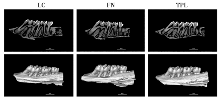
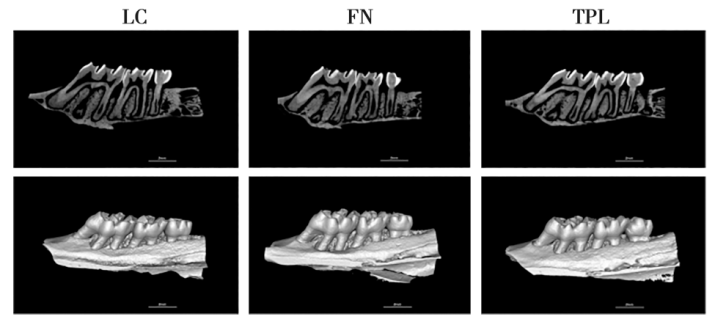
Fig.1
Micro-CT cross-sectional images and reconstruction results"
Tab.3
BMD, Tb.Th and CEJ-ABC of the maxillary first molar"
| 组别 | BMD/cm3 | Tb.Th/mm | CEJ-ABC/mm |
|---|---|---|---|
| LC组 | 825.14±19.84 | 0.24±0.02 | 1.08±0.01 |
| FN组 | 736.76±33.28* | 0.20±0.01** | 1.24±0.02** |
| TPL组 | 900.13±29.51## | 0.28±0.02## | 0.68±0.03## |
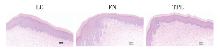
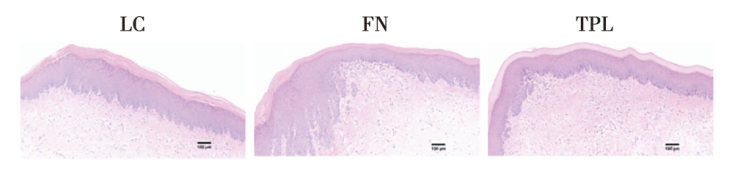
Fig.2
HE staining of gingiva tissue sections"
Tab.4
Proportion of positive area of inflammatory factors IL-6, TNF-α, OPG and RANKL proteins in each group %"
| 组别 | IL-6 | TNF-α | OPG | RANKL |
|---|---|---|---|---|
| LC组 | 8.32±1.80 | 6.39±1.50 | 8.00±1.92 | 9.58±1.31 |
| FN组 | 12.75±3.05** | 12.99±1.63* | 5.70±1.82* | 14.45±2.61** |
| TPL组 | 4.21±1.27## | 4.34±1.33## | 10.94±2.40## | 5.38±1.17## |
Fig.3
Immunohistochemical staining results of IL-6, TNF-α, OPG and RANKL in rat gingival tissues( ×400)"
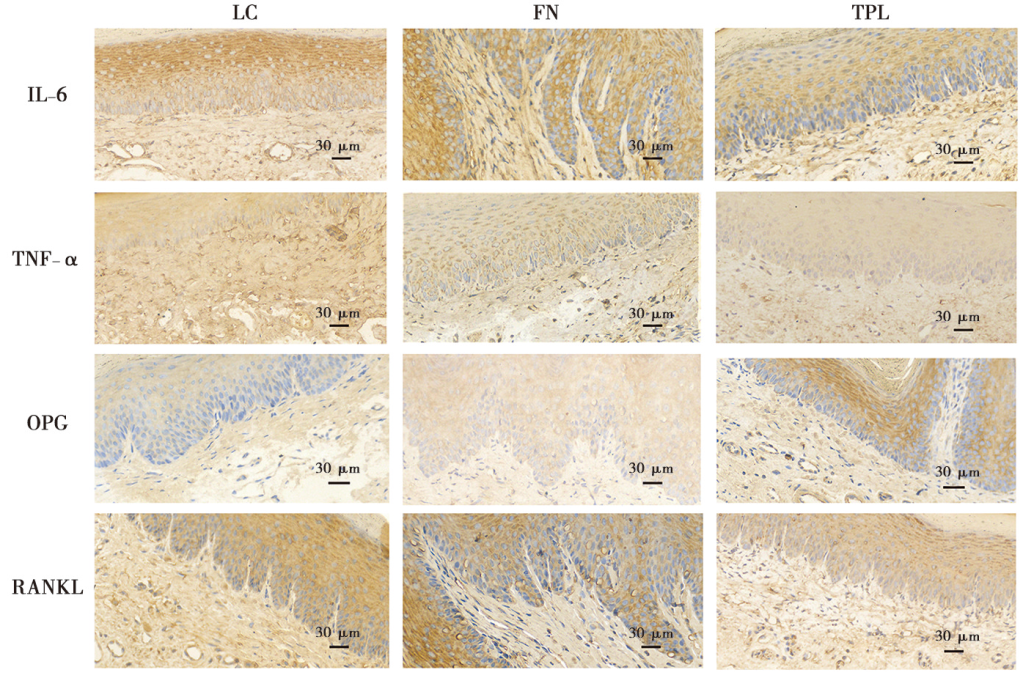
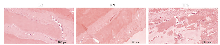
Fig.4
Alizarin red S staining results( ×200)"
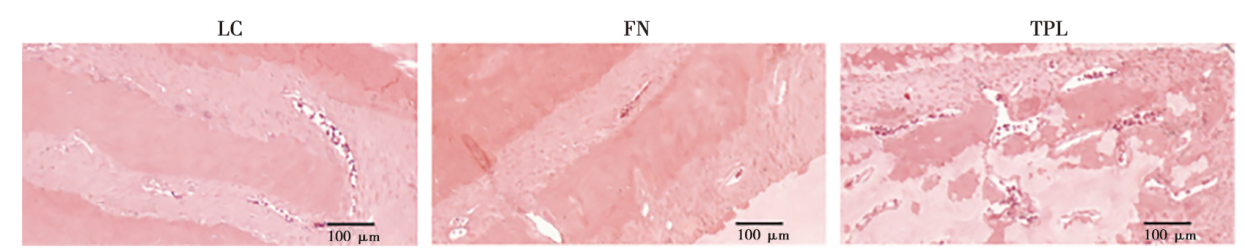
Fig.5
TRAP staining results( ×200)"

Tab.5
Comparison of percentage of alizarin red S-positive area and number of osteoclasts in tissues of each group"
| 组别 | 茜素红染色阳性 面积百分比/% | 破骨细胞数量/个 | |
|---|---|---|---|
| LC组 | 0.70±0.04 | 22.50±10.45 | |
| FN组 | 0.17±0.03** | 58.17±14.69** | |
| TPL组 | 1.33±0.13## | 8.67±2.88## | |
| [1] |
Cheng XY, Shen S. Identification of key genes in periodontitis[J]. Front Genet, 2025, 16: 1579848.
doi: 10.3389/fgene.2025.1579848 |
| [2] |
Bassani B, Cucchiara M, Butera A, et al. Neutrophils’ contribution to periodontitis and periodontitis-associated cardiovascular diseases[J]. Int J Mol Sci, 2023, 24(20): 15370.
doi: 10.3390/ijms242015370 |
| [3] |
王德续, 陈晓涛. 2型群体感应自诱导分子对牙周炎影响的研究进展[J]. 口腔医学研究, 2023, 39(7): 578-581.
doi: 10.13701/j.cnki.kqyxyj.2023.07.003 |
| [4] |
Zhang L, Zhang DM, Liu CC, et al. Outer membrane vesicles derived from Fusobacterium nucleatum trigger periodontitis through host overimmunity[J]. Adv Sci, 2024, 11(47): 2400882.
doi: 10.1002/advs.v11.47 |
| [5] |
Guo YY, Guo NN, Wang J, et al. Retrospective analysis of Tripterygium wilfordii polyglycoside combined with angiotensin receptor blockers for the treatment of primary membranous nephropathy with sub-nephrotic proteinuria[J]. Ren Fail, 2021, 43(1): 729-736.
doi: 10.1080/0886022X.2021.1918555 |
| [6] |
Liu PY, Liu HY, Sang YL, et al. Triptolide regulates neutrophil function through the Hippo signaling pathway to alleviate rheumatoid arthritis disease progression[J]. J Transl Autoimmun, 2024, 8: 100242.
doi: 10.1016/j.jtauto.2024.100242 |
| [7] |
Silvestrini AVP, Garcia Praça F, Leite MN, et al. Liquid crystalline nanoparticles enable a multifunctional approach for topical psoriasis therapy by co-delivering triptolide and siRNAs[J]. Int J Pharm, 2023, 640: 123019.
doi: 10.1016/j.ijpharm.2023.123019 |
| [8] | Abdul Hussein AH, Al-Taee MM, Radih ZA, et al. Mechanisms of cancer cell death induction by triptolide[J]. Bio Factors, 2023, 49(4): 718-735. |
| [9] |
Ji W, Lu YY, Ma ZY, et al. Triptolide attenuates inhibition of ankylosing spondylitis-derived mesenchymal stem cells on the osteoclastogenesis through modulating exosomal transfer of circ-0110634[J]. J Orthop Translat, 2022, 36: 132-144.
doi: 10.1016/j.jot.2022.05.007 |
| [10] |
Yang F, Wang XX, Ma D, et al. Effects of triptolide on tooth movement and root resorption in rats[J]. Drug Des Dev Ther, 2019, 13: 3963-3975.
doi: 10.2147/DDDT.S217936 pmid: 31819370 |
| [11] |
Xiong Y, Yin Y, Darshika Kodithuwakku N, et al. Immunosuppressive effects of triptolide via interleukin-2/receptor signaling[J]. Immunopharmacol Immunotoxicol, 2024, 46(6): 727-740.
doi: 10.1080/08923973.2024.2373219 |
| [12] |
崔家康, 朱泽林, 刘孟娇, 等. 基于转录组测序、网络药理和毒理学探讨雷公藤甲素治疗类风湿关节炎的分子作用机制[J]. 天然产物研究与开发, 2025, 37(5): 957-964.
doi: 10.16333/j.1001-6880.2025.5.016 |
| [13] | 李嘉铮, 韩梅, 盛硕, 等. 雷公藤在心血管系统中的调控作用及机制研究进展[J]. 老年医学研究, 2025, 6(2): 86-89. |
| [14] |
蔡烨华, 李星, 赵艳霞, 等. 雷公藤甲素调控p38 MAPK/ERK/JNK信号通路对正畸牙移动模型大鼠牙周炎症及破骨细胞的影响[J]. 口腔医学研究, 2024, 40(11): 978-984.
doi: 10.13701/j.cnki.kqyxyj.2024.11.007 |
| [15] | 陈庆, 殷焦. Hippo通路在感染及肿瘤免疫中的相关作用研究进展[J]. 解放军医学杂志, 2019, 44(9): 791-796. |
| [16] |
Shi HC, Liu QM, He W, et al. Triptolide attenuates LPS-induced chondrocyte inflammation by inhibiting inflammasome activation via the Wnt/β-catenin and NF-κB signaling pathways[J]. Cytotechnology, 2024, 77(1): 13.
doi: 10.1007/s10616-024-00680-9 |
| [17] |
Relvas M, Mendes-Frias A, Gonçalves M, et al. Salivary IL-1β, IL-6, and IL-10 are key biomarkers of periodontitis severity[J]. Int J Mol Sci, 2024, 25(15): 8401.
doi: 10.3390/ijms25158401 |
| [18] |
Nakao Y, Fukuda T, Zhang QZ, et al. Exosomes from TNF-α-treated human gingiva-derived MSCs enhance M2 macrophage polarization and inhibit periodontal bone loss[J]. Acta Biomater, 2021, 122: 306-324.
doi: 10.1016/j.actbio.2020.12.046 pmid: 33359765 |
| [19] |
Marahleh A, Kitaura H, Ohori F, et al. The osteocyte and its osteoclastogenic potential[J]. Front Endocrinol, 2023, 14: 1121727.
doi: 10.3389/fendo.2023.1121727 |
| [20] |
Jacho D, Babaniamansour P, Osorio R, et al. Deciphering the cell-specific effect of osteoblast-macrophage crosstalk in periodontitis[J]. Tissue Eng Part A, 2023, 29(21/22): 579-593.
doi: 10.1089/ten.tea.2023.0104 |
| [21] |
Guo YK, Ji W, Lu YY, et al. Triptolide reduces salivary gland damage in a non-obese diabetic mice model of Sjögren’s syndrome via JAK/STAT and NF-κB signaling pathways[J]. J Clin Biochem Nutr, 2021, 68(2): 131-138.
doi: 10.3164/jcbn.20-15 |
| [22] |
Ding X, Liu J, Sun YQ, et al. Triptolide alleviates the development of inflammation in ankylosing spondylitis via the NONHSAT227927.1/JAK2/STAT3 pathway[J]. Exp Ther Med, 2023, 27(1): 17.
doi: 10.3892/etm |
| [23] |
Luo DQ, Ren HY, Zhang HT, et al. The protective effects of triptolide on age-related bone loss in old male rats[J]. Biomed Pharmacother, 2018, 98: 280-285.
doi: S0753-3322(17)34305-6 pmid: 29274584 |
| [1] | ZHANG Qunbo, LI Cheng, REN Minyi, LI Lu. Filifactor alocis exacerbates experimental periodontitis by modulating CXCL3-mediated neutrophil infiltration [J]. Stomatology, 2026, 46(7): 481-488. |
| [2] | DAI Shuyue, ZHANG Xiya, CHEN Jian, ZHANG Qinyu, ZHOU Yiyi, BI Mengfei, SHEN Ming. Correlation between LAPTM5 expression and macrophage infiltration in the progression of periodontitis [J]. Stomatology, 2026, 46(7): 495-503. |
| [3] | CHEN Jian, DAI Shuyue, ZHANG Qinyu, ZHOU Yiyi, BI Mengfei, SHEN Ming. The role of ATF6 in macrophage-mediated periodontitis progression [J]. Stomatology, 2026, 46(6): 416-421. |
| [4] | WANG Chunxiao, HUANG You, LIU Yan. Study on the effects of biological antimicrobial peptides on periodontitis factors and bone metabolism indicators [J]. Stomatology, 2026, 46(6): 422-426. |
| [5] | LI Yuanfeng, QIAN Yuanyi, HUANG Yanli, DING Peihui. Research progress of lysosome and its dysfunction in periodontitis [J]. Stomatology, 2026, 46(6): 460-465. |
| [6] | LONG Yulin, LI Qingcun, YIN Guoqiang, BAO Yaoguang, GE Liming, MU Changdao, XU Zhilang, LI Defu. Application and exploration of hydrogels in the repair of periodontitis-induced bone defects [J]. Stomatology, 2026, 46(5): 395-400. |
| [7] | CHEN Yingyu, LIU Mao, HU Yuheng, CAO Dan, GU Minfen, HU Danyan, WU Bin, YAN Bin. A study on the compositional differences of healthy and periodontitis-affected alveolar bone based on Raman spectroscopy [J]. Stomatology, 2026, 46(4): 241-245. |
| [8] | HAN Dong, YANG Shuhan, YU Xinhong, XIE Weili. The role of cimifugin in regulating macrophage polarization in periodontitis [J]. Stomatology, 2026, 46(4): 246-252. |
| [9] | ZHANG Kewei, WANG Feiyang, LI Jiaojiao, YANG Chen, CHEN Wu, LI Lin, SHI Wenhui, CHEN Xiaomei, WANG Xiaoqian. Study on clinical effect of digital occlusal guided periodontal splint for periodontitis patients with loose teeth [J]. Stomatology, 2026, 46(4): 253-259. |
| [10] | GAO Han, ZHOU Yue. Research progress of PKM2-mediated regulatory pathways in periodontitis [J]. Stomatology, 2026, 46(2): 148-151. |
| [11] | SHEN Weiwei, ZHONG Liangjun. Progress of research on the mechanism of obesity’s impact on periodontitis [J]. Stomatology, 2026, 46(2): 152-155. |
| [12] | JIANG Yuhan, YOU Pinzhe, ZHAO Xueyun, LIN Mohan, SHI Bowei, PU Junlin, JIA Bo. A study on bergapten anti-inflammatory inhibition of bone resorption in the treatment of periodontitis [J]. Stomatology, 2025, 45(9): 667-674. |
| [13] | XUE Jiaojiao, WANG Xiaoxu, FAN Mingyue. 3D finite element analysis of retraction and intrusion of maxillary anterior teeth at different alveolar bone heights [J]. Stomatology, 2025, 45(9): 675-680. |
| [14] | LI Haoyu, WU Yikuan, DING Peihui, LI Xiaojun. Research progress of the correlation between periodontal pathogens and gastrointestinal tumors [J]. Stomatology, 2025, 45(9): 691-695. |
| [15] | HAO Yandi, LIU Ye, GAO Pengyu, YANG Jingshu, XU Quanchen. Research progress of the relationship between macrophages and periodontitis [J]. Stomatology, 2025, 45(9): 696-700. |
| Viewed | ||||||
|
Full text |
|
|||||
|
Abstract |
|
|||||
