
Stomatology ›› 2026, Vol. 46 ›› Issue (9): 677-683.doi: 10.13591/j.cnki.kqyx.2026.09.006
• Basic and Clinical Research • Previous Articles Next Articles
SHI Qian1,2,3,4, YAN Ke2,3,5, ZHANG Liying6, WANG Xiaoqian1,2,3( )
)
Received:2025-11-17
Online:2026-09-28
Published:2026-09-20
CLC Number:
SHI Qian, YAN Ke, ZHANG Liying, WANG Xiaoqian. Study on detection of saliva fingerprint spectrum based on surface enhanced Raman scattering technology for screening of periodontitis[J]. Stomatology, 2026, 46(9): 677-683.
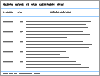
Tab.1
Two groups of periodontal clinical indices"
| 组别 | PD/mm | CAL/mm | BOP阳性位点百分比 |
|---|---|---|---|
| 牙周炎组 | 2.25(2.09,2.72) | 0.28(0.09,1.10) | 9.84(5.88,13.99) |
| 健康组 | 1.53(1.23,1.67) | 0 | 2.98(2.23,6.10) |
| U | 21.00 | 0 | 126.50 |
| Z | -5.80 | -6.63 | -3.88 |
| P | <0.001 | <0.001 | <0.001 |
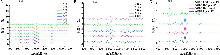
Fig.1
Filter results of detection condition"
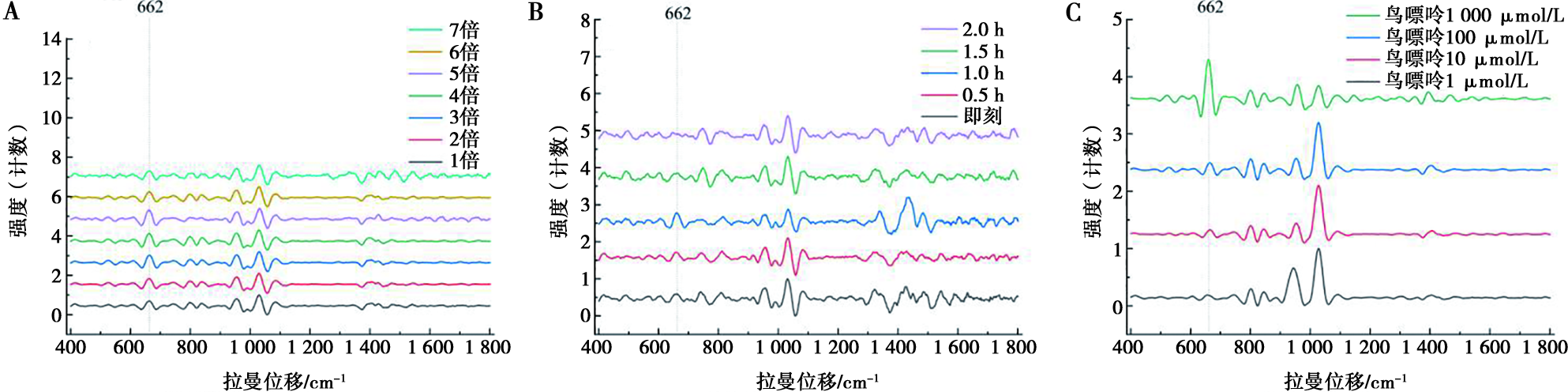
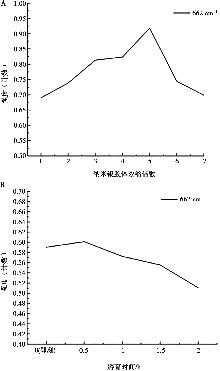
Fig.2
662 cm-1 Raman intensity"
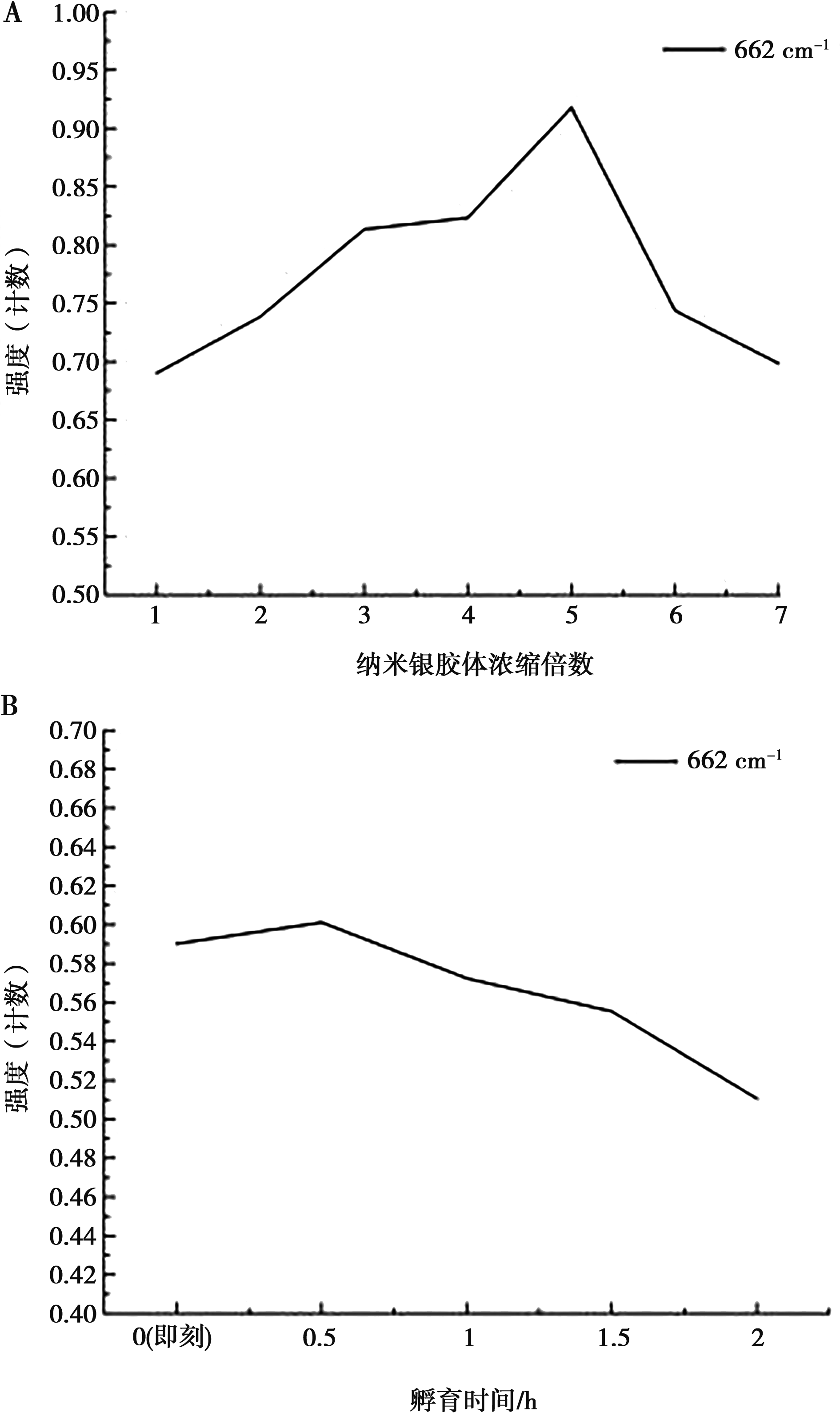
Fig.3
SERS spectra"
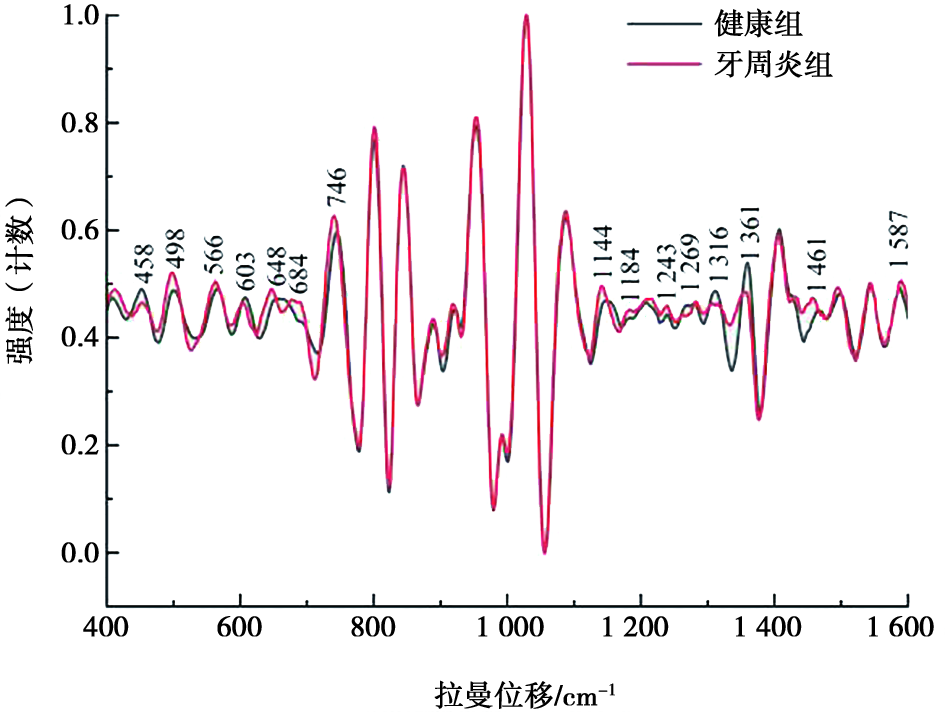
Tab.2
Intensity analysis of Raman shifts in two groups"
| 拉曼位移/cm-1 | 牙周炎组 | 健康组 | P |
|---|---|---|---|
| 458 | 0.45(0.42,0.49) | 0.47(0.45,0.49) | 0.02 |
| 498 | 0.54(0.50,0.59) | 0.49(0.47,0.52) | <0.01 |
| 566 | 0.51(0.50,0.55) | 0.49(0.47,0.51) | 0.02 |
| 603 | 0.48(0.46,0.50) | 0.47(0.46,0.49) | 0.18 |
| 648 | 0.49±0.03 | 0.47±0.02 | 0.01 |
| 684 | 0.47±0.04 | 0.44±0.03 | <0.01 |
| 746 | 0.60(0.57,0.62) | 0.57(0.55,0.60) | 0.03 |
| 1 144 | 0.49±0.07 | 0.46±0.06 | 0.15 |
| 1 184 | 0.46±0.05 | 0.44±0.04 | 0.09 |
| 1 243 | 0.44(0.40,0.46) | 0.44(0.40,0.49) | 0.26 |
| 1 269 | 0.44(0.40,0.46) | 0.44(0.40,0.49) | 0.26 |
| 1 316 | 0.48±0.09 | 0.49±0.04 | 0.85 |
| 1 361 | 0.48±0.07 | 0.54±0.05 | <0.01 |
| 1 461 | 0.47±0.03 | 0.45±0.04 | 0.01 |
| 1 587 | 0.50±0.08 | 0.50±0.09 | 0.81 |
Tab.3
Possible attribution of the material in the Raman shift material"
| 拉曼位移/cm-1 | 物质归属 |
|---|---|
| 448~461 | 谷胱甘肽[ |
| 498 | DNA[ |
| 566 | 色氨酸[ |
| 603 | 类固醇[ |
| 640~675 | 鸟嘌呤、酪氨酸[ |
| 684 | 肌酐、肌酸[ |
| 746 | 胸腺嘧啶[ |
| 1 144 | 蛋白质[ |
| 1 150~1 186 | 环结构、芳香族氨基酸、蛋白质[ |
| 1 215~1 295 | 酰胺Ⅲ(随机)、胸腺嘧啶[ |
| 1 269 | 酰胺Ⅲ[ |
| 1 315~1 325 | 酰胺Ⅲ(蛋白质)、C—H形变[ |
| 1 361 | N-乙酰氨基葡萄糖[ |
| 1 440~1 475 | CH2形变[ |
| 1 587 | L-缬氨酸[ |
Fig.4
PCA score diagram of healthy group and periodontitis group"
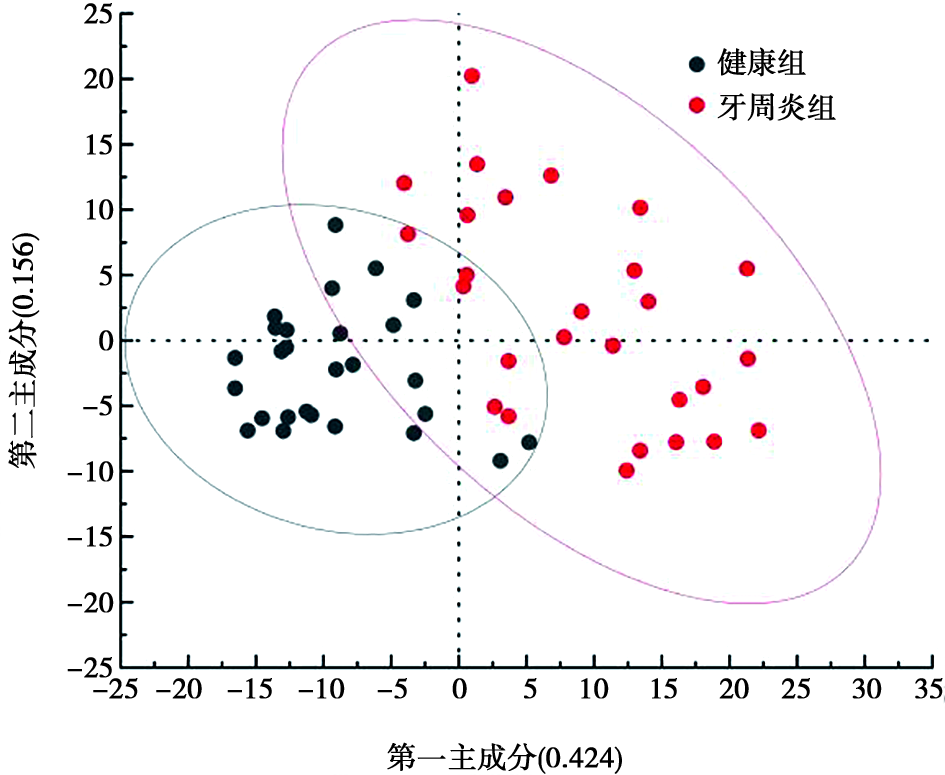
Fig.5
OPLS-DA score diagram of healthy group and periodontitis group"
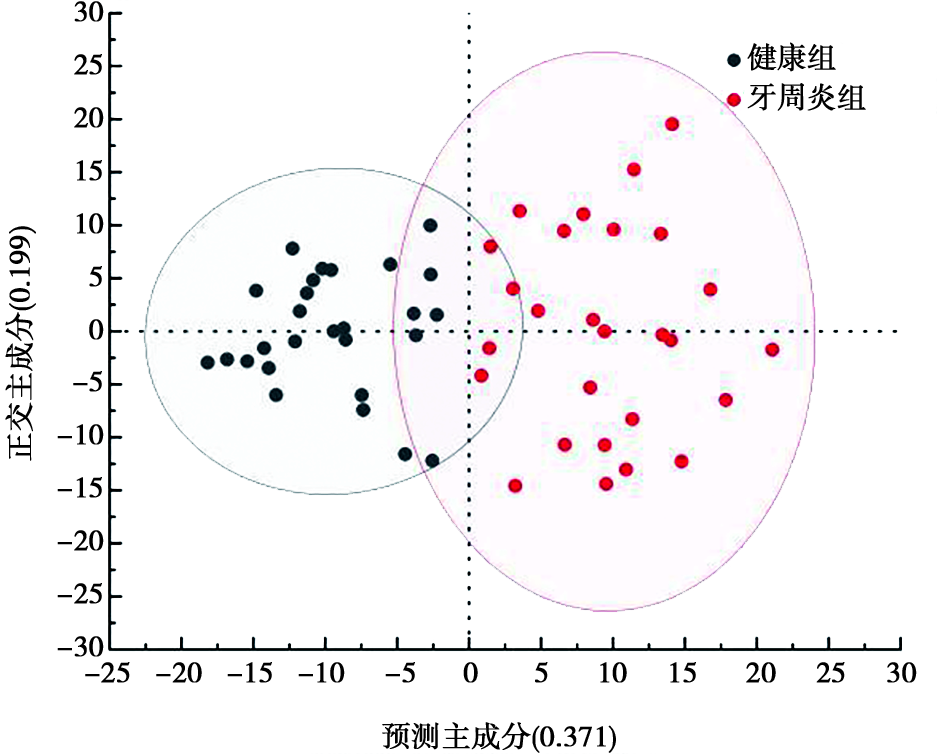
Fig.6
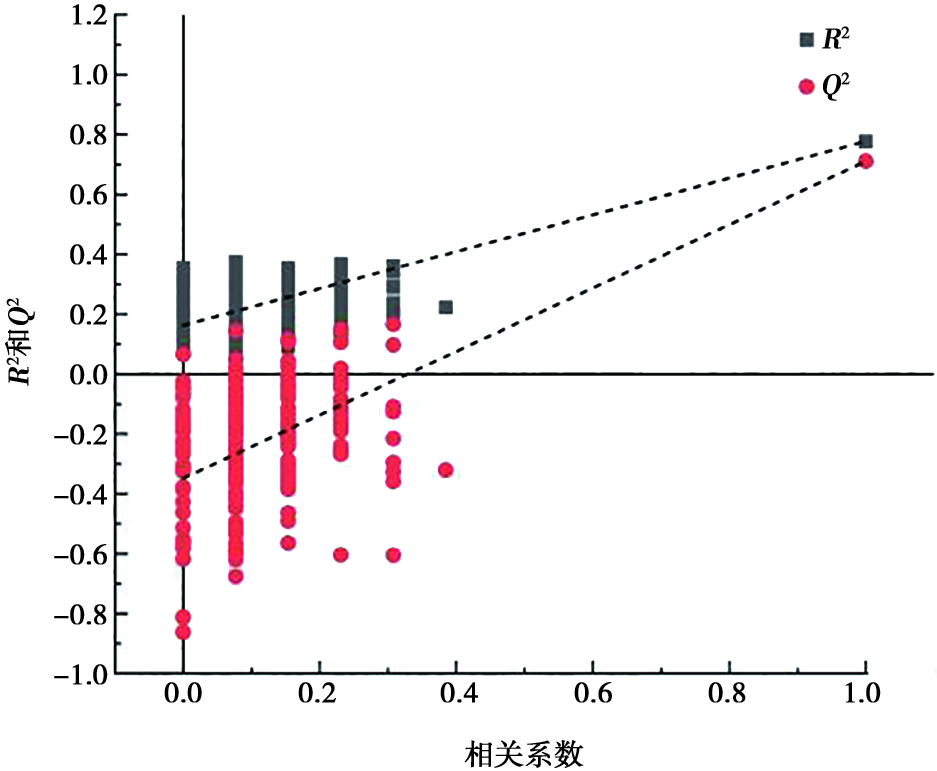
OPLS-DA model permutation test plot"
| [1] |
Nascimento GG, Alves-Costa S, Romandini M. Burden of severe periodontitis and edentulism in 2021, with projections up to 2050: The Global Burden of Disease 2021 study[J]. J Periodontal Res, 2024, 59(5): 823-867.
doi: 10.1111/jre.v59.5 |
| [2] |
Kwon T, Lamster IB, Levin L. Current concepts in the management of periodontitis[J]. Int Dent J, 2021, 71(6): 462-476.
doi: 10.1111/idj.12630 pmid: 34839889 |
| [3] |
Hajishengallis G. Interconnection of periodontal disease and comorbidities: Evidence, mechanisms, and implications[J]. Periodontol 2000, 2022, 89(1): 9-18.
doi: 10.1111/prd.12430 pmid: 35244969 |
| [4] |
Heitz-Mayfield LJA. Conventional diagnostic criteria for periodontal diseases (plaque-induced gingivitis and periodontitis)[J]. Periodontol 2000, 2024, 95(1): 10-19.
doi: 10.1111/prd.12579 pmid: 38831568 |
| [5] |
Jacobs R, Fontenele RC, Lahoud P, et al. Radiographic diagnosis of periodontal diseases: Current evidence versus innovations[J]. Periodontol 2000, 2024, 95(1): 51-69.
doi: 10.1111/prd.v95.1 |
| [6] |
Kim MJ, Chae SG, Bae SJ, et al. Unsupervised few shot learning architecture for diagnosis of periodontal disease in dental panoramic radiographs[J]. Sci Rep, 2024, 14: 23237.
doi: 10.1038/s41598-024-73665-5 pmid: 39369017 |
| [7] |
Chen IH, Lin CH, Lee MK, et al. Convolutional-neural-network-based radiographs evaluation assisting in early diagnosis of the periodontal bone loss via periapical radiograph[J]. J Dent Sci, 2024, 19(1): 550-559.
doi: 10.1016/j.jds.2023.09.032 pmid: 38303886 |
| [8] |
Zhang SY, Qi Y, Tan SPH, et al. Molecular fingerprint detection using Raman and infrared spectroscopy technologies for cancer detection: A progress review[J]. Biosensors, 2023, 13(5): 557.
doi: 10.3390/bios13050557 |
| [9] |
Itoh T, Procházka M, Dong ZC, et al. Toward a new era of SERS and TERS at the nanometer scale: From fundamentals to innovative applications[J]. Chem Rev, 2023, 123(4): 1552-1634.
doi: 10.1021/acs.chemrev.2c00316 pmid: 36745738 |
| [10] |
Ma H, Pan SQ, Wang WL, et al. Surface-enhanced Raman spectroscopy: Current understanding, challenges, and opportunities[J]. ACS Nano, 2024, 18(22): 14000-14019.
doi: 10.1021/acsnano.4c02670 |
| [11] |
Petersen M, Yu ZL, Lu XN. Application of Raman spectroscopic methods in food safety: A review[J]. Biosensors, 2021, 11(6): 187.
doi: 10.3390/bios11060187 |
| [12] |
Chen S, Wu HT, Chen C, et al. The prognostic prediction of periodontal non-surgery therapy in periodontitis patients based on surface-enhanced Raman measurements of pre-treatment saliva[J]. Spectrochim Acta Part A Mol Biomol Spectrosc, 2023, 288: 122150.
doi: 10.1016/j.saa.2022.122150 |
| [13] |
Faur CI, Dinu C, Toma V, et al. A new detection method of oral and oropharyngeal squamous cell carcinoma based on multivariate analysis of surface enhanced Raman spectra of salivary exosomes[J]. J Pers Med, 2023, 13(5): 762.
doi: 10.3390/jpm13050762 |
| [14] |
Linh VTN, Kim H, Lee MY, et al. 3D plasmonic Hexaplex paper sensor for label-free human saliva sensing and machine learning-assisted early-stage lung cancer screening[J]. Biosens Bioelectron, 2024, 244: 115779.
doi: 10.1016/j.bios.2023.115779 |
| [15] | 孟焕新. 2018年牙周病和植体周病国际新分类简介[J]. 中华口腔医学杂志, 2019, 54(2): 73-78. |
| [16] | 刘杰, 汪攀, 汤超, 等. 拉曼光谱在鉴别垂体腺瘤分泌类型中的应用[J]. 中华神经外科杂志, 2023, 39(4): 356-361. |
| [17] | 胡珊, 姜伟伟, 顾锋, 等. 表面增强拉曼光谱快速鉴定和鉴别耳念珠菌及其近缘菌[J]. 中华检验医学杂志, 2022, 45(2): 145-150. |
| [18] | 凡华. 应用拉曼光谱对鼻咽癌放射治疗急性不良反应进行评估的相关性研究[D]. 成都: 成都医学院, 2024. |
| [19] | 周清清, 郭景星, 许晴, 等. 拉曼光谱在脑胶质瘤诊疗中的研究与应用[J]. 中华核医学与分子影像杂志, 2023, 43(9): 566-570. |
| [20] |
Yang J, Chen XM, Luo CN, et al. Application of serum SERS technology combined with deep learning algorithm in the rapid diagnosis of immune diseases and chronic kidney disease[J]. Sci Rep, 2023, 13: 15719.
doi: 10.1038/s41598-023-42719-5 |
| [21] |
Stepanenko T, Sofińska K, Wilkosz N, et al. Surface-enhanced Raman scattering (SERS) and tip-enhanced Raman scattering (TERS) in label-free characterization of erythrocyte membranes and extracellular vesicles at the nano-scale and molecular level[J]. Analyst, 2024, 149(3): 778-788.
doi: 10.1039/d3an01658g pmid: 38109075 |
| [22] | 薛丽丽, 李一, 蔡巧玲, 等. 口腔黏膜鳞状细胞癌、上皮异常增生及正常黏膜组织拉曼光谱研究[J]. 中华口腔医学杂志, 2015, 50(1): 18-22. |
| [23] |
Dastgir S, Rauf S, Nawaz H, et al. Surface-enhanced Raman spectroscopy (SERS) for the analysis of cell masses of different bacterial strains including Staphylococcus aureus, Escherichia Coli, Bacillus cereus, and Pseudomonas aeruginosa[J]. Plasmonics, 2025, 20(10): 9107-9119.
doi: 10.1007/s11468-025-02960-2 |
| [24] |
De Gelder J, De Gussem K, Vandenabeele P, et al. Reference database of Raman spectra of biological molecules[J]. J Raman Spectrosc, 2007, 38(9): 1133-1147.
doi: 10.1002/jrs.v38:9 |
| [25] |
Hernández-Cedillo A, García-Valdivieso MG, Hernández-Arteaga AC, et al. Determination of sialic acid levels by using surface-enhanced Raman spectroscopy in periodontitis and gingivitis[J]. Oral Dis, 2019, 25(6): 1627-1633.
doi: 10.1111/odi.13141 pmid: 31177594 |
| [26] |
Zhu WG, Zhou Y, Guo LJ, et al. Biological function of sialic acid and sialylation in human health and disease[J]. Cell Death Discov, 2024, 10: 415.
doi: 10.1038/s41420-024-02180-3 pmid: 39349440 |
| [27] |
Fornasaro S, Berton F, Stacchi C, et al. Label-free analysis of gingival crevicular fluid (GCF) by surface enhanced Raman scattering (SERS)[J]. Analyst, 2021, 146(4): 1464-1471.
doi: 10.1039/d0an01997f pmid: 33427826 |
| [28] | 赵紫瑞, 胡乔禹, 齐霞, 等. 代谢组学技术对牙周炎生物标志物、病理机制及与全身关系的评价[J]. 中国组织工程研究, 2023, 27(26): 4239-4245. |
| [29] |
何毅, 余东升. 铁死亡在牙周炎中的研究进展[J]. 口腔疾病防治, 2024, 32(12): 963-970.
doi: 10.12016/j.issn.2096-1456.202330571 |
| [30] |
Kovalčíková AG, Novák B, Roshko O, et al. Extracellular DNA and markers of neutrophil extracellular traps in saliva from patients with periodontitis: A case-control study[J]. J Clin Med, 2024, 13(2): 468.
doi: 10.3390/jcm13020468 |
| [31] |
Balci N, Kurgan Ş, Çekici A, et al. Free amino acid composition of saliva in patients with healthy periodontium and periodontitis[J]. Clin Oral Investig, 2021, 25(6): 4175-4183.
doi: 10.1007/s00784-021-03977-7 |
| [32] |
Barnes VM, Teles R, Trivedi HM, et al. Acceleration of purine degradation by periodontal diseases[J]. J Dent Res, 2009, 88(9): 851-855.
doi: 10.1177/0022034509341967 pmid: 19767584 |
| [33] | 杨博, 张雅茹, 程碧瑶, 等. 浓度微扰下硝酸水溶液中氢键作用的二维相关拉曼光谱研究[J]. 光谱学与光谱分析, 2025, 45(4): 958-963. |
| [34] | 么远, 曹佳佳, 殷悦, 等. Er: YAG激光在糖尿病肾病并发牙周炎中的应用及对牙周状态、肾功能、龈沟液炎症因子的影响[J]. 检验医学与临床, 2026, 23(1): 101-105, 111. |
| [35] |
Dai WJ, Ye YH, Mao BY, et al. Microbiological and metabolomic analysis of biomarkers for grades A and B in stage Ⅱ periodontitis[J]. Inflammation, 2025, 48(5): 3206-3218.
doi: 10.1007/s10753-025-02260-1 |
| [36] |
Kazak L, Cohen P. Creatine metabolism: Energy homeostasis, immunity and cancer biology[J]. Nat Rev Endocrinol, 2020, 16(8): 421-436.
doi: 10.1038/s41574-020-0365-5 pmid: 32493980 |
| [37] |
蒋海云, 陈静龙, 崔小燕, 等. N-乙酰-D-氨基葡萄糖的生理功能及其在畜牧生产中的应用研究进展[J]. 动物营养学报, 2025, 37(6): 3564-3572.
doi: 10.12418/CJAN2025.293 |
| [38] |
Panneerselvam K, Rajkumar K, Kumar S, et al. Salivary metabolomics in early detection of oral squamous cell carcinoma: A meta-analysis[J]. Expert Rev Proteom, 2024, 21(7/8): 317-332.
doi: 10.1080/14789450.2024.2395398 |
| [39] |
Bel’skaya LV, Sarf EA, Solomatin DV. Age and gender characteristics of the infrared spectra of normal human saliva[J]. Appl Spectrosc, 2020, 74(5): 536-543.
doi: 10.1177/0003702819885958 pmid: 31617400 |
| [1] | SUN Xu, LI Jin, SHEN Da, WANG Xue. Relationship between apical periodontitis and local marginal alveolar bone loss: A retrospective study [J]. Stomatology, 2026, 46(8): 561-566. |
| [2] | SHAN Yifan, ZHANG Hengzhi, ZHANG Yuhang, ZHU Xianxin, JIANG Fei, LU Wei. Analysis of factors influencing changes in residual ridge height and maxillary sinus mucosal thickness in the maxillary molar region of patients with periodontitis [J]. Stomatology, 2026, 46(8): 574-581. |
| [3] | ZHANG Qunbo, LI Cheng, REN Minyi, LI Lu. Filifactor alocis exacerbates experimental periodontitis by modulating CXCL3-mediated neutrophil infiltration [J]. Stomatology, 2026, 46(7): 481-488. |
| [4] | SHANG Wenjia, YANG Fanghong, GAO Hui, DAI Bingfeng, YANG Xiaochuan. Research on the mechanism of triptolide in meliorating Fusobacterium nucleatum-related periodontitis [J]. Stomatology, 2026, 46(7): 489-494. |
| [5] | DAI Shuyue, ZHANG Xiya, CHEN Jian, ZHANG Qinyu, ZHOU Yiyi, BI Mengfei, SHEN Ming. Correlation between LAPTM5 expression and macrophage infiltration in the progression of periodontitis [J]. Stomatology, 2026, 46(7): 495-503. |
| [6] | CHEN Yu, CHEN Wenge. Research progress of PI3K/AKT/mTOR signaling pathway in adenoid cystic carcinoma [J]. Stomatology, 2026, 46(7): 549-554. |
| [7] | CHEN Jian, DAI Shuyue, ZHANG Qinyu, ZHOU Yiyi, BI Mengfei, SHEN Ming. The role of ATF6 in macrophage-mediated periodontitis progression [J]. Stomatology, 2026, 46(6): 416-421. |
| [8] | WANG Chunxiao, HUANG You, LIU Yan. Study on the effects of biological antimicrobial peptides on periodontitis factors and bone metabolism indicators [J]. Stomatology, 2026, 46(6): 422-426. |
| [9] | LI Yuanfeng, QIAN Yuanyi, HUANG Yanli, DING Peihui. Research progress of lysosome and its dysfunction in periodontitis [J]. Stomatology, 2026, 46(6): 460-465. |
| [10] | LONG Yulin, LI Qingcun, YIN Guoqiang, BAO Yaoguang, GE Liming, MU Changdao, XU Zhilang, LI Defu. Application and exploration of hydrogels in the repair of periodontitis-induced bone defects [J]. Stomatology, 2026, 46(5): 395-400. |
| [11] | CHEN Yingyu, LIU Mao, HU Yuheng, CAO Dan, GU Minfen, HU Danyan, WU Bin, YAN Bin. A study on the compositional differences of healthy and periodontitis-affected alveolar bone based on Raman spectroscopy [J]. Stomatology, 2026, 46(4): 241-245. |
| [12] | HAN Dong, YANG Shuhan, YU Xinhong, XIE Weili. The role of cimifugin in regulating macrophage polarization in periodontitis [J]. Stomatology, 2026, 46(4): 246-252. |
| [13] | ZHANG Kewei, WANG Feiyang, LI Jiaojiao, YANG Chen, CHEN Wu, LI Lin, SHI Wenhui, CHEN Xiaomei, WANG Xiaoqian. Study on clinical effect of digital occlusal guided periodontal splint for periodontitis patients with loose teeth [J]. Stomatology, 2026, 46(4): 253-259. |
| [14] | LING Feng, ZHANG Yuchao, HU Lingran, TIAN Yinglin, JIN Jiayi, GAO Yunru, FU Yu. A case of secretory carcinoma in the anterior tongue [J]. Stomatology, 2026, 46(4): 300-304. |
| [15] | GAO Han, ZHOU Yue. Research progress of PKM2-mediated regulatory pathways in periodontitis [J]. Stomatology, 2026, 46(2): 148-151. |
| Viewed | ||||||
|
Full text |
|
|||||
|
Abstract |
|
|||||
