
Stomatology ›› 2025, Vol. 45 ›› Issue (12): 887-894.doi: 10.13591/j.cnki.kqyx.2025.12.002
• Basic and Clinical Research • Previous Articles Next Articles
FAN Yadan, SONG Zhongchen, LIAO Yue, CHENG Lan( ), GE Linhua()
Received:2025-01-02
Online:2025-12-28
Published:2025-12-16
Contact:
CHENG Lan, GE Linhua
E-mail:chenglan920@126.com;lilyge2015@163.com
CLC Number:
FAN Yadan, SONG Zhongchen, LIAO Yue, CHENG Lan, GE Linhua. Alterations and metabolic function in subgingival microbiome in Stage Ⅲ/Ⅳ periodontitis patients with uncontrolled type 2 diabetes mellitus[J]. Stomatology, 2025, 45(12): 887-894.
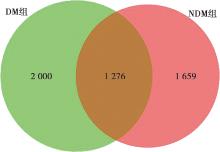
Fig.1
Venn diagram"
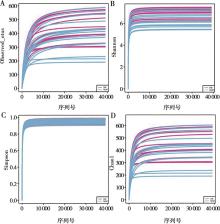
Fig.2
Alpha diversity"

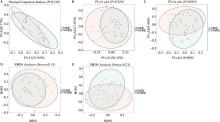
Fig.3
Beta diversity"
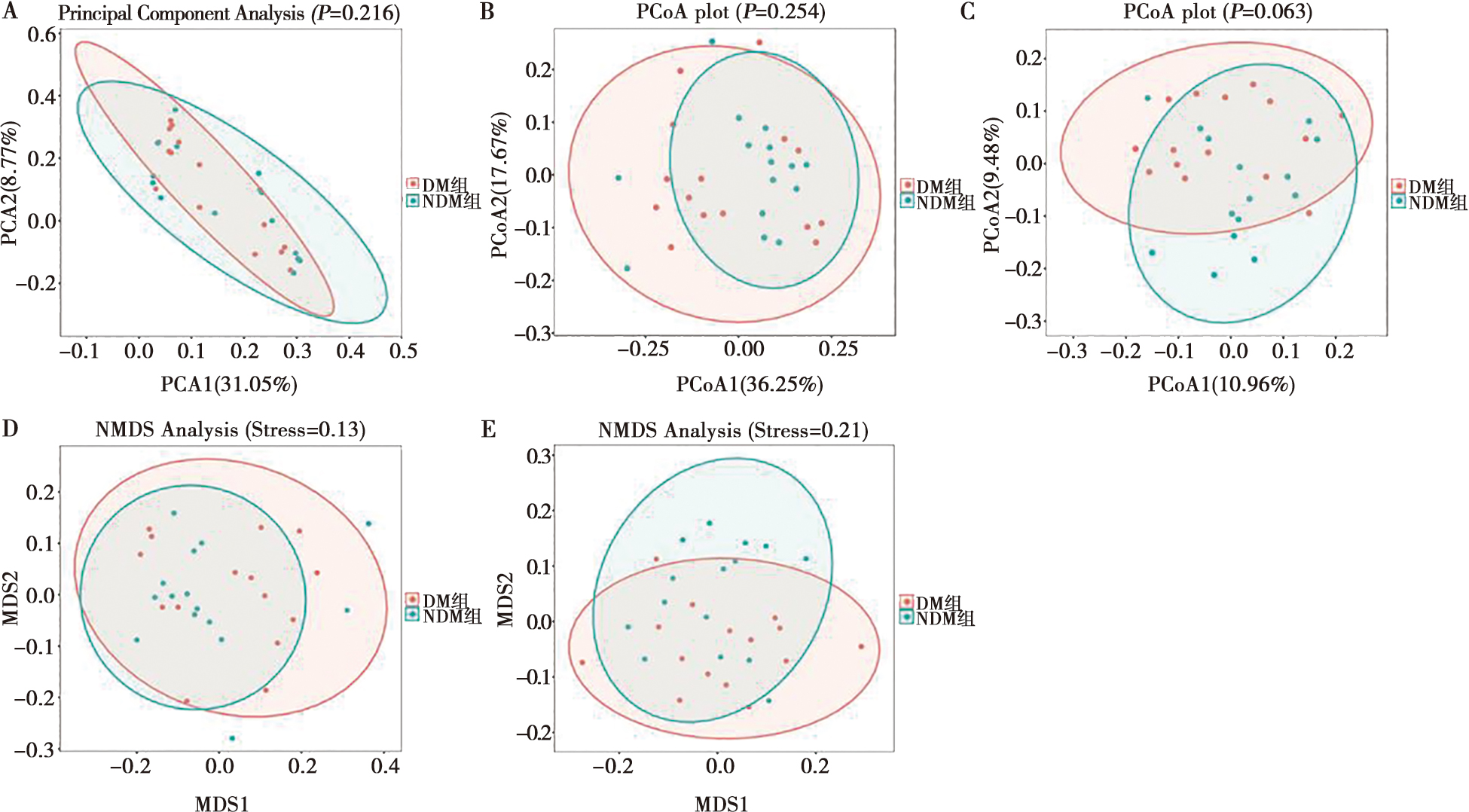
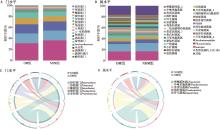
Fig.4
The relative abundance of subgingival microbiota at the phylum and genus levels"

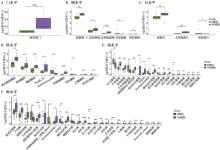
Fig.5
Analysis of the subgingival microbiota composition at different levels between two groups"

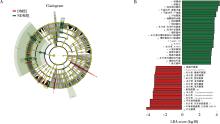
Fig. 6
LEfSe analysis of the changes of subgingival microbiota in group DM and NDM"
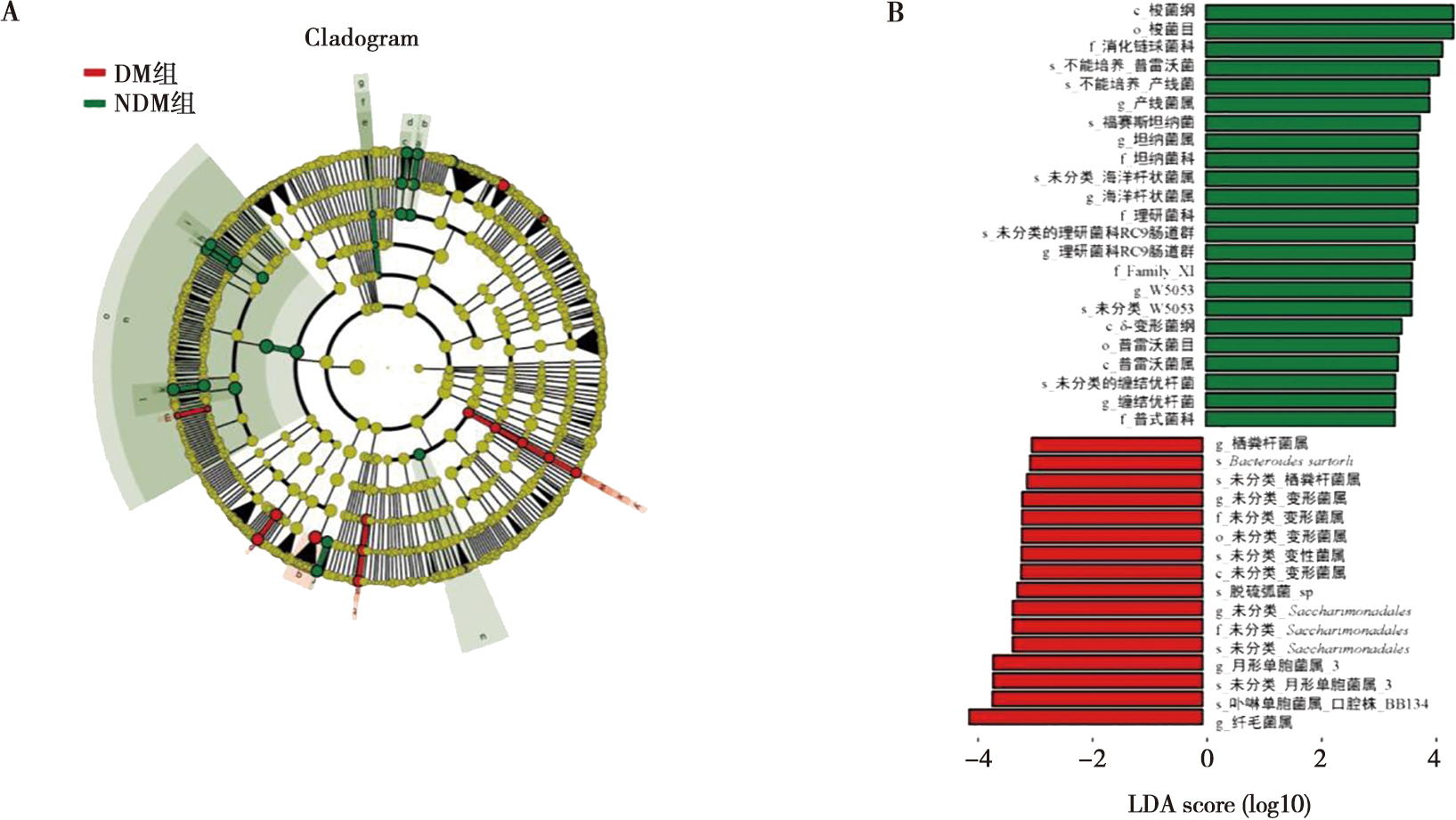
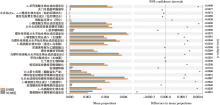
Fig.7
STAMP difference analysis of pathway prediction"

| [1] |
Genco RJ, Graziani F, Hasturk H. Effects of periodontal disease on glycemic control, complications, and incidence of diabetes mellitus[J]. Periodontol 2000, 2020, 83(1): 59-65.
doi: 10.1111/prd.12271 pmid: 32385875 |
| [2] | Chinese Diabetes Society. Guideline for the prevention and treatment of type 2 diabetes mellitus in China(2020 edition)[J]. Chin J Diabetes Mellitus, 2021(13): 315-409. |
| [3] |
Stojilković M, Gušić I, Prodanović D, et al. Awareness of physicians and dentists in Serbia about the association between periodontitis and systemic diseases: A cross-sectional study[J]. BMC Oral Health, 2023, 23(1): 449.
doi: 10.1186/s12903-023-03143-3 pmid: 37408017 |
| [4] | Jepsen S, Caton JG, Albandar JM, et al. Periodontal manifestations of systemic diseases and developmental and acquired conditions: Consensus report of workgroup 3 of the 2017 World Workshop on the Classification of Periodontal and Peri-Implant Diseases and Conditions[J]. J Periodontol, 2018, 89(Suppl 1): S237-S248. |
| [5] |
Zhou M, Rong RC, Munro D, et al. Investigation of the effect of type 2 diabetes mellitus on subgingival plaque microbiota by high-throughput 16S rDNA pyrosequencing[J]. PLoS One, 2013, 8(4): e61516.
doi: 10.1371/journal.pone.0061516 |
| [6] |
Merchant AT, Shrestha D, Chaisson C, et al. Association between serum antibodies to oral microorganisms and hyperglycemia in adults[J]. J Dent Res, 2014, 93(8): 752-759.
doi: 10.1177/0022034514538451 pmid: 24943202 |
| [7] |
Chopra A, Jayasinghe TN, Eberhard J. Are inflamed periodontal tissues endogenous source of advanced glycation end-products (AGEs) in individuals with and without diabetes mellitus: A systematic review[J]. Biomolecules, 2022, 12(5): 642.
doi: 10.3390/biom12050642 |
| [8] |
Cole JB, Florez JC. Genetics of diabetes mellitus and diabetes complications[J]. Nat Rev Nephrol, 2020, 16(7): 377-390.
doi: 10.1038/s41581-020-0278-5 pmid: 32398868 |
| [9] |
Mauri-Obradors E, Merlos A, Estrugo-Devesa A, et al. Benefits of non-surgical periodontal treatment in patients with type 2 diabetes mellitus and chronic periodontitis: A randomized controlled trial[J]. J Clin Periodontol, 2018, 45(3): 345-353.
doi: 10.1111/jcpe.12858 pmid: 29265454 |
| [10] |
Callahan BJ, McMurdie PJ, Rosen MJ, et al. DADA2: High-resolution sample inference from Illumina amplicon data[J]. Nat Methods, 2016, 13(7): 581-583.
doi: 10.1038/nmeth.3869 pmid: 27214047 |
| [11] |
Bolyen E, Rideout JR, Dillon MR, et al. Author Correction: Reproducible, interactive, scalable and extensible microbiome data science using QIIME 2[J]. Nat Biotechnol, 2019, 37(9): 1091.
doi: 10.1038/s41587-019-0252-6 pmid: 31399723 |
| [12] | Rognes T, Flouri T, Nichols B, et al. VSEARCH: A versatile open source tool for metagenomics[J]. Peer J, 2016, 4: e2584. |
| [13] |
Caporaso JG, Kuczynski J, Stombaugh J, et al. QIIME allows analysis of high-throughput community sequencing data[J]. Nat Methods, 2010, 7(5): 335-336.
doi: 10.1038/nmeth.f.303 pmid: 20383131 |
| [14] | Segata N, Izard J, Waldron L, et al. Metagenomic biomarker discovery and explanation[J]. Genome Biol, 2011, 12(6): R60. |
| [15] |
Krzywinski M, Schein J, Birol I, et al. Circos: An information aesthetic for comparative genomics[J]. Genome Res, 2009, 19(9): 1639-1645.
doi: 10.1101/gr.092759.109 pmid: 19541911 |
| [16] |
Friedman J, Alm EJ. Inferring correlation networks from genomic survey data[J]. PLoS Comput Biol, 2012, 8(9): e1002687.
doi: 10.1371/journal.pcbi.1002687 |
| [17] |
Douglas GM, Maffei VJ, Zaneveld JR, et al. PICRUSt2 for prediction of metagenome functions[J]. Nat Biotechnol, 2020, 38(6): 685-688.
doi: 10.1038/s41587-020-0548-6 pmid: 32483366 |
| [18] |
Bitencourt FV, Nascimento GG, Costa SA, et al. Co-occurrence of periodontitis and diabetes-related complications[J]. J Dent Res, 2023, 102(10): 1088-1097.
doi: 10.1177/00220345231179897 |
| [19] |
Polak D, Shapira L. An update on the evidence for pathogenic mechanisms that may link periodontitis and diabetes[J]. J Clin Periodontol, 2018, 45(2): 150-166.
doi: 10.1111/jcpe.12803 pmid: 29280184 |
| [20] |
Ganesan SM, Joshi V, Fellows M, et al. A tale of two risks: Smoking, diabetes and the subgingival microbiome[J]. ISME J, 2017, 11(9): 2075-2089.
doi: 10.1038/ismej.2017.73 pmid: 28534880 |
| [21] |
Miranda TS, Feres M, Retamal-Valdés B, et al. Influence of glycemic control on the levels of subgingival periodontal pathogens in patients with generalized chronic periodontitis and type 2 diabetes[J]. J Appl Oral Sci, 2017, 25(1): 82-89.
doi: S1678-77572017000100082 pmid: 28198980 |
| [22] |
Qin H, Li GY, Xu XH, et al. The role of oral microbiome in periodontitis under diabetes mellitus[J]. J Oral Microbiol, 2022, 14(1): 2078031.
doi: 10.1080/20002297.2022.2078031 |
| [23] |
Guo WC, Song YC, Sun Y, et al. Systemic immune-inflammation index is associated with diabetic kidney disease in Type 2 diabetes mellitus patients: Evidence from NHANES 2011-2018[J]. Front Endocrinol (Lausanne), 2022, 13: 1071465.
doi: 10.3389/fendo.2022.1071465 |
| [24] |
Pirih FQ, Monajemzadeh S, Singh N, et al. Association between metabolic syndrome and periodontitis: The role of lipids, inflammatory cytokines, altered host response, and the microbiome[J]. Periodontol 2000, 2021, 87(1): 50-75.
doi: 10.1111/prd.12379 pmid: 34463996 |
| [25] |
Balmasova IP, Olekhnovich EI, Klimina KM, et al. Drift of the subgingival periodontal microbiome during chronic periodontitis in type 2 diabetes mellitus patients[J]. Pathogens, 2021, 10(5): 504.
doi: 10.3390/pathogens10050504 |
| [26] |
Chen JL, Wang H, Bu SS, et al. Alterations in subgingival microbiome and advanced glycation end-products levels in periodontitis with and without type 1 diabetes mellitus: A cross-sectional study[J]. BMC Oral Health, 2024, 24(1): 1344.
doi: 10.1186/s12903-024-05089-6 pmid: 39501226 |
| [27] |
Thurnheer T, Bensland S, Eick S, et al. Antibiotic resistance among Fusobacterium, Capnocytophaga, and Leptotrichia species of the oral cavity[J]. Oral Health Prev Dent, 2023, 21: 93-102.
doi: 10.3290/j.ohpd.b4009553 pmid: 37014213 |
| [28] |
Cho H, Ren Z, Divaris K, et al. Selenomonas sputigena acts as a pathobiont mediating spatial structure and biofilm virulence in early childhood caries[J]. Nat Commun, 2023, 14(1): 2919.
doi: 10.1038/s41467-023-38346-3 |
| [29] | 姜明露, 范伟, 刘春霞, 等. 龈下菌斑中微生物与2型糖尿病患者牙周炎的相关性研究[J]. 实用口腔医学杂志, 2024, 40(6):840-848. |
| [30] |
Matuszczak E, Cwalina I, Tylicka M, et al. Levels of selected matrix metalloproteinases-MMP-1, MMP-2 and fibronectin in the saliva of patients planned for endodontic treatment or surgical extraction[J]. J Clin Med, 2020, 9(12): 3971.
doi: 10.3390/jcm9123971 |
| [31] |
Belstrøm D, Constancias F, Drautz-Moses DI, et al. Periodontitis associates with species-specific gene expression of the oral microbiota[J]. NPJ Biofilms Microbiomes, 2021, 7(1): 76.
doi: 10.1038/s41522-021-00247-y |
| [32] |
Liebsch C, Pitchika V, Pink C, et al. The saliva metabolome in association to oral health status[J]. J Dent Res, 2019, 98(6): 642-651.
doi: 10.1177/0022034519842853 pmid: 31026179 |
| [33] |
Favale N, Farina R, Carrieri A, et al. Functional profile of oral plaque microbiome: Further insight into the bidirectional relationship between type 2 diabetes and periodontitis[J]. Mol Oral Microbiol, 2024, 39(2): 62-79.
doi: 10.1111/omi.v39.2 |
| Viewed | ||||||
|
Full text |
|
|||||
|
Abstract |
|
|||||
