
Stomatology ›› 2025, Vol. 45 ›› Issue (12): 901-908.doi: 10.13591/j.cnki.kqyx.2025.12.004
• Basic and Clinical Research • Previous Articles Next Articles
ZHANG Tingting1, LI Xiao2,3( ), FENG Dajun1, MA Yan1, TAN Jun2, LIU Li4
Received:2024-12-20
Online:2025-12-28
Published:2025-12-16
Contact:
LI Xiao
E-mail:drlixiao@16.com
CLC Number:
ZHANG Tingting, LI Xiao, FENG Dajun, MA Yan, TAN Jun, LIU Li. Biological evaluation and study on antibacterial properties of TiO2 nanotubes loaded baicalin-chitosan composite coating[J]. Stomatology, 2025, 45(12): 901-908.
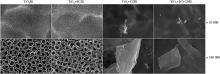
Fig.1
Morphology of different groups of titanium by SEM scanning"
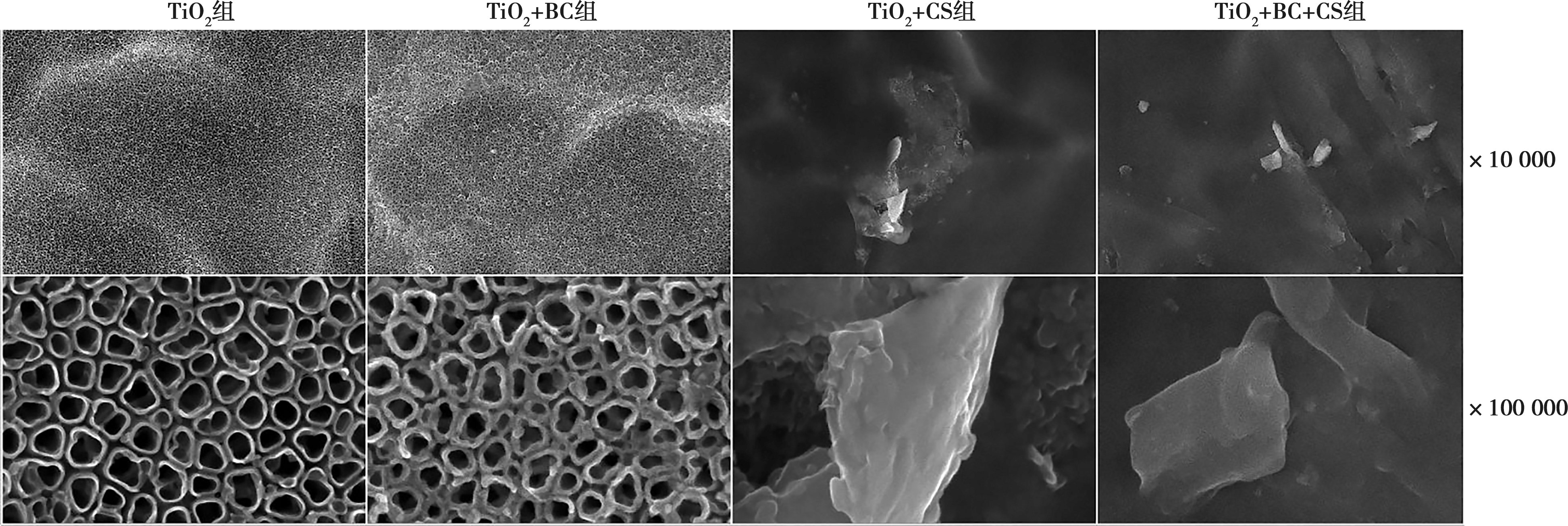
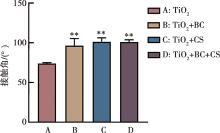
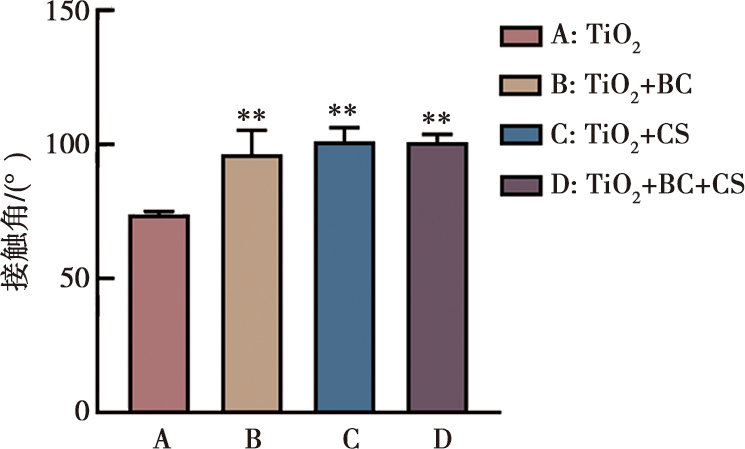
Fig.2
Contact angle of different groups"
Tab.1
Baicalin release concentrations of TiO2+BC group and TiO2+BC+CS group at different time intervals n=3,μg/mL"
| 组别 | 2 h | 8 h | 12 h | 24 h | 72 h | 120 h | 168 h |
|---|---|---|---|---|---|---|---|
| TiO2+BC组 | 17.170±2.129 | 6.790±1.187 | 0.561±0.207 | 0.500±0.278 | 0.164±0.132 | 0 | 0 |
| TiO2+BC+CS组 | 11.288±2.689 | 5.597±0.487 | 2.511±0.050 | 1.581±0.271 | 0.919±0.182 | 0.305±0.097 | 0.222±0.101 |
| P | 0.041 | 0.183 | 0.001 | 0.009 | 0.004 |
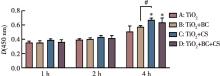
Fig.3
Difference of BMSCs adhesion between different titanium plates"
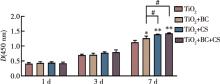
Fig.4
Difference of BMSCs proliferation between different groups of titanium"
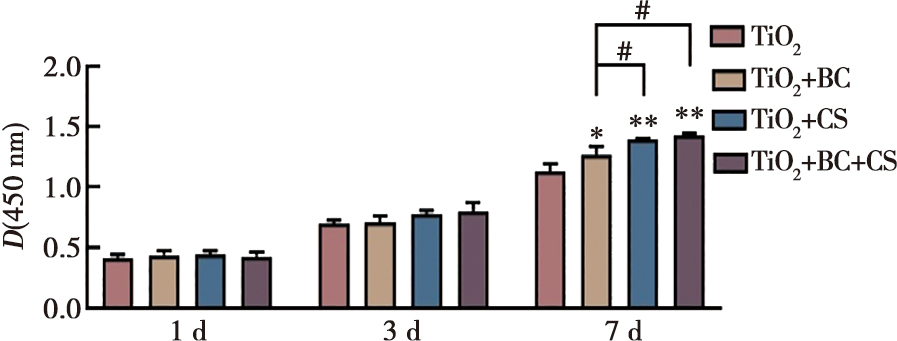
Fig.5
Live & dead cell staining of BMSCs on the surface of various titanium plates"
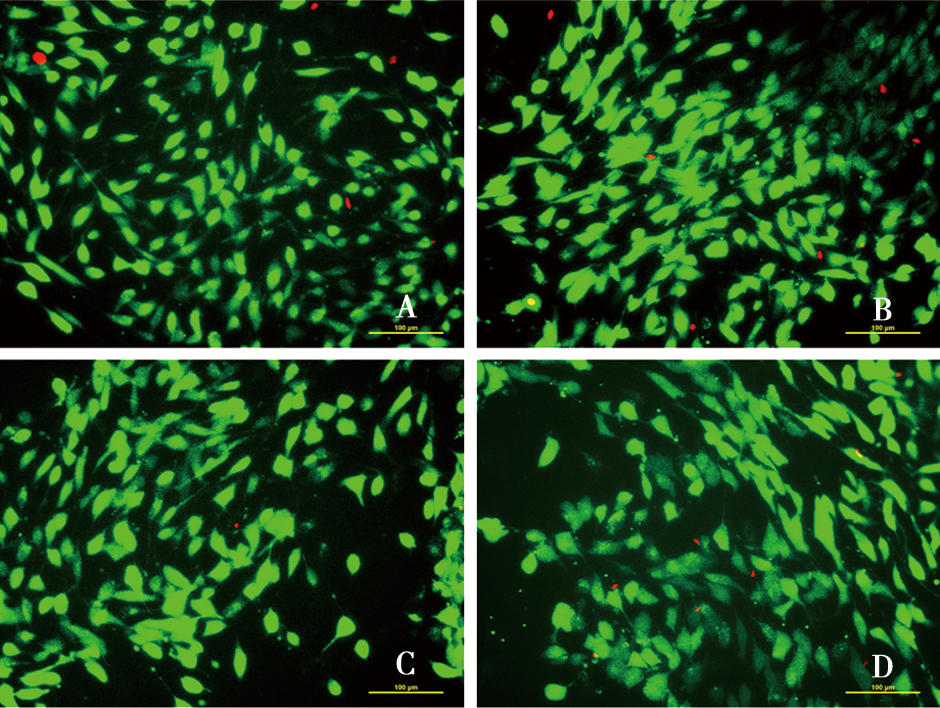
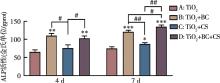
Fig.6
The ALP activity on the surface of various titanium plates at day 4 and day 7"
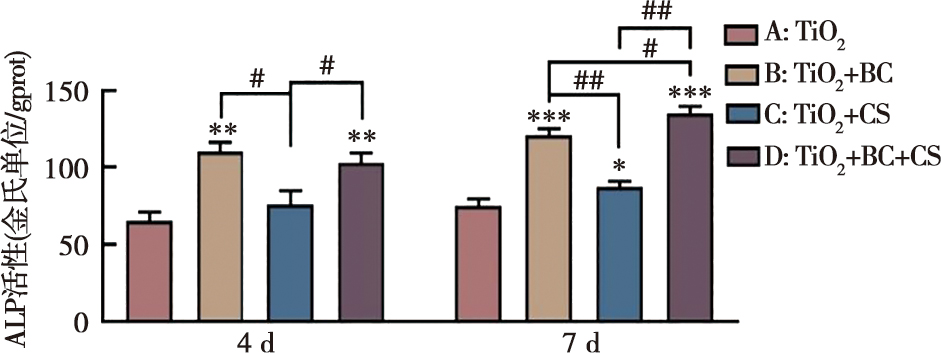
Fig.7
Alizarin Red S staining picture after osteogenic induction and quantification of cell mineralization on the surface of titanium after osteogenic induction"
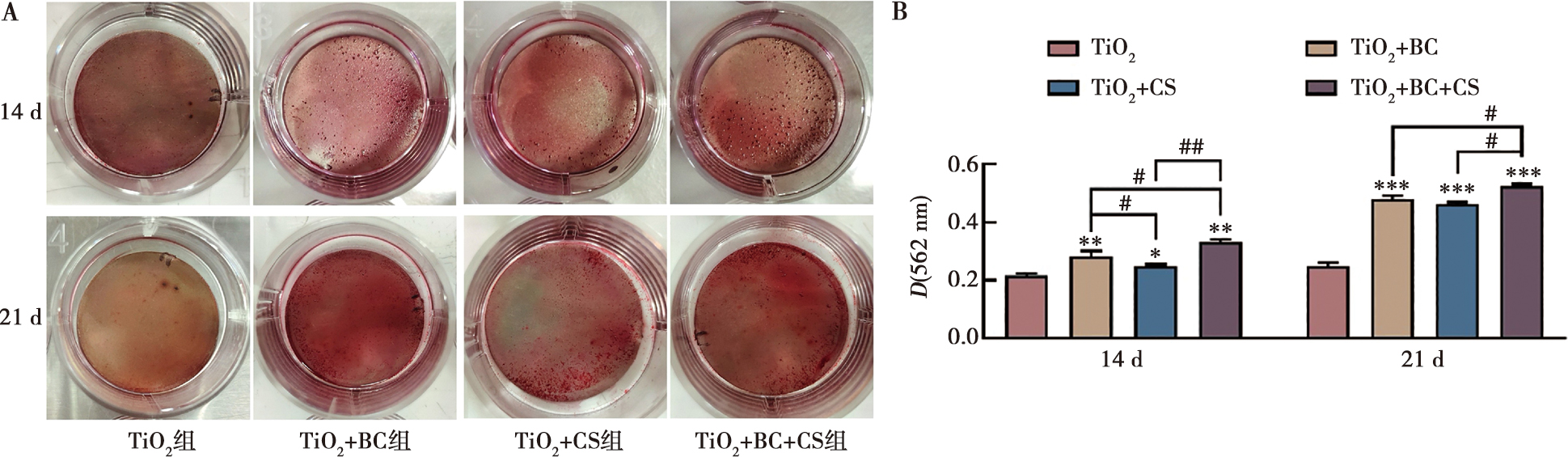
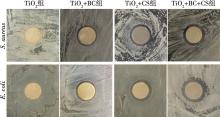
Fig.8
Pictures of antibacterial ring"
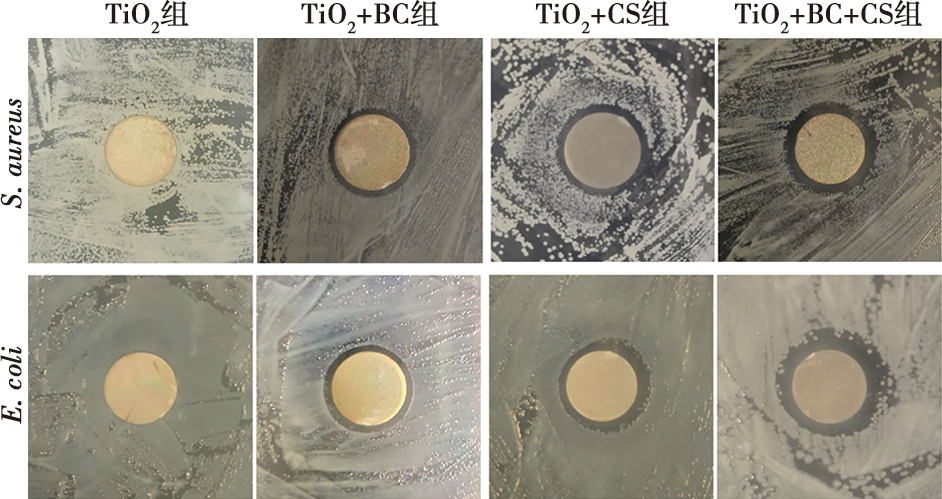
Fig.9
Images and results of viability test on the surface of different samples"
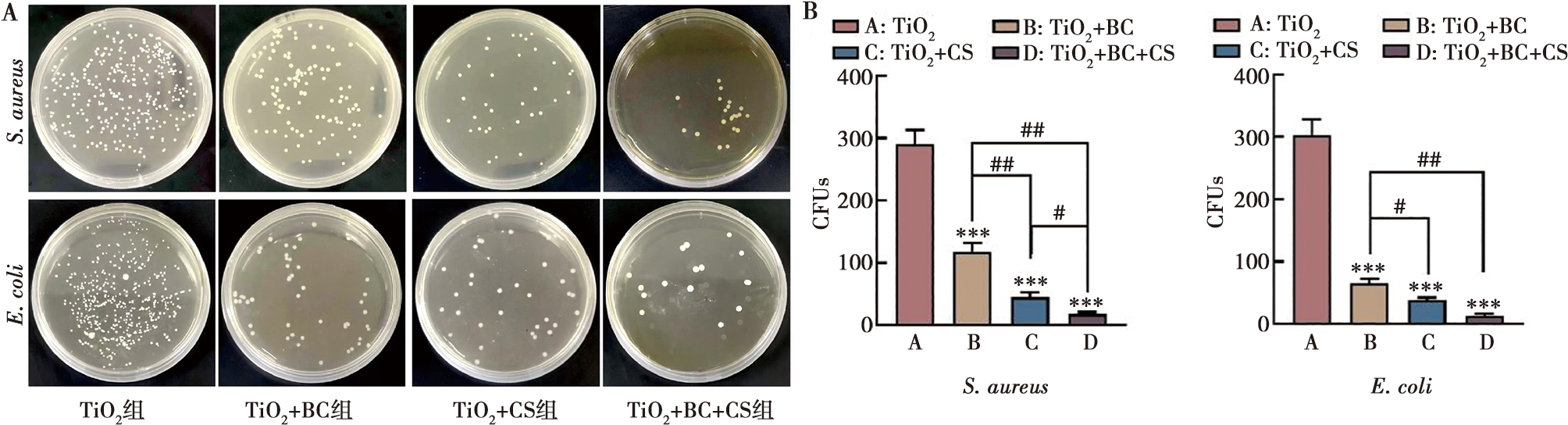

Fig.10
Bacterial proliferation of titanium sheets co-cultured with S. aureus or E. coli in each group at different time points"

| [1] |
Stich T, Alagboso F, Křenek T,et al. Implant-bone-interface: Reviewing the impact of titanium surface modifications on osteogenic processes and in vivo[J]. Bioeng Transl Med, 2021, 7(1): e10239.
doi: 10.1002/btm2.v7.1 |
| [2] | Pozzi A, Polizzi G, Moy PK. Guided surgery with tooth-supported templates for single missing teeth: A critical review[J]. Eur J Oral Implantol, 2016, 9(Suppl 1): S135-S153. |
| [3] |
Menini M, Bagnasco F, Calimodio I, et al. Influence of implant thread morphology on primary stability: A prospective clinical study[J]. Biomed Res Int, 2020, 2020: 6974050.
doi: 10.1155/bmri.v2020.1 |
| [4] | Fugazzotto PA. Success and failure rates of osseointegrated implants in function in regenerated bone for 72 to 133 months[J]. Int J Oral Maxillofac Implants, 2005, 20(1): 77-83. |
| [5] |
Souza JCM, Sordi MB, Kanazawa M, et al. Nano-scale modification of titanium implant surfaces to enhance osseointegration[J]. Acta Biomater, 2019, 94: 112-131.
doi: S1742-7061(19)30372-1 pmid: 31128320 |
| [6] |
Liu XM, Li M, Zhu YZ, et al. The modulation of stem cell behaviors by functionalized nanoceramic coatings on Ti-based implants[J]. Bioact Mater, 2016, 1(1): 65-76.
doi: 10.1016/j.bioactmat.2016.09.001 pmid: 29744396 |
| [7] |
Fu JH, Wang HL. Breaking the wave of peri-implantitis[J]. Periodontol 2000, 2020, 84(1): 145-160.
doi: 10.1111/prd.v84.1 |
| [8] | Jepsen S, Berglundh T, Genco R, et al. Primary prevention of peri-implantitis: Managing peri-implant mucositis[J]. J Clin Periodontol, 2015, 42(Suppl 16): S152-S157. |
| [9] | Mombelli A, Hashim D, Cionca N. What is the impact of titanium particles and biocorrosion on implant survival and complications? A critical review[J]. Clin Oral Implants Res, 2018, 29(Suppl 18): 37-53. |
| [10] |
Qasim M, Chae DS, Lee NY. Advancements and frontiers in nano-based 3D and 4D scaffolds for bone and cartilage tissue engineering[J]. Int J Nanomedicine, 2019, 14: 4333-4351.
doi: 10.2147/IJN |
| [11] |
Cui JJ, Xia LG, Lin KL, et al. construction of a nano-structured akermanite coating for promoting bone formation and osseointegra-tion of Ti-6Al-4V implants in a rabbit osteoporosis model[J]. J Mater Chem B, 2021, 9(46): 9505-9513.
doi: 10.1039/D1TB01917A |
| [12] |
Zeng WW, Cheng NM, Liang X, et al. Electrospun polycaprolact-one nanofibrous membranes loaded with baicalin for antibacterial wound dressing[J]. Sci Rep, 2022, 12(1): 10900.
doi: 10.1038/s41598-022-13141-0 |
| [13] |
Guo AJY, Choi RCY, Cheung AWH, et al. Baicalin, a flavone, induces the differentiation of cultured osteoblasts: An action the Wnt/beta-catenin signaling pathway[J]. J Biol Chem, 2011, 286(32): 27882-27893.
doi: 10.1074/jbc.M111.236281 |
| [14] |
Ding FY, Nie Z, Deng HB, et al. Antibacterial hydrogel coating by electrophoretic co-deposition of chitosan/alkynyl chitosan[J]. Carbohydr Polym, 2013, 98(2): 1547-1552.
doi: 10.1016/j.carbpol.2013.07.042 |
| [15] | Husain S, Al-Samadani KH, Najeeb S, et al. Chitosan biomateri-als for current and potential dental applications[J]. Materials(Basel), 2017, 10(6): 602. |
| [16] |
Yang CC, Lin CC, Liao JW, et al. Vancomycin-chitosan compo-site deposited on post porous hydroxyapatite coated Ti6Al4V implant for drug controlled release[J]. Mater Sci Eng C Mater Biol Appl, 2013, 33(4): 2203-2212.
doi: 10.1016/j.msec.2013.01.038 |
| [17] |
Liu Y, Rath B, Tingart M, et al. Role of implants surface modification in osseointegration: A systematic review[J]. J Biomed Mater Res A, 2020, 108(3): 470-484.
doi: 10.1002/jbm.a.36829 pmid: 31664764 |
| [18] |
Hanawa T. Titanium-tissue interface reaction and its control with surface treatment[J]. Front Bioeng Biotechnol, 2019, 7: 170.
doi: 10.3389/fbioe.2019.00170 pmid: 31380361 |
| [19] |
Jafari S, Mahyad B, Hashemzadeh H, et al. Biomedical applications of TiO2 nanostructures: Recent advances[J]. Int J Nanomedicine, 2020, 15: 3447-3470.
doi: 10.2147/IJN.S249441 |
| [20] |
Li X, Chen T, Hu J, et al. Modified surface morphology of a novel Ti-24Nb-4Zr-7.9Sn titanium alloy anodic oxidation for enhanced interfacial biocompatibility and osseointegration[J]. Colloids Surf B Biointerfaces, 2016, 144: 265-275.
doi: 10.1016/j.colsurfb.2016.04.020 |
| [21] |
Maher S, Mazinani A, Barati MR, et al. Engineered titanium implants for localized drug delivery: Recent advances and perspectives of Titania nanotubes arrays[J]. Expert Opin Drug Deliv, 2018, 15(10): 1021-1037.
doi: 10.1080/17425247.2018.1517743 pmid: 30259776 |
| [22] |
Cai JC, Yang K, Xu H, et al. Improved drug incorporation and osteogenic effect of baicalin coating on different modified titanium surfaces[J]. J Mater Res, 2023, 38(5): 1364-1376.
doi: 10.1557/s43578-023-00895-0 |
| [23] |
Chen YR, Zhou YL, Yang SY, et al. Novel bone substitute composed of chitosan and strontium-doped α-calcium sulfate hemihydrate: Fabrication, characterisation and evaluation of biocompatibility[J]. Mater Sci Eng C Mater Biol Appl, 2016, 66: 84-91.
doi: 10.1016/j.msec.2016.04.070 |
| [24] |
Singh RK, Awasthi S, Dhayalan A, et al. Deposition, structure, physical and in vitro characteristics of Ag-doped β-Ca3(PO4)2/chitosan hybrid composite coatings on Titanium metal[J]. Mater Sci Eng C Mater Biol Appl, 2016, 62: 692-701.
doi: 10.1016/j.msec.2016.02.013 |
| [25] |
Chen LR, Bai MX, Du RY, et al. The non-viral vectors and main methods of loading siRNA onto the titanium implants and their application[J]. J Biomater Sci Polym Ed, 2020, 31(16): 2152-2168.
doi: 10.1080/09205063.2020.1793706 |
| [26] |
Olivares-Navarrete R, Hyzy SL, Haithcock DA, et al. Coordinated regulation of mesenchymal stem cell differentiation on microstructured titanium surfaces by endogenous bone morphogenetic proteins[J]. Bone, 2015, 73: 208-216.
doi: 10.1016/j.bone.2014.12.057 pmid: 25554602 |
| [27] |
Kumar Roy M, Nakahara K, Na TV, et al. Baicalein, a flavonoid extracted from a methanolic extract of Oroxylum indicum inhibits proliferation of a cancer cell line induction of apoptosis[J]. Pharmazie, 2007, 62(2): 149-153.
pmid: 17341037 |
| [28] |
Lu L, Rao L, Jia HH, et al. Baicalin positively regulates osteoclast function by activating MAPK/Mitf signalling[J]. J Cell Mol Med, 2017, 21(7): 1361-1372.
doi: 10.1111/jcmm.13066 pmid: 28158928 |
| [29] |
Karimi S, Salahinejad E, Sharifi E, et al. Bioperformance of chitosan/fluoride-doped diopside nanocomposite coatings deposited on medical stainless steel[J]. Carbohydr Polym, 2018, 202: 600-610.
doi: 10.1016/j.carbpol.2018.09.022 |
| [30] |
Chen WZ, Xu K, Tao BL, et al. Multilayered coating of titanium implants promotes coupled osteogenesis and angiogenesis and in vivo[J]. Acta Biomater, 2018, 74: 489-504.
doi: 10.1016/j.actbio.2018.04.043 |
| [31] | Hjalmarsson L, Gheisarifar M, Jemt T. A systematic review of survival of single implants as presented in longitudinal studies with a follow-up of at least 10 years[J]. Eur J Oral Implantol, 2016, 9(Suppl 1): S155-S162. |
| [32] |
Smeets R, Henningsen A, Jung O, et al. Definition, etiology, prevention and treatment of peri-implantitis: A review[J]. Head Face Med, 2014, 10: 34.
doi: 10.1186/1746-160X-10-34 pmid: 25185675 |
| [33] | Alshammari H, Neilands J, Svensäter G, et al. Antimicrobial potential of strontium hydroxide on bacteria associated with peri-implantitis[J]. Antibiotics(Basel), 2021, 10(2): 150. |
| [34] |
Leonhardt A, Dahlén G, Renvert S. Five-year clinical, microbiological, and radiological outcome following treatment of peri-implantitis in man[J]. J Periodontol, 2003, 74(10): 1415-1422.
pmid: 14653386 |
| [35] |
Zhang PS, Guo Q, Wei ZH, et al. Baicalin represses type three secretion system of Pseudomonas aeruginosa through PQS system[J]. Molecules, 2021, 26(6): 1497.
doi: 10.3390/molecules26061497 |
| [36] |
Friedman AJ, Phan J, Schairer DO, et al. Antimicrobial and anti-inflammatory activity of chitosan-alginate nanoparticles: A targeted therapy for cutaneous pathogens[J]. J Invest Dermatol, 2013, 133(5): 1231-1239.
doi: 10.1038/jid.2012.399 pmid: 23190896 |
| [37] |
Blecher K, Nasir A, Friedman A. The growing role of nanotechnology in combating infectious disease[J]. Virulence, 2011, 2(5): 395-401.
doi: 10.4161/viru.2.5.17035 pmid: 21921677 |
| [38] |
Pelgrift RY, Friedman AJ. Nanotechnology as a therapeutic tool to combat microbial resistance[J]. Adv Drug Deliv Rev, 2013, 65(13/14): 1803-1815.
doi: 10.1016/j.addr.2013.07.011 |
| [39] |
Ghimire N, Foss BL, Sun YY, et al. Interactions among osteoblas-tic cells, Staphylococcus aureus, and chitosan-immobilized titanium implants in a postoperative coculture system: A study[J]. J Biomed Mater Res A, 2016, 104(3): 586-594.
doi: 10.1002/jbm.a.v104.3 |
| Viewed | ||||||
|
Full text |
|
|||||
|
Abstract |
|
|||||
