
Stomatology ›› 2026, Vol. 46 ›› Issue (7): 481-488.doi: 10.13591/j.cnki.kqyx.2026.07.001
• Basic and Clinical Research • Next Articles
ZHANG Qunbo1,2,3, LI Cheng1,2,3, REN Minyi1,2,3, LI Lu1,2,3
Received:2026-01-09
Online:2026-07-28
Published:2026-07-23
CLC Number:
ZHANG Qunbo, LI Cheng, REN Minyi, LI Lu. Filifactor alocis exacerbates experimental periodontitis by modulating CXCL3-mediated neutrophil infiltration[J]. Stomatology, 2026, 46(7): 481-488.
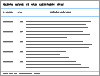
Tab.1
Primer sequences"
| 基因名称 | 引物序列(5'—3') |
|---|---|
| CXCL1 | F:CTTGCCTCAATCCTGCATCCC R:GAACAGCCACCAGTGAGCTTC |
| CXCL2 | F:CCAAACCGAAGTCATAGCCACA R:CTTCTGGTCAGTTGGATTTGCCAT |
| CXCL3 | F:GCCCAAACCGAAGTCATAGCC R:CTCTCCTGTCAGTTGGTGCTC |
| CXCL5 | F:CAGACCACGCAAGGAGTTCA R:TCTTCAGGGAGGCTACCACT |
| CXCL6 | F:CCTGAAGAACGGGAAGCAAG R:AGAAAACTGCTCCGCTGAAG |
| CXCL8 | F:TCAGAGACAGCAGAGCACAC R:GTTCTTTAGCACTCCTTGGCAAA |
| CXCL16 | F:CTCCTGCTGGTGTACCTGAC R:AGGAGCTGGAACCTCGTGTA |
| TNF-α | F:CAGCCTCTTCTCCTTCCTGAT R:GCCAGAGGGCTGATTAGAGA |
| IL-1β | F:TACCTCTCCTGCGTGTTGAA R:TCTTTGGGTAATTTTTGGGATCT |
| IL-6 | F:ACTCACCTCTTCAGAACGAATTG R:CCATCTTTGGAAGGTTCAGGTTG |
| CCL2 | F:CCCCAGTCACCTGCTGTTAT R:CCACAATGGTCTTGAAGATCAC |
| GAPDH | F:CTTTGGTATCGTGGAAGGACTC R:GTAGAGGCAGGGATGATGTTC |
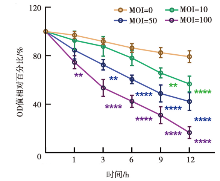
Fig.1
Cytotoxicity of F. alocis on neutrophils assessed by CCK-8 assay"
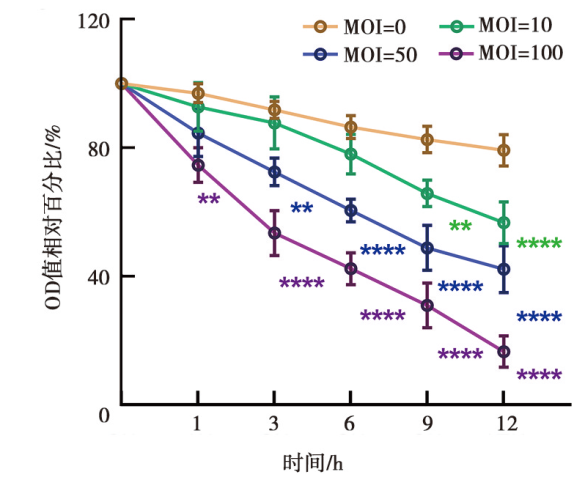
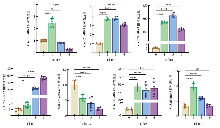
Fig.2
Analysis of chemokine expression in neutrophils by RT-qPCR ns:P>0.05;***:P<0.001;****:P<0.000 1。"
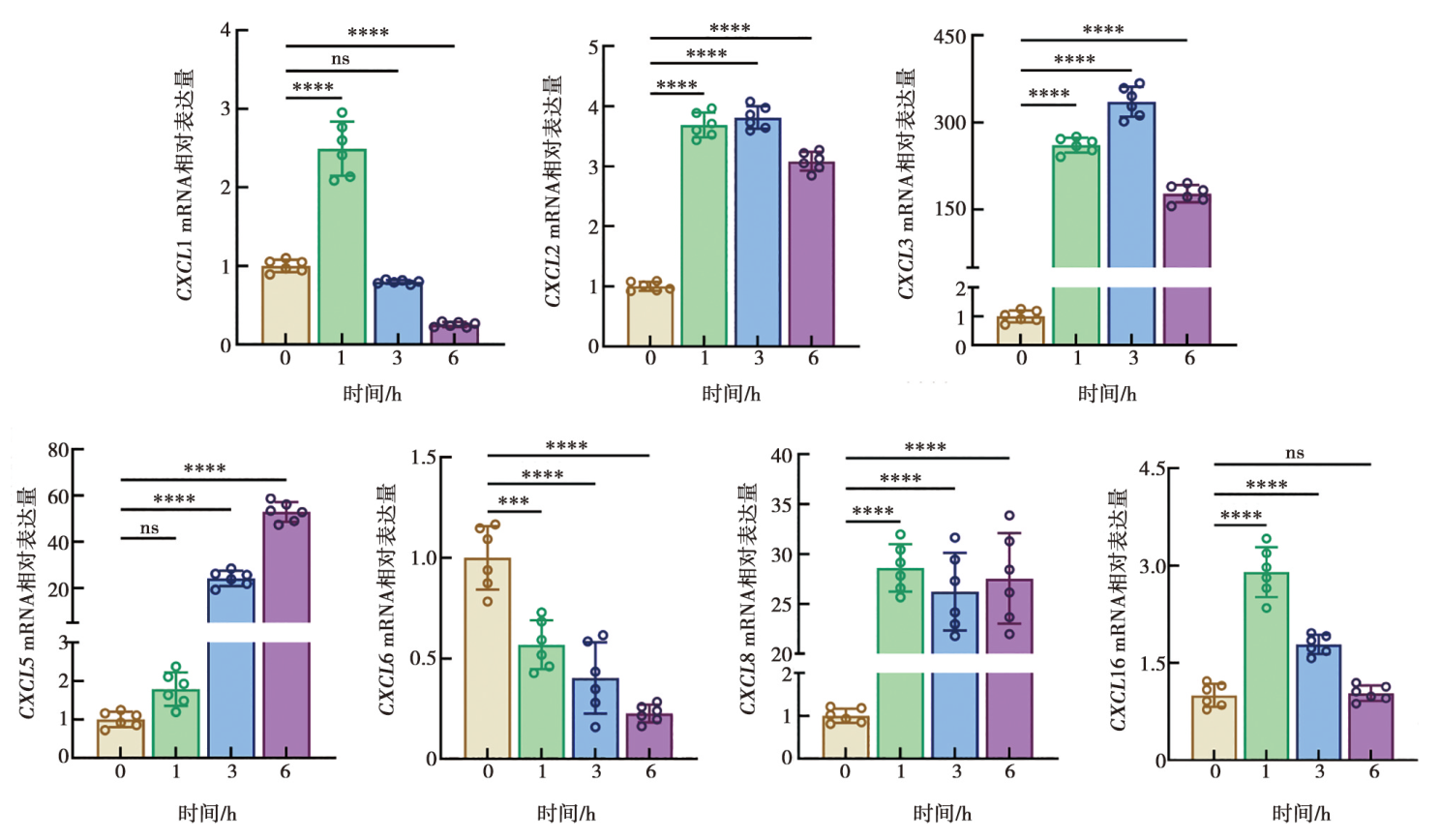
Fig.3
Analysis of inflammatory factor expression in neutrophils by RT-qPCR ns:P>0.05;*:P<0.05;***:P<0.001;****:P<0.000 1。"
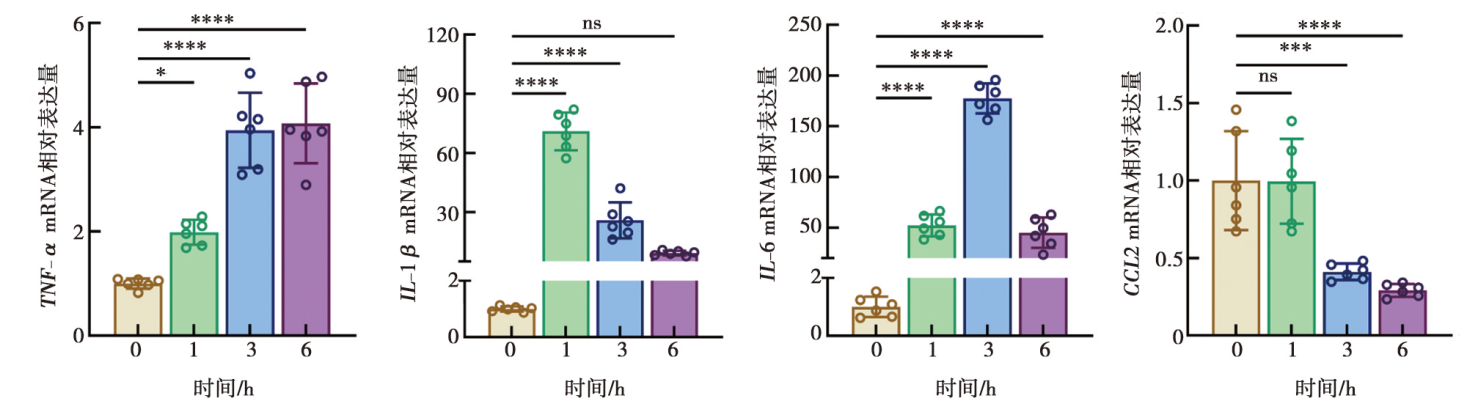
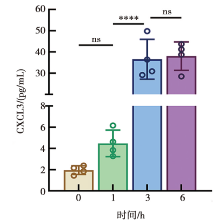
Fig.4
Quantification of CXCL3 secretion from neutrophils by ELISA ns:P>0.05;****:P<0.000 1。"
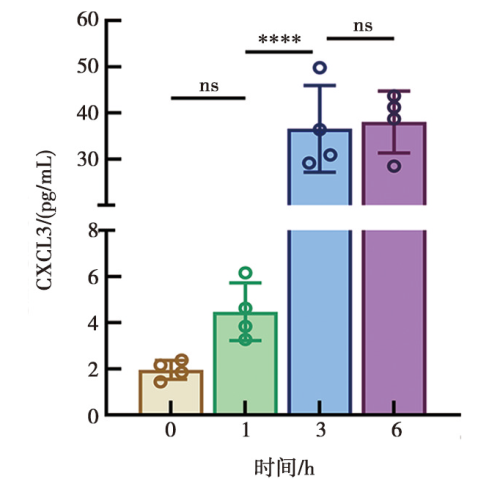
Fig.5
Immunofluorescence analysis of CXCL3 in neutrophils under different treatments"
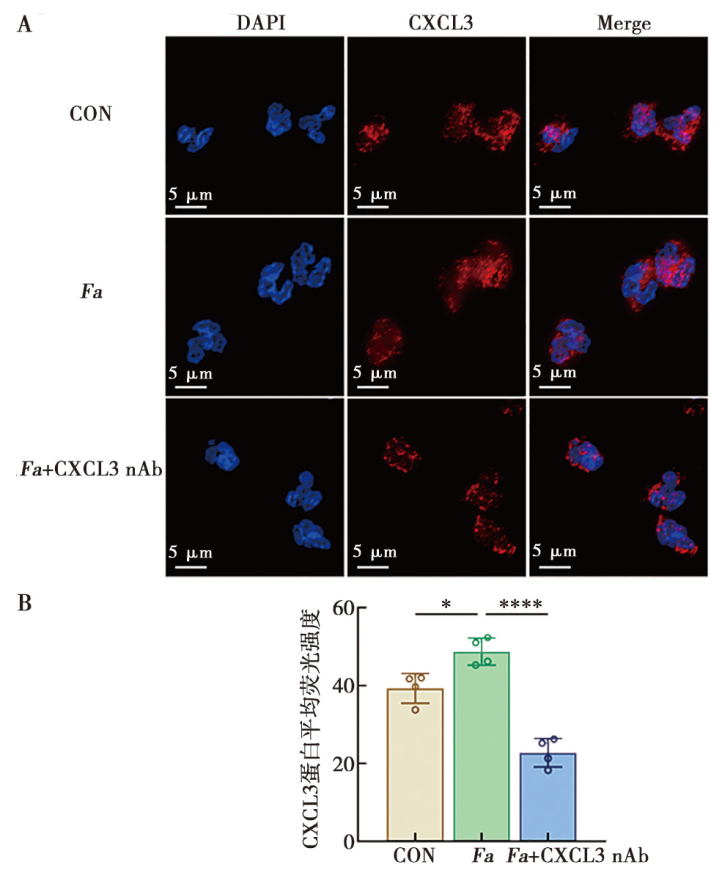
Fig.6
Assessment of neutrophil chemotaxis by cell migration assay"
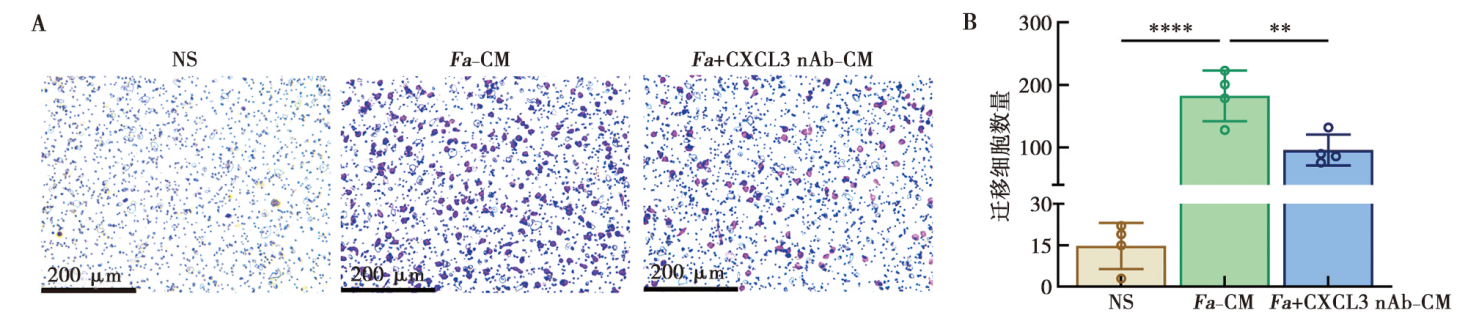
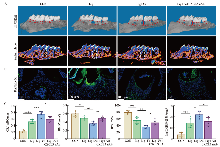
Fig.7
Effect of F. alocis infection on alveolar bone loss in mice with experimental periodontitis in vivo"

| [1] |
Hajishengallis G. Periodontitis: From microbial immune subversion to systemic inflammation[J]. Nat Rev Immunol, 2015, 15(1): 30-44.
doi: 10.1038/nri3785 pmid: 25534621 |
| [2] |
Aja E, Mangar M, Fletcher HM, et al. Filifactor alocis: Recent insights and advances[J]. J Dent Res, 2021, 100(8): 790-797.
doi: 10.1177/00220345211000656 |
| [3] |
Aruni AW, Mishra A, Dou YT, et al. Filifactor alocis: A new emerging periodontal pathogen[J]. Microbes Infect, 2015, 17(7): 517-530.
doi: 10.1016/j.micinf.2015.03.011 |
| [4] |
Oscarsson J, Claesson R, Bao K, et al. Phylogenetic analysis of Filifactor alocis strains isolated from several oral infections identified a novel RTX toxin, FtxA[J]. Toxins, 2020, 12(11): 687.
doi: 10.3390/toxins12110687 |
| [5] |
Jusko M, Miedziak B, Ermert D, et al. FACIN, a double-edged sword of the emerging periodontal pathogen Filifactor alocis: A metabolic enzyme moonlighting as a complement inhibitor[J]. J Immunol, 2016, 197(8): 3245-3259.
doi: 10.4049/jimmunol.1600739 |
| [6] |
Mishra A, Aja E, Fletcher HM. Role of superoxide reductase FA796 in oxidative stress resistance in Filifactor alocis[J]. Sci Rep, 2020, 10: 9178.
doi: 10.1038/s41598-020-65806-3 |
| [7] |
Kim HY, Lim Y, An SJ, et al. Characterization and immunostimulatory activity of extracellular vesicles from Filifactor alocis[J]. Mol Oral Microbiol, 2020, 35(1): 1-9.
doi: 10.1111/omi.v35.1 |
| [8] |
Kim HY, Song MK, Gho YS, et al. Extracellular vesicles derived from the periodontal pathogen Filifactor alocis induce systemic bone loss through Toll-like receptor 2[J]. J Extracell Vesicles, 2021, 10(12): e12157.
doi: 10.1002/jev2.v10.12 |
| [9] |
Song MK, Kim HY, Choi BK, et al. Filifactor alocis-derived extracellular vesicles inhibit osteogenesis through TLR2 signaling[J]. Mol Oral Microbiol, 2020, 35(5): 202-210.
doi: 10.1111/omi.v35.5 |
| [10] |
Yoo HJ, Lee SH. Virulence of Filifactor alocis lipoteichoic acid on human gingival fibroblast[J]. Arch Oral Biol, 2022, 135: 105370.
doi: 10.1016/j.archoralbio.2022.105370 |
| [11] | Zhang J, Chen BY, Zhi MF, et al. Linking oral microbiota to periodontitis and hypertension unveils that Filifactor alocis aggravates hypertension via infiltration of interferon-γ+ T cells[J]. m Systems, 2025, 10(6): e00084-e00025. |
| [12] | 王雪奎, 孙瑶. 中性粒细胞与牙周炎关系的研究进展[J]. 口腔医学, 2024, 44(4): 292-296. |
| [13] |
Qiu W, Guo RM, Yu HW, et al. Single-cell atlas of human gingiva unveils a NETs-related neutrophil subpopulation regulating periodontal immunity[J]. J Adv Res, 2025, 72: 287-301.
doi: 10.1016/j.jare.2024.07.028 |
| [14] |
Song J, Zhang YN, Bai YY, et al. The deubiquitinase OTUD1 suppresses secretory neutrophil polarization and ameliorates immunopathology of periodontitis[J]. Adv Sci, 2023, 10(30): 2303207.
doi: 10.1002/advs.v10.30 |
| [15] |
Capucetti A, Albano F, Bonecchi R. Multiple roles for chemokines in neutrophil biology[J]. Front Immunol, 2020, 11: 1259.
doi: 10.3389/fimmu.2020.01259 pmid: 32733442 |
| [16] |
Dahlstrand Rudin A, Khamzeh A, Venkatakrishnan V, et al. Porphyromonas gingivalis produce neutrophil specific chemoattractants including short chain fatty acids[J]. Front Cell Infect Microbiol, 2021, 10: 620681.
doi: 10.3389/fcimb.2020.620681 |
| [17] |
Vashishta A, Li L, Srivastava S, et al. Filifactor alocis pathogenicity requires TLR2 and the oral microbiome[J]. J Dent Res, 2025, 104(11): 1248-1256.
doi: 10.1177/00220345251331959 |
| [18] |
Miralda I, Vashishta A, Rogers MN, et al. Whole transcriptome analysis reveals that Filifactor alocis modulates TNFα-stimulated MAPK activation in human neutrophils[J]. Front Immunol, 2020, 11: 497.
doi: 10.3389/fimmu.2020.00497 pmid: 32373107 |
| [19] |
Yao YF, Yin YJ, Shuai FY, et al. M2 macrophage-derived extracellular vesicles reprogram immature neutrophils into Anxa1hi neutrophils to enhance inflamed bone regeneration[J]. Adv Sci, 2025, 12(28): 2416159.
doi: 10.1002/advs.v12.28 |
| [20] |
Chen H, Liu Y, Zhang MH, et al. A Filifactor alocis-centered co-occurrence group associates with periodontitis across different oral habitats[J]. Sci Rep, 2015, 5: 9053.
doi: 10.1038/srep09053 pmid: 25761675 |
| [21] |
Nogueira AVB, Nokhbehsaim M, Damanaki A, et al. Filifactor alocis and tumor necrosis factor-alpha stimulate synthesis of visfatin by human macrophages[J]. Int J Mol Sci, 2021, 22(3): 1235.
doi: 10.3390/ijms22031235 |
| [22] |
Gutierrez LS, Zandim-Barcelos DL, Eick S, et al. Possible immunomodulatory role of Filifactor alocis through beta-defensin 2 in gingival keratinocytes[J]. Clin Oral Investig, 2024, 28(12): 658.
doi: 10.1007/s00784-024-06043-0 |
| [23] |
Cardisciani M, Di Nicolantonio S, Altamura S, et al. Temporal dynamics of early inflammatory markers after professional dental cleaning: A meta-analysis and spline-based meta-regression of TNF-α, IL-1β, IL-6, and (hs)CRP[J]. Front Immunol, 2025, 16: 1634622.
doi: 10.3389/fimmu.2025.1634622 |
| [24] |
Adamik J, Wang KZQ, Unlu S, et al. Distinct mechanisms for induction and tolerance regulate the immediate early genes encoding interleukin 1β and tumor necrosis factor α[J]. PLoS One, 2013, 8(8): e70622.
doi: 10.1371/journal.pone.0070622 |
| [25] |
Lee A, Qiao Y, Grigoriev G, et al. Tumor necrosis factor α induces sustained signaling and a prolonged and unremitting inflammatory response in rheumatoid arthritis synovial fibroblasts[J]. Arthritis Rheum, 2013, 65(4): 928-938.
doi: 10.1002/art.v65.4 |
| [26] |
Kalliolias GD, Ivashkiv LB. TNF biology, pathogenic mechanisms and emerging therapeutic strategies[J]. Nat Rev Rheumatol, 2016, 12(1): 49-62.
doi: 10.1038/nrrheum.2015.169 pmid: 26656660 |
| [27] | Fu LL, Yin CH, Zhao Q, et al. CD81+ senescent-like fibroblasts exaggerate inflammation and activate neutrophils via C3/C3aR1 axis in periodontitis[J]. eLife, 2025, 13: RP96908. |
| [28] |
Sokulsky LA, Garcia-Netto K, Nguyen TH, et al. A critical role for the CXCL3/CXCL5/CXCR2 neutrophilic chemotactic axis in the regulation of type 2 responses in a model of rhinoviral-induced asthma exacerbation[J]. J Immunol, 2020, 205(9): 2468-2478.
doi: 10.4049/jimmunol.1901350 pmid: 32948685 |
| [29] |
Wang HH, Zhang BY, Li RQ, et al. KIAA1199 drives immune suppression to promote colorectal cancer liver metastasis by modulating neutrophil infiltration[J]. Hepatology, 2022, 76(4): 967-981.
doi: 10.1002/hep.32383 pmid: 35108400 |
| [30] |
Szmydynger-Chodobska J, Strazielle N, Zink BJ, et al. The role of the choroid plexus in neutrophil invasion after traumatic brain injury[J]. J Cereb Blood Flow Metab, 2009, 29(9): 1503-1516.
doi: 10.1038/jcbfm.2009.71 |
| [31] |
Qian J, Tao Q, Shen Y, et al. Periodontitis salivary microbiota exacerbates colitis by CXCL3 derived from gut microbiota-induced macrophages[J]. Microbiome, 2025, 13(1): 255.
doi: 10.1186/s40168-025-02218-3 |
| [32] |
Armstrong CL, Miralda I, Neff AC, et al. Filifactor alocis promotes neutrophil degranulation and chemotactic activity[J]. Infect Immun, 2016, 84(12): 3423-3433.
pmid: 27647870 |
| [33] |
Zhao YF, Zuo ZA, Li ZY, et al. Integrated multi-omics profiling reveals neutrophil extracellular traps potentiate aortic dissection progression[J]. Nat Commun, 2024, 15(1): 10736.
doi: 10.1038/s41467-024-55038-8 |
| [34] |
Miralda I, Vashishta A, Uriarte SM. Neutrophil interaction with emerging oral pathogens: A novel view of the disease paradigm[J]. Adv Exp Med Biol, 2019, 1197: 165-178.
doi: 10.1007/978-3-030-28524-1_12 pmid: 31732941 |
| [1] | SHANG Wenjia, YANG Fanghong, GAO Hui, DAI Bingfeng, YANG Xiaochuan. Research on the mechanism of triptolide in meliorating Fusobacterium nucleatum-related periodontitis [J]. Stomatology, 2026, 46(7): 489-494. |
| [2] | DAI Shuyue, ZHANG Xiya, CHEN Jian, ZHANG Qinyu, ZHOU Yiyi, BI Mengfei, SHEN Ming. Correlation between LAPTM5 expression and macrophage infiltration in the progression of periodontitis [J]. Stomatology, 2026, 46(7): 495-503. |
| [3] | CHEN Jian, DAI Shuyue, ZHANG Qinyu, ZHOU Yiyi, BI Mengfei, SHEN Ming. The role of ATF6 in macrophage-mediated periodontitis progression [J]. Stomatology, 2026, 46(6): 416-421. |
| [4] | WANG Chunxiao, HUANG You, LIU Yan. Study on the effects of biological antimicrobial peptides on periodontitis factors and bone metabolism indicators [J]. Stomatology, 2026, 46(6): 422-426. |
| [5] | LI Yuanfeng, QIAN Yuanyi, HUANG Yanli, DING Peihui. Research progress of lysosome and its dysfunction in periodontitis [J]. Stomatology, 2026, 46(6): 460-465. |
| [6] | LONG Yulin, LI Qingcun, YIN Guoqiang, BAO Yaoguang, GE Liming, MU Changdao, XU Zhilang, LI Defu. Application and exploration of hydrogels in the repair of periodontitis-induced bone defects [J]. Stomatology, 2026, 46(5): 395-400. |
| [7] | CHEN Yingyu, LIU Mao, HU Yuheng, CAO Dan, GU Minfen, HU Danyan, WU Bin, YAN Bin. A study on the compositional differences of healthy and periodontitis-affected alveolar bone based on Raman spectroscopy [J]. Stomatology, 2026, 46(4): 241-245. |
| [8] | HAN Dong, YANG Shuhan, YU Xinhong, XIE Weili. The role of cimifugin in regulating macrophage polarization in periodontitis [J]. Stomatology, 2026, 46(4): 246-252. |
| [9] | ZHANG Kewei, WANG Feiyang, LI Jiaojiao, YANG Chen, CHEN Wu, LI Lin, SHI Wenhui, CHEN Xiaomei, WANG Xiaoqian. Study on clinical effect of digital occlusal guided periodontal splint for periodontitis patients with loose teeth [J]. Stomatology, 2026, 46(4): 253-259. |
| [10] | GAO Han, ZHOU Yue. Research progress of PKM2-mediated regulatory pathways in periodontitis [J]. Stomatology, 2026, 46(2): 148-151. |
| [11] | SHEN Weiwei, ZHONG Liangjun. Progress of research on the mechanism of obesity’s impact on periodontitis [J]. Stomatology, 2026, 46(2): 152-155. |
| [12] | JIANG Yuhan, YOU Pinzhe, ZHAO Xueyun, LIN Mohan, SHI Bowei, PU Junlin, JIA Bo. A study on bergapten anti-inflammatory inhibition of bone resorption in the treatment of periodontitis [J]. Stomatology, 2025, 45(9): 667-674. |
| [13] | LI Haoyu, WU Yikuan, DING Peihui, LI Xiaojun. Research progress of the correlation between periodontal pathogens and gastrointestinal tumors [J]. Stomatology, 2025, 45(9): 691-695. |
| [14] | HAO Yandi, LIU Ye, GAO Pengyu, YANG Jingshu, XU Quanchen. Research progress of the relationship between macrophages and periodontitis [J]. Stomatology, 2025, 45(9): 696-700. |
| [15] | HE Mengke, LU Jiawei, DUAN Hui, LUO Lijun. Progress of research on artificial intelligence technology in radiographic diagnosis of periodontitis [J]. Stomatology, 2025, 45(6): 460-464. |
| Viewed | ||||||
|
Full text |
|
|||||
|
Abstract |
|
|||||
