
Stomatology ›› 2026, Vol. 46 ›› Issue (10): 743-750.doi: 10.13591/j.cnki.kqyx.2026.10.004
• Review and Commentary • Previous Articles Next Articles
JIN Yu1, YE Ruixing1, MA Li1,2, HUANG Xin1,2, CAO Zhengguo1,2( )
Received:2026-06-22
Online:2026-10-28
Published:2026-10-16
CLC Number:
JIN Yu, YE Ruixing, MA Li, HUANG Xin, CAO Zhengguo. Clinical application of plasma matrix bone blocks in periodontal infrabony defects[J]. Stomatology, 2026, 46(10): 743-750.
Fig.1
Intraoral photographs at initial visit"
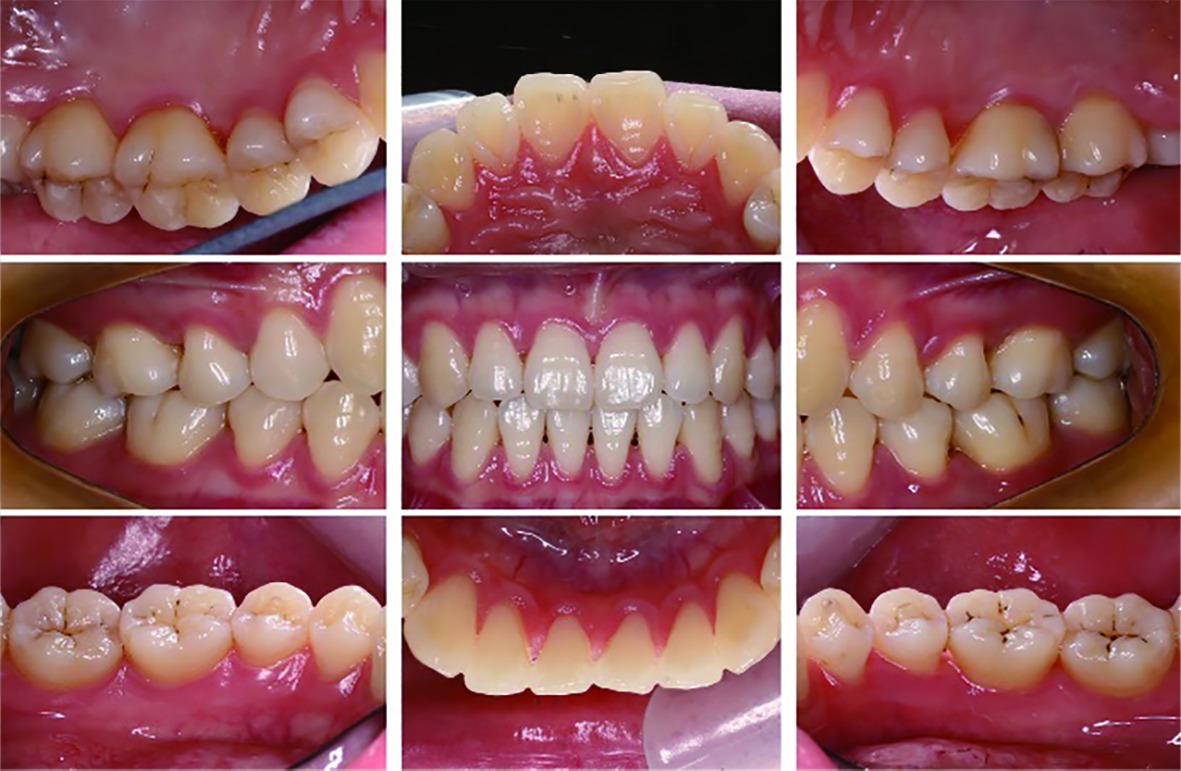
Fig.2
Initial periodontal chart"
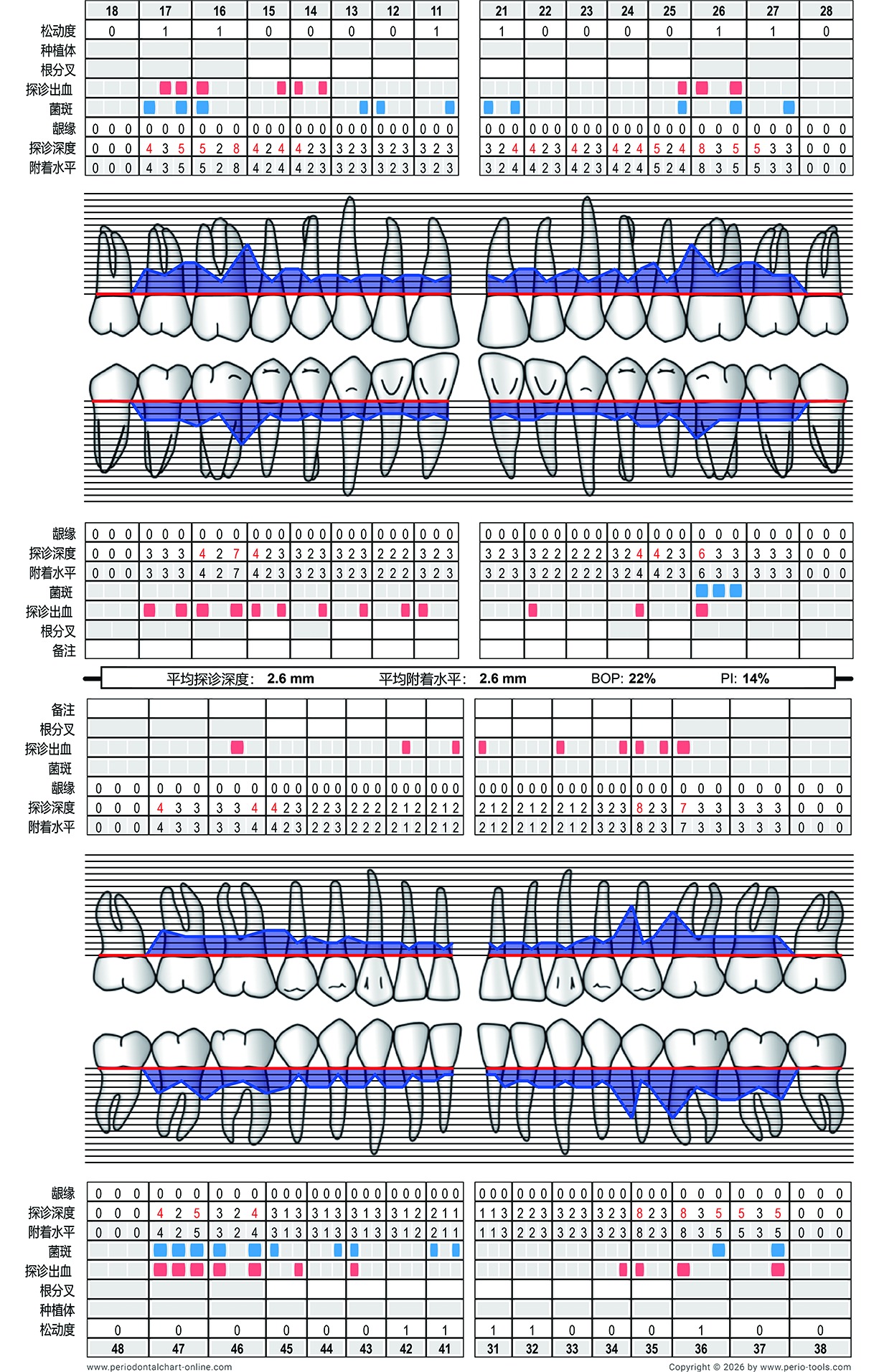
Fig.3
Initial panoramic radiograph"
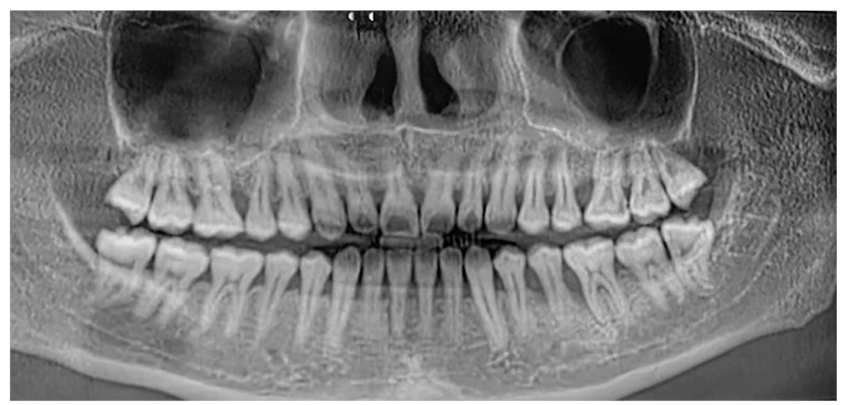
Fig.4
Initial full-mouth periapical radiographs"
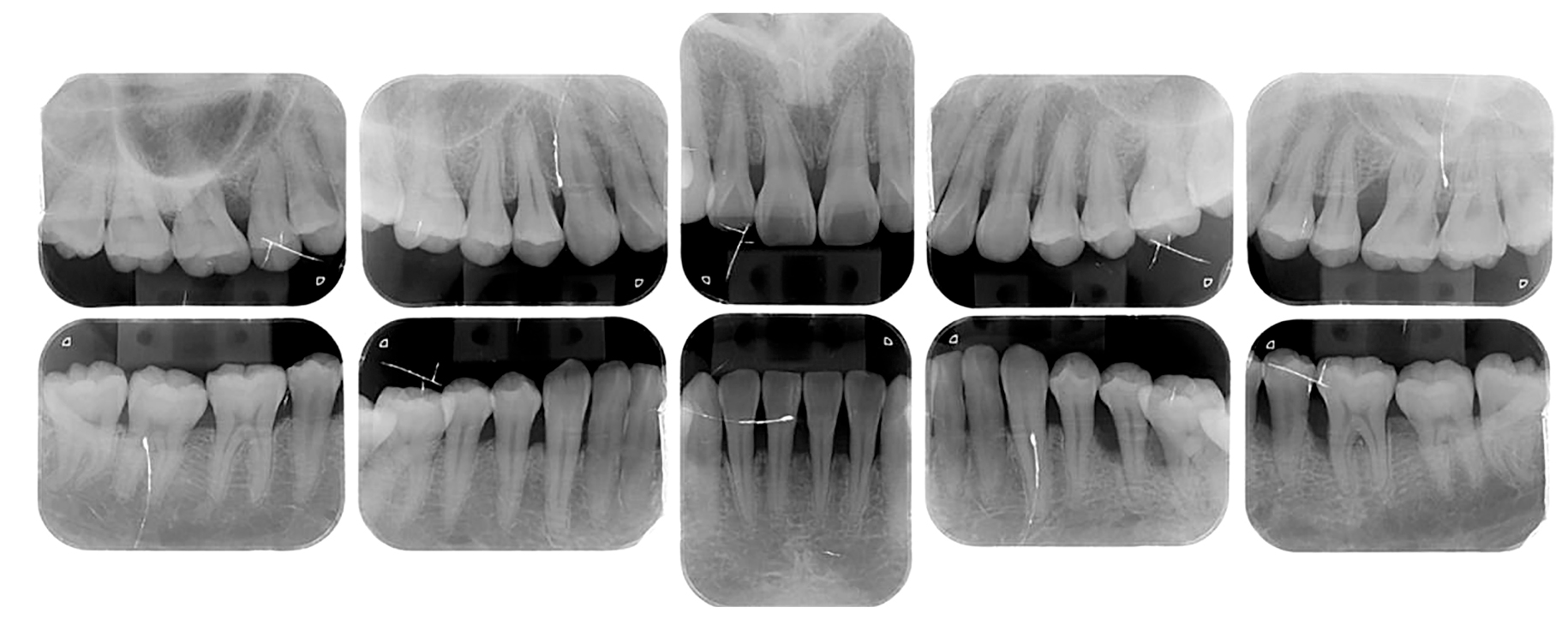
Fig.5
Surgical process"
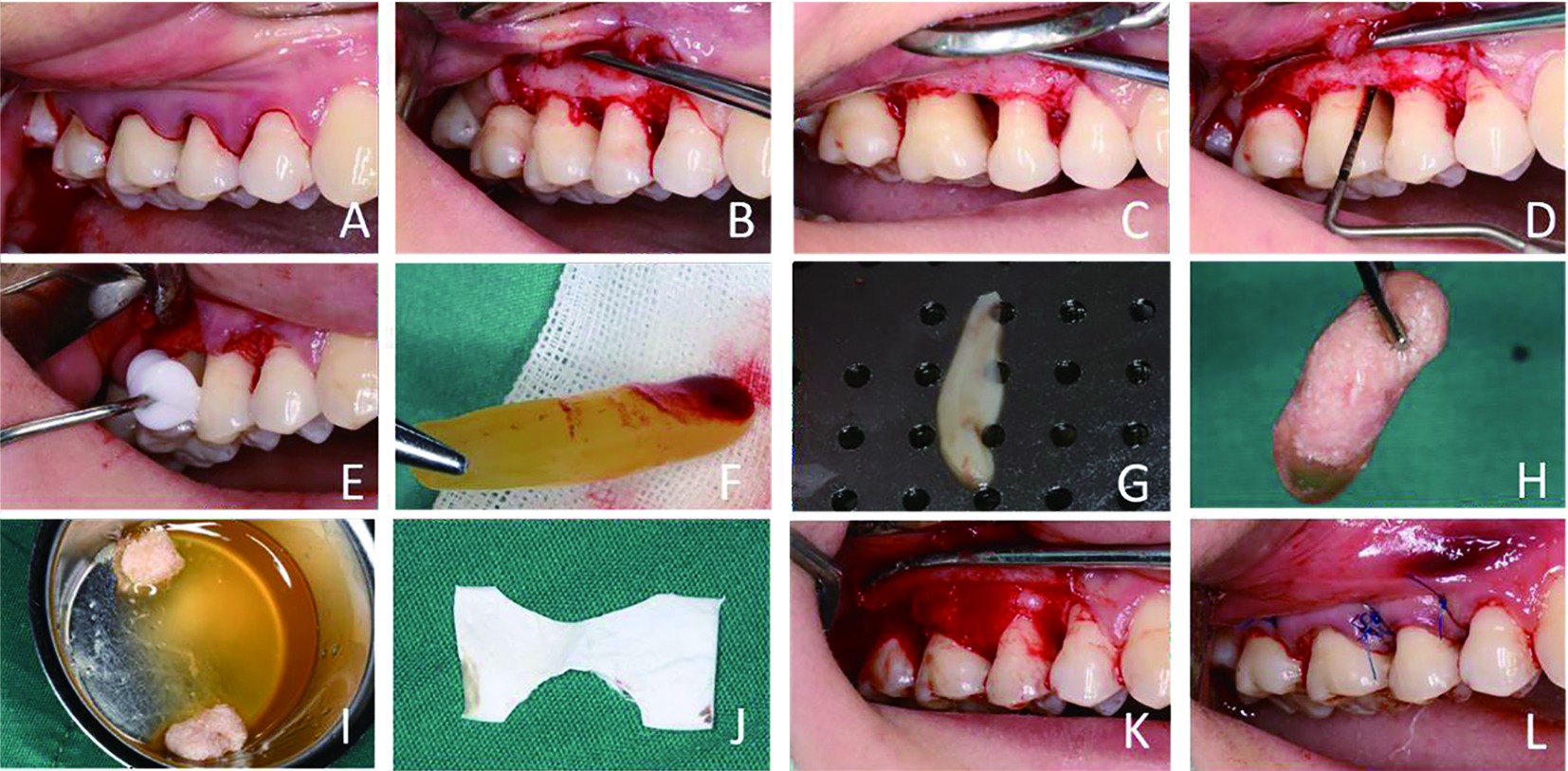
Fig.6
Two weeks post-surgery"
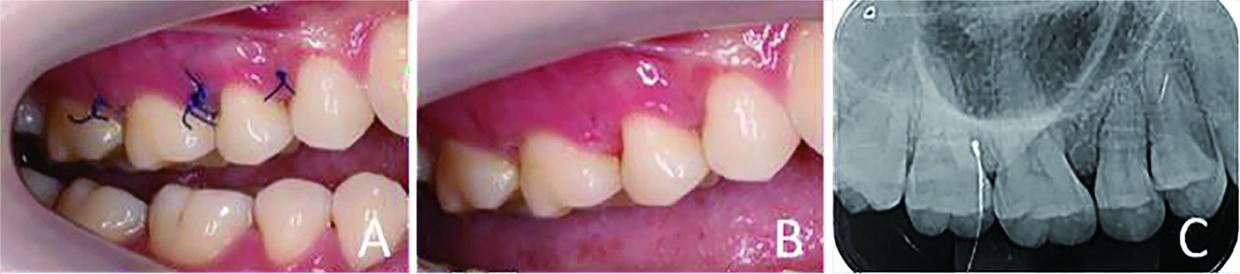
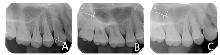
Fig.7
Mesial bone changes of tooth 16"
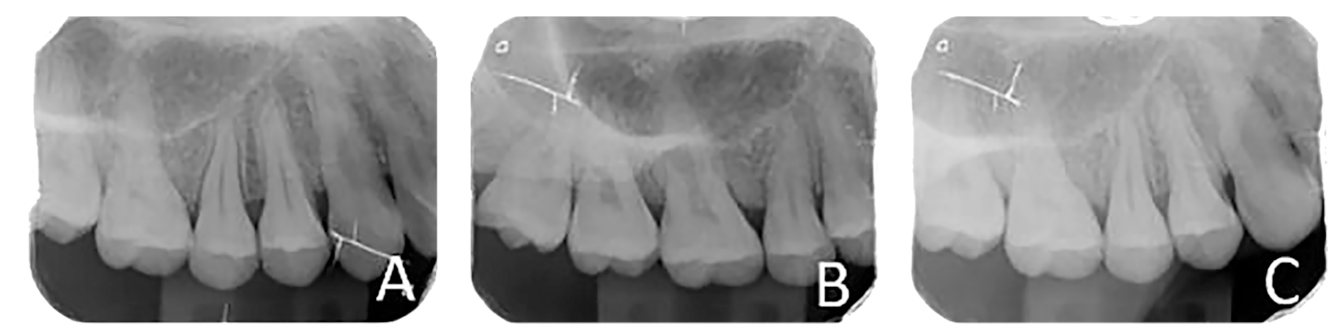
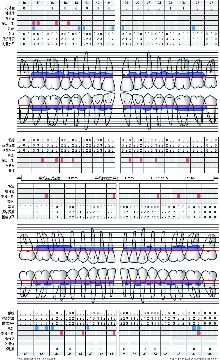
Fig.8
Five months post-surgery periodontal chart"
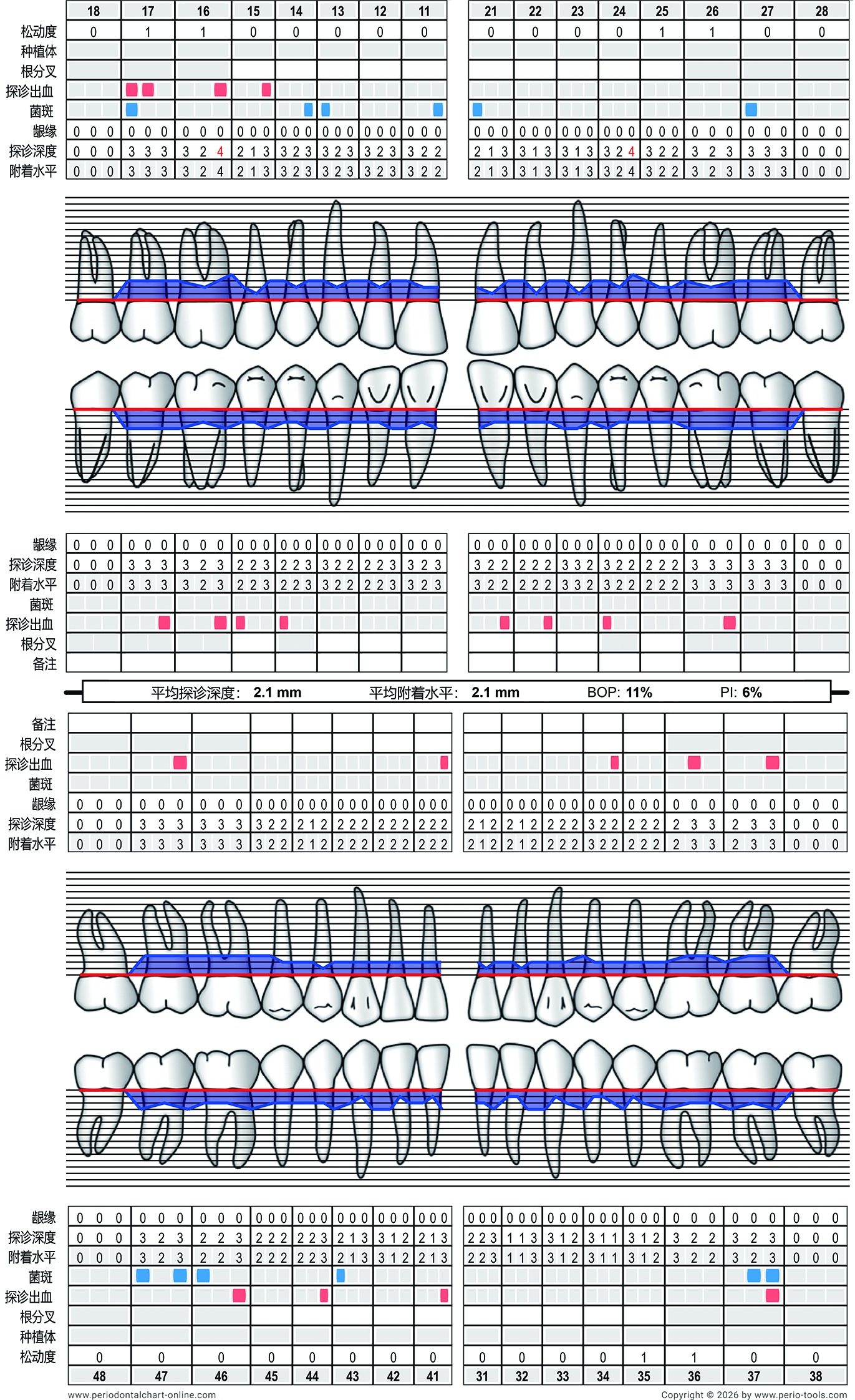
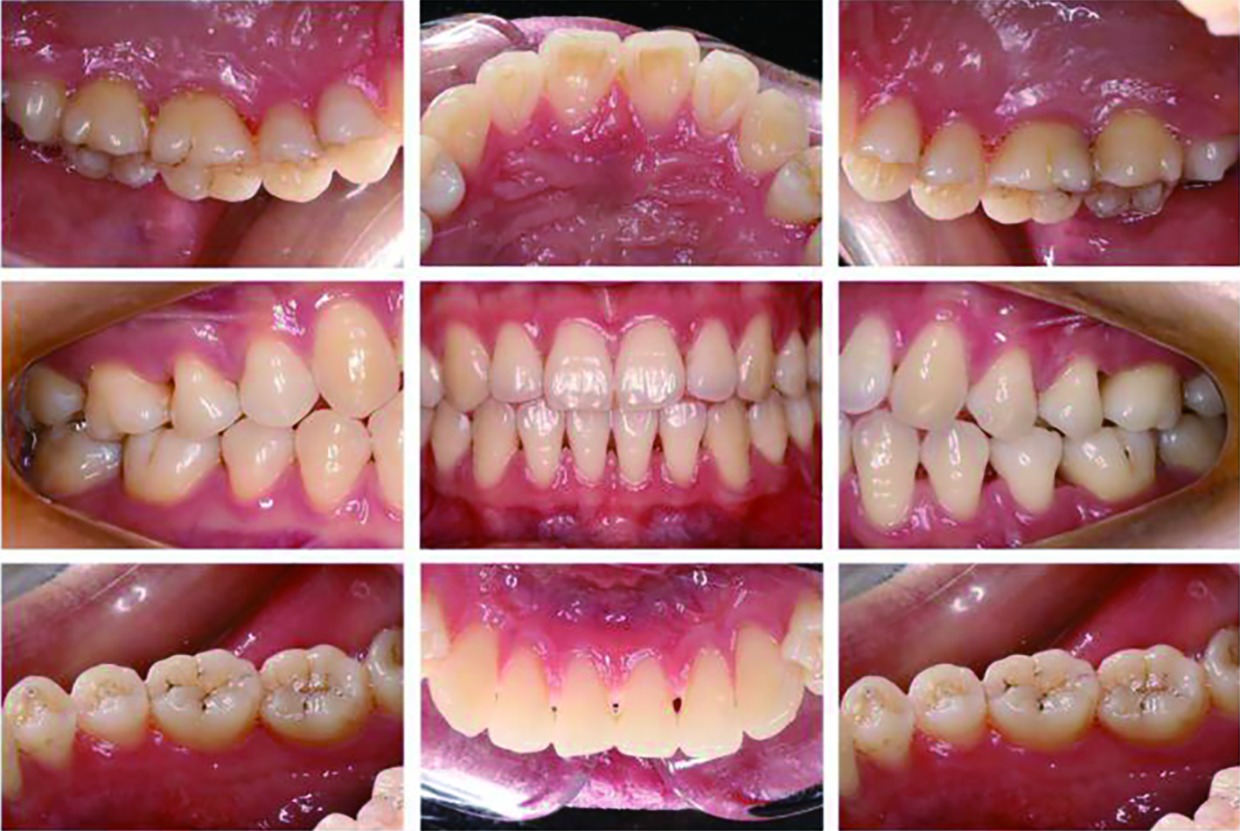
Fig.9
Intraoral photographs at 5 months post-surgery"
| [1] |
Sculean A, Nikolidakis D, Nikou G, et al. Biomaterials for promoting periodontal regeneration in human intrabony defects: A systematic review[J]. Periodontol 2000, 2015, 68(1): 182-216.
doi: 10.1111/prd.12086 pmid: 25867987 |
| [2] | 马莉, 吴靖, 席悦, 等. 黏性骨的生物学特点及其在牙周辅助加速成骨正畸手术中的临床应用[J]. 中华口腔医学杂志, 2026, 61(4): 460-467. |
| [3] | 张玉峰. 血浆基质制品的前世今生[J]. 中华口腔医学杂志, 2021, 56(8): 740-746. |
| [4] | Choukroun J, Adda F, Schoeffler C, et al. Une opportunité en paro-implantologie:Le PRF[J]. Implantodontie, 2001, 42:55-62. |
| [5] |
Dohan DM, Choukroun J, Diss A, et al. Platelet-rich fibrin (PRF): A second-generation platelet concentrate. Part I: Technological concepts and evolution[J]. Oral Surg Oral Med Oral Pathol Oral Radiol Endod, 2006, 101(3): e37-e44.
doi: 10.1016/j.tripleo.2005.07.008 pmid: 16504849 |
| [6] |
de Lima Barbosa R, Rodrigues Santiago Rocha N, Stellet Lourenço E, et al. The association of nanostructured carbonated hydroxyapatite with denatured albumin and platelet-rich fibrin: Impacts on growth factors release and osteoblast behavior[J]. J Funct Biomater, 2024, 15(1): 18.
doi: 10.3390/jfb15010018 |
| [7] |
Albash Z, Khalil A, Ali M, et al. Sticky bone in regenerative dentistry: A paradigm shift in graft stability or a promising technique still under scrutiny?[J]. Ann Med Surg, 2026, 88(2): 1541-1554.
doi: 10.1097/MS9.0000000000004575 |
| [8] |
de Almeida Barros Mourão CF, Valiense H, Melo ER, et al. Obtention of injectable platelets rich-fibrin (i-PRF) and its polymerization with bone graft: Technical note[J]. Rev Col Bras Cir, 2015, 42(6): 421-423.
doi: 10.1590/0100-69912015006013 pmid: 26814997 |
| [9] | Sareen V, Santhi K, Saxena I, et al. Role of sticky bone in the management of various alveolar bone defects: A systematic review[J]. Cureus, 2024: e63561. |
| [10] |
Yang Z, Zhai SB, Liu Y, et al. Sticky bone: Advances and applications[J]. Int J Nanomed, 2025, 20: 10151-10175.
doi: 10.2147/IJN.S524115 |
| [11] |
Cortellini P, Tonetti MS. Clinical concepts for regenerative therapy in intrabony defects[J]. Periodontol 2000, 2015, 68(1): 282-307.
doi: 10.1111/prd.12048 pmid: 25867990 |
| [12] |
Jepsen K, Sculean A, Jepsen S. Complications and treatment errors related to regenerative periodontal surgery[J]. Periodontol 2000, 2023, 92(1): 120-134.
doi: 10.1111/prd.12504 pmid: 37435999 |
| [13] |
Nibali L, Koidou VP, Nieri M, et al. Regenerative surgery versus access flap for the treatment of intra-bony periodontal defects: A systematic review and meta-analysis[J]. J Clin Periodontol, 2020, 47(S22): 320-351.
doi: 10.1111/jcpe.v47.s22 |
| [14] | Reynolds MA, Kao RT, Camargo PM, et al. Periodontal regeneration-intrabony defects: A consensus report from the AAP regeneration workshop[J]. J Periodontol, 2015, 86(2S): S105-S107. |
| [15] |
Nibali L, Sultan D, Arena C, et al. Periodontal infrabony defects: Systematic review of healing by defect morphology following regenerative surgery[J]. J Clin Periodontol, 2021, 48(1): 101-114.
doi: 10.1111/jcpe.v48.1 |
| [16] |
Tony JB, Parthasarathy H, Tadepalli A, et al. CBCT evaluation of sticky bone in horizontal ridge augmentation with and without collagen membrane: A randomized parallel arm clinical trial[J]. J Funct Biomater, 2022, 13(4): 194.
doi: 10.3390/jfb13040194 |
| [17] |
Sanz M, Herrera D, Kebschull M, et al. Treatment of stage Ⅰ-Ⅲ periodontitis: The EFP S3 level clinical practice guideline[J]. J Clin Periodontol, 2020, 47(S22): 4-60.
doi: 10.1111/jcpe.v47.s22 |
| [18] | 徐林坤, 杨扬, 何东宁, 等. 黏性骨在口腔临床治疗中的应用研究进展[J]. 口腔颌面修复学杂志, 2024, 25(3): 213-216. |
| [19] | Salama MH, Bilal AM, Hosny MM, et al. Efficacy of sticky bone with repeated injectable platelet-rich fibrin application in the management of periodontal intrabony defects: Randomized controlled clinical trial[J]. Open Dent J, 2025, 19: e18742106390467. |
| [20] |
Mallappa J, Vasanth D, Gowda TM, et al. Clinic oradiographic evaluation of advanced-platelet rich fibrin block (a-PRF + i-PRF + nanohydroxyapatite) compared to nanohydroxyapatite alone in the management of periodontal intrabony defects[J]. J Indian Soc Periodontol, 2022, 26(4): 359-364.
doi: 10.4103/jisp.jisp_882_20 |
| [21] |
Silva FFVE, Chauca-Bajaña L, Caponio VCA, et al. Regeneration of periodontal intrabony defects using platelet-rich fibrin (PRF): A systematic review and network meta-analysis[J]. Odontology, 2024, 112(4): 1047-1068.
doi: 10.1007/s10266-024-00949-7 pmid: 38771493 |
| [22] |
Miron RJ, Moraschini V, Fujioka-Kobayashi M, et al. Use of platelet-rich fibrin for the treatment of periodontal intrabony defects: A systematic review and meta-analysis[J]. Clin Oral Invest, 2021, 25(5): 2461-2478.
doi: 10.1007/s00784-021-03825-8 pmid: 33609186 |
| [23] | Tonetti MS, Greenwell H, Kornman KS. Staging and grading of periodontitis: Framework and proposal of a new classification and case definition[J]. J Clin Periodontol, 2018, 45(S20): S149-S161. |
| [24] |
McGuire MK, Nunn ME. Prognosis versus actual outcome.Ⅱ. The effectiveness of clinical parameters in developing an accurate prognosis[J]. J Periodontol, 1996, 67(7): 658-665.
doi: 10.1902/jop.1996.67.7.658 pmid: 8832476 |
| [25] | Herrera D, Sanz M, Kebschull M, et al. Treatment of stage Ⅳ periodontitis: The EFP S3 level clinical practice guideline[J]. J Clin Periodontol, 2022, 49(S24): 4-71. |
| [26] |
Bunyatratchata O, Nimlamool W, Sangin S. The impact of centrifugation devices and collection tubes on fibrin characteristics and growth factor release under high- and low-speed protocols[J]. Dent J, 2025, 13(10): 476.
doi: 10.3390/dj13100476 |
| Viewed | ||||||
|
Full text |
|
|||||
|
Abstract |
|
|||||
